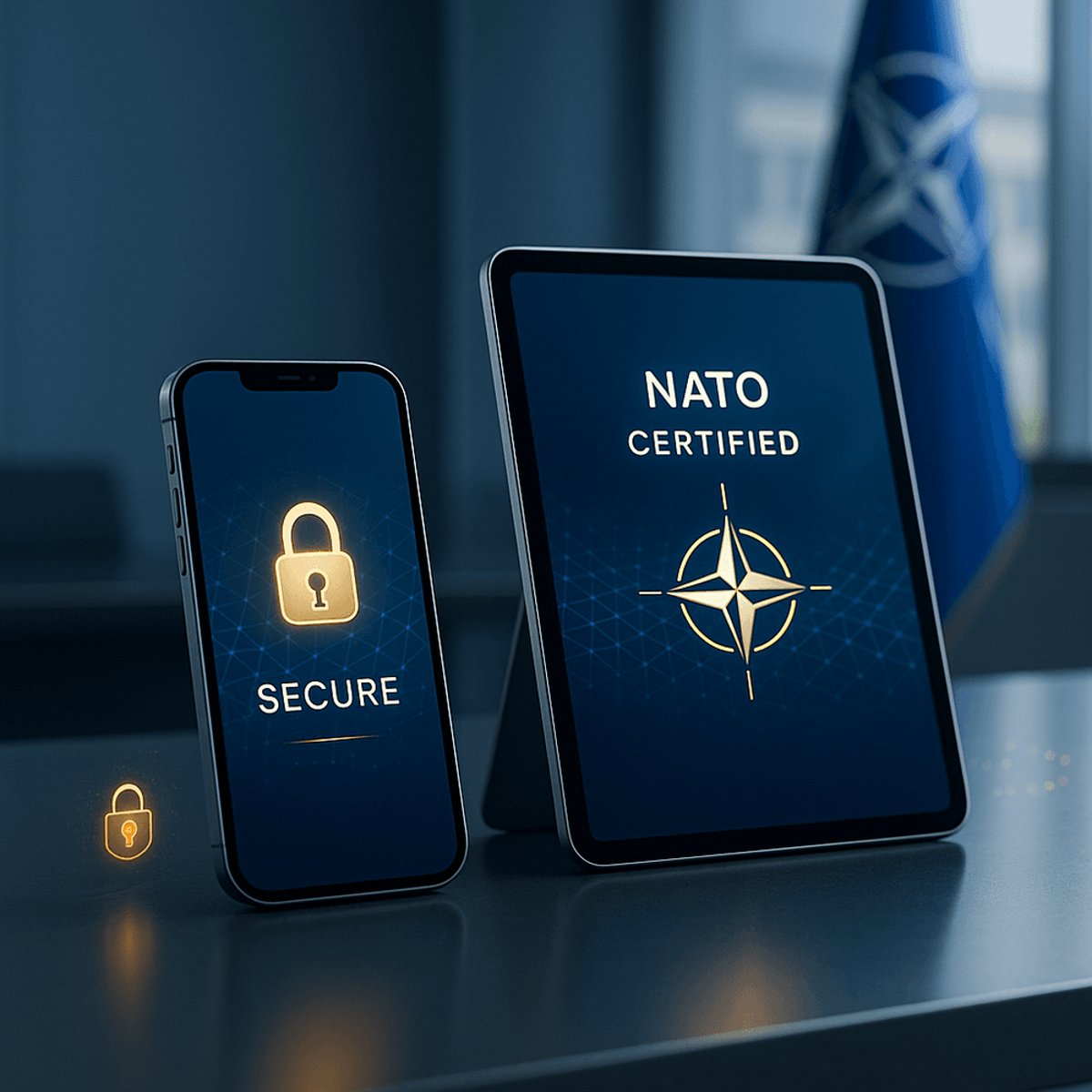
Apple just crossed a security threshold no consumer tech company has reached before. The company announced today that iPhone and iPad are now the first and only consumer devices approved to handle classified information under NATO's strict information assurance requirements. The certification marks a watershed moment for enterprise security, potentially opening Apple's devices to military and diplomatic use across all 32 NATO member nations.
Apple just became the first consumer technology company to earn NATO's blessing for handling classified information. The Cupertino giant announced today that both iPhone and iPad have cleared the alliance's stringent information assurance requirements, making them the only consumer devices approved to process sensitive military and diplomatic data across NATO's 32 member nations.
The certification is a massive win for Apple's enterprise ambitions. While the company has long positioned itself as the privacy-first alternative to Android, this NATO approval provides concrete validation of its security architecture from one of the world's most demanding institutions. It's the kind of third-party endorsement money can't buy, and it arrives at a moment when Apple is aggressively courting government and enterprise customers.
What makes this announcement particularly significant is what it isn't saying. NATO information assurance compliance typically requires hardware-level security features like secure enclaves, encrypted storage, verified boot chains, and rigorous supply chain validation. Apple's already been building these capabilities into its devices for years through its Secure Enclave processor and T2/Apple Silicon security architecture. But meeting NATO's classified information standards suggests Apple's security goes several layers deeper than what's publicly documented.
The practical implications are enormous. Defense personnel, diplomats, and military officials across NATO countries can now theoretically use standard iPhones and iPads for classified communications, rather than relying on specialized ruggedized devices that cost thousands of dollars and lag years behind in user experience. That's not just a win for user experience, it's a potential multi-billion dollar market opportunity as governments look to modernize their mobile infrastructure.
For context, traditional defense contractors like L3Harris and General Dynamics have dominated the secure communications market for decades with purpose-built devices. Apple's entry with consumer hardware fundamentally challenges that model. If a $1,200 iPhone can match or exceed the security of a $5,000 specialized device, procurement officers will take notice.
The certification also arrives as Apple faces mounting pressure in its consumer markets. iPhone sales have plateaued in mature markets, and the company's been hunting for new revenue streams. Enterprise and government contracts represent a massive untapped opportunity, and this NATO approval hands Apple's sales teams a powerful proof point. It's hard to argue a device isn't secure enough for your corporate network when it's approved for NATO secrets.
What remains unclear is the implementation timeline and specific technical requirements. NATO's announcement doesn't detail whether this applies to all current iPhone and iPad models or only specific configurations. It also doesn't specify whether classified use requires additional software layers, mobile device management configurations, or physical security controls. These details matter enormously for actual deployment.
The competitive dynamics are equally intriguing. Samsung has its Knox security platform and has pursued defense contracts for years, but it hasn't secured comparable NATO-wide approval for consumer devices. Google has been pushing its Pixel devices and Android Enterprise solutions into government markets, but now faces a significant credibility gap. Microsoft, despite its deep government relationships through Windows and Office, doesn't manufacture mobile hardware with comparable market penetration.
This certification could also influence civilian enterprise adoption. If Apple's consumer devices are secure enough for classified NATO information, they're certainly secure enough for corporate intellectual property, financial data, and healthcare records. That's a compelling argument against the remaining holdouts who still view iOS devices as consumer toys rather than enterprise tools.
The timing is particularly notable given ongoing debates about encryption backdoors and government access to devices. Apple's famously resisted pressure to build backdoors into its devices, even when facing legal battles with the FBI. This NATO approval suggests it's possible to meet rigorous government security requirements without compromising the fundamental security architecture that protects all users.
Apple's NATO certification represents more than a technical achievement - it's a strategic inflection point that validates iOS as the world's most secure consumer platform while unlocking billions in government contracts. The certification challenges decades of defense contractor dominance and forces competitors to either match Apple's security credentials or concede the high-security enterprise market. As implementation details emerge and NATO nations begin actual deployments, the real test will be whether this certification translates into meaningful government adoption or remains largely symbolic. Either way, Apple's just claimed the security high ground in a way that will reshape enterprise mobile computing for years to come.