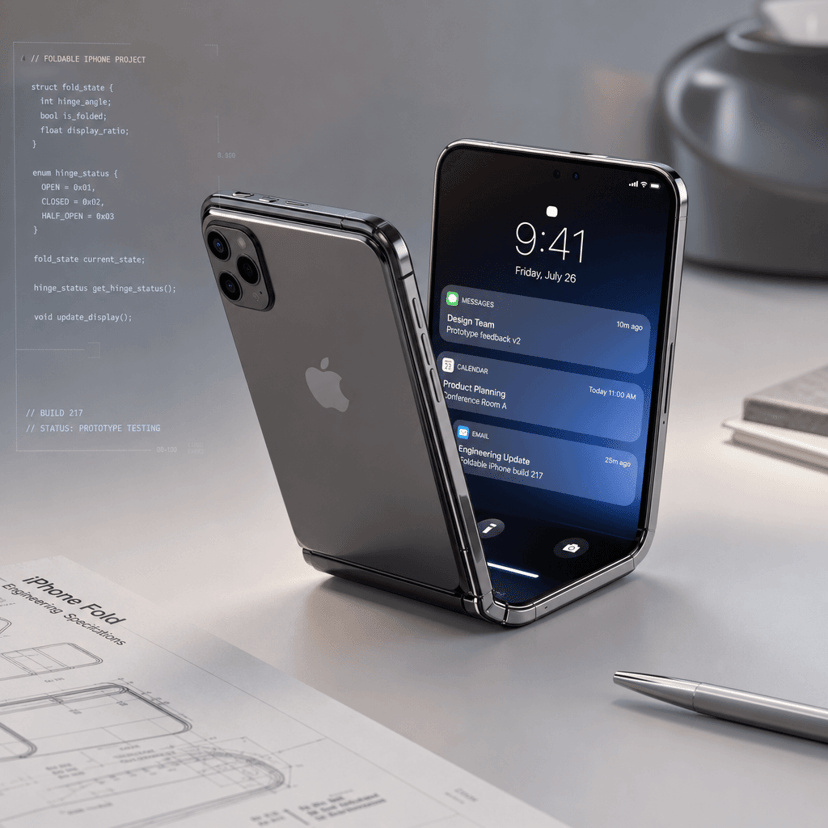
Apple just dropped its biggest hint yet that a foldable iPhone is finally happening. The iOS 27 developer beta, released during WWDC, includes code referencing fold states and screen angles - technical markers that suggest the company's long-rumored foldable device might be closer to reality than anyone expected. After years of watching Samsung and others dominate the foldable market, Apple appears ready to make its move.
Apple has been conspicuously absent from the foldable phone race, but that might be about to change. Developers digging through the iOS 27 beta released at this year's WWDC discovered something unexpected - code that explicitly references device fold states and screen angles, features that only make sense for a foldable device.
The discovery, first reported by TechCrunch, represents the clearest signal yet that Apple's foldable ambitions have moved beyond the patent stage. While the company has filed dozens of foldable-related patents over the past five years, this is the first time such functionality has appeared in production code destined for developer hands.
The timing is particularly telling. Apple typically doesn't include hardware-specific code in iOS betas unless devices are in advanced development stages. When iPad Pro stylus support appeared in an early iOS beta back in 2015, the Apple Pencil launched just months later. The same pattern played out with Face ID code appearing before the iPhone X reveal.
For years, Samsung has had the foldable market largely to itself. The company's Galaxy Z Fold and Z Flip lines have steadily improved through multiple generations, working out early durability issues and refining the form factor. Meanwhile, Chinese manufacturers like Huawei and Oppo have pushed foldable innovation even further with tri-fold designs and sophisticated hinge mechanisms.
Apple's late entry to foldables has puzzled industry watchers, especially given the company's history of perfecting categories pioneered by others. The company did the same with smartphones, tablets, and smartwatches - entering markets after competitors established them, then redefining expectations.
The code references suggest Apple is working on software that can detect multiple screen configurations. This points to either a book-style fold similar to Samsung's Galaxy Z Fold, or possibly a clamshell design like the Z Flip. The screen angle detection is particularly intriguing, as it implies iOS 27 will support features that change based on how far the device is folded - imagine different interface modes for fully open, partially folded, or closed positions.
Apple hasn't commented on the code discovery, which is typical for the notoriously secretive company. But the evidence is mounting from multiple directions. Supply chain reports from Asia have indicated Apple is working with display manufacturers on foldable OLED panels, while analyst Ming-Chi Kuo has predicted a foldable iPhone launch for 2026 or 2027.
The bigger question is whether Apple can bring something genuinely new to foldables. Early foldable phones suffered from visible crease marks, fragile screens, and awkward software experiences. Samsung has largely solved these issues through iteration, but there's still room for Apple's typical refinement - better materials, smoother software transitions, and tighter hardware-software integration.
The market is certainly ready for Apple's arrival. Foldable phone sales grew 25% year-over-year in 2025, but still represent less than 5% of the overall smartphone market. Apple's entry could legitimize the category for mainstream consumers who've been waiting to see if foldables are more than just a gimmick. When Apple launched the iPhone in 2007, smartphones already existed - but Apple's version made everyone else rethink what was possible.
Developers now have a few months to explore the new APIs before iOS 27's public release in the fall. But the real action will be watching whether Apple announces foldable hardware later this year or holds back for a 2027 reveal. Either way, the foldable phone landscape is about to get a lot more interesting.
Apple's iOS 27 code discovery marks a turning point for the foldable market. After years of watching competitors experiment and iterate, Apple appears ready to enter with its own take on folding smartphones. The code references suggest development is far enough along that developers need APIs to work with, which typically means hardware isn't far behind. Whether Apple can redefine foldables the way it has other product categories remains to be seen, but the company rarely enters a market without a clear vision of how to do it better. For consumers who've been waiting for a foldable iPhone, that moment might finally be approaching.