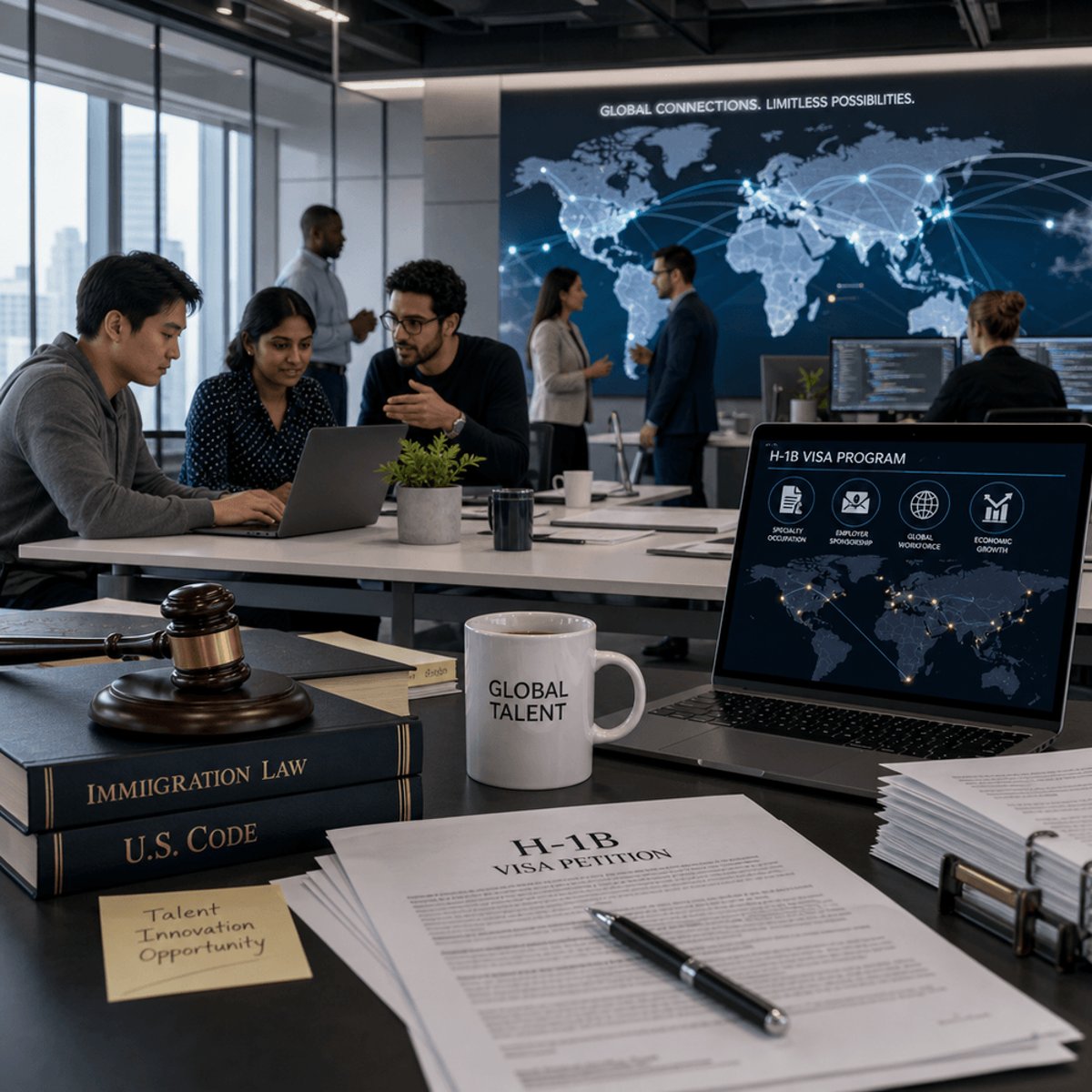
A federal judge has blocked the Trump administration's controversial $100,000 H-1B visa fee, delivering a major victory to tech companies that rely heavily on skilled foreign workers. The ruling halts what would have been one of the most dramatic restrictions on the visa program in decades, just as companies like Amazon, Google, and Microsoft were preparing to navigate the new reality. The decision comes after industry groups challenged the fee as exceeding executive authority and threatening innovation across the tech sector.
A federal judge just threw a wrench into the Trump administration's immigration crackdown, blocking a $100,000 fee on H-1B visas that threatened to reshape how tech companies hire foreign talent. The ruling lands as Amazon, Google, Microsoft, and hundreds of other companies were bracing for what many called an existential threat to their hiring pipelines.
The H-1B program, which allows U.S. companies to temporarily employ foreign workers in specialty occupations, has become a lightning rod in debates over American competitiveness and worker protection. Tech giants depend on these visas to fill critical roles in software engineering, AI development, and data science - positions they argue can't be filled by domestic talent alone.
Trump had imposed the six-figure fee earlier this year, arguing the program "has undermined U.S. security through the replacement of American workers," according to CNBC. The administration framed the move as protecting American jobs while critics saw it as a backdoor ban on skilled immigration that would cripple innovation.
The financial impact would have been staggering. Companies like Meta and Apple each sponsor thousands of H-1B workers annually. At $100,000 per visa, the costs would have run into hundreds of millions of dollars for major employers - effectively pricing smaller startups out of competing for global talent entirely.
Industry groups moved quickly to challenge the fee in federal court, arguing the administration overstepped its authority by imposing such a dramatic policy change without Congressional approval. The H-1B program currently caps filing fees at around $10,000 per petition, making the proposed increase a 10-fold jump that legal experts called unprecedented.
The timing couldn't be more critical for the tech sector. Companies are locked in an AI arms race that demands specialized talent in machine learning, natural language processing, and large language model development. OpenAI, Nvidia, and established players are already competing fiercely for researchers who can advance their AI capabilities - many of whom come from universities abroad.
For startups, the blocked fee represents a lifeline. Early-stage companies operating on tight budgets told investors the $100,000 charge would force impossible choices between hiring essential technical talent and preserving runway. Y Combinator-backed founders had begun exploring alternative visa categories and considering relocating operations to Canada or Europe to access global talent pools.
The visa program has long been controversial, with critics pointing to cases where companies appeared to use H-1B workers to replace American employees at lower wages. Tech companies counter that they face genuine talent shortages, particularly in cutting-edge fields where university programs haven't kept pace with industry needs. The debate intensified as AI emerged as a national priority, with both sides claiming their approach better serves American competitiveness.
The judge's decision doesn't resolve the underlying policy debate - it simply blocks the administration from implementing this particular fee structure. The ruling likely hinges on procedural grounds, finding the administration failed to follow proper regulatory processes for such a significant policy shift. The Trump team could appeal or attempt to impose restrictions through different mechanisms.
For now, tech companies are breathing easier. HR departments that had frozen international hiring can resume normal operations, and startups that paused fundraising discussions pending clarity on hiring costs have renewed runway calculations. But the reprieve may be temporary if the administration pursues its restrictionist agenda through other channels.
The decision also carries implications beyond individual companies. University researchers on student visas who hoped to transition to industry roles through H-1B sponsorship faced uncertainty about their career paths. International students considering U.S. graduate programs in computer science had begun questioning whether they'd be able to stay and work after graduation - a calculus that could push top talent toward programs in other countries.
What happens next depends partly on the administration's next move and partly on whether Congress steps in with legislation to address the program's legitimate concerns while preserving access to global talent. Some lawmakers have proposed reforms that would prioritize higher-wage positions and crack down on outsourcing firms that critics say abuse the system, while maintaining pathways for companies genuinely unable to find domestic workers.
The court's decision to block Trump's $100,000 H-1B fee gives tech companies crucial breathing room in the competition for AI and engineering talent, but it doesn't end the debate over skilled immigration. As companies from Amazon to early-stage startups recalibrate their hiring strategies, the underlying tension remains: how to balance legitimate concerns about protecting American workers with the industry's insistence that global talent pipelines fuel innovation. With the administration likely to appeal and Congress potentially weighing in, this fight over who gets to work in American tech is far from over. For now, companies can proceed with their hiring plans - but they'd be wise to prepare for continued uncertainty around one of their most critical talent channels.