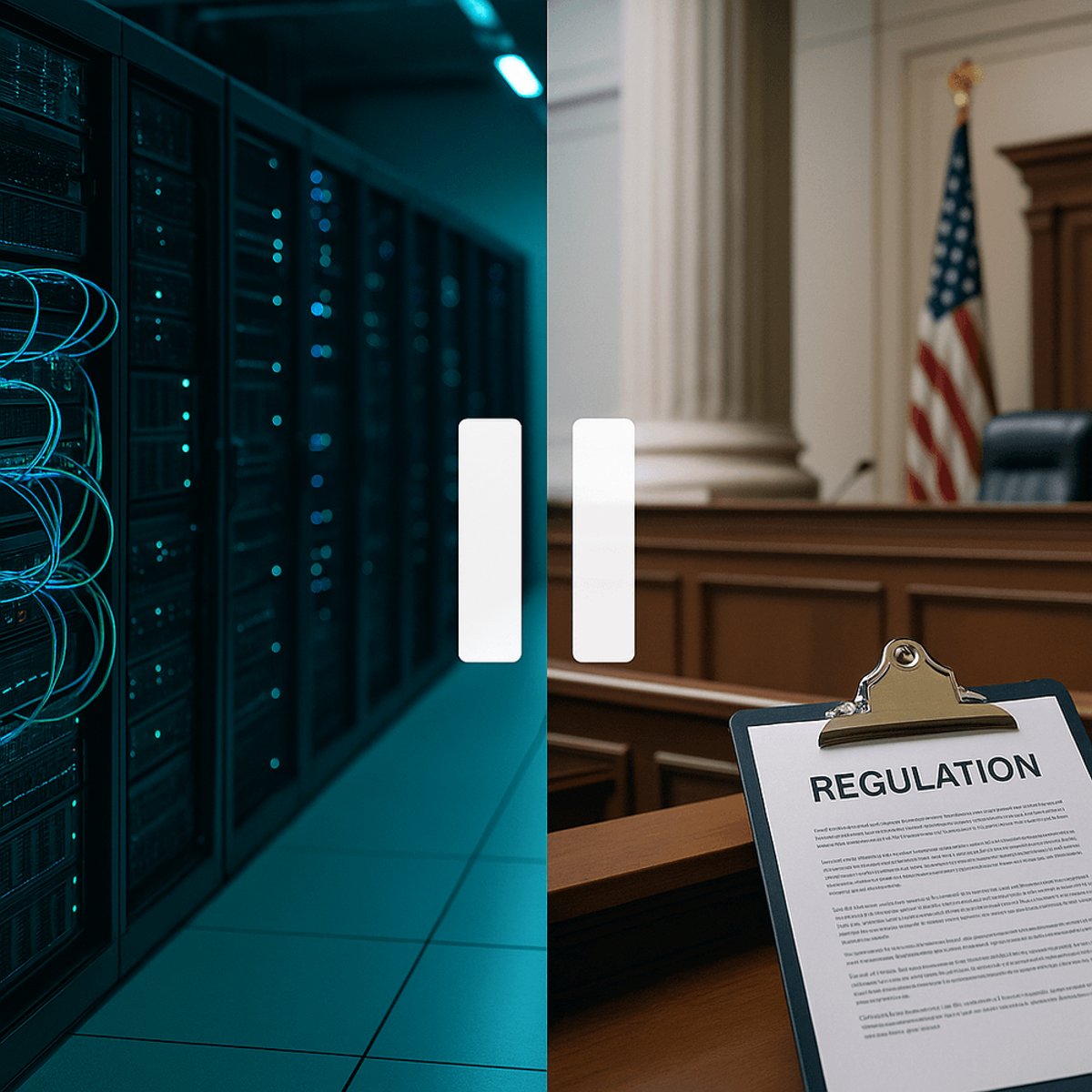
Senator Bernie Sanders and Rep. Alexandria Ocasio-Cortez just dropped a legislative bombshell that could freeze billions in AI infrastructure investment. The progressive lawmakers introduced companion bills Wednesday to halt all new data center construction until Congress passes comprehensive AI regulation, a move that directly threatens expansion plans from Amazon, Microsoft, Google, and Meta. The unprecedented proposal comes as tech giants race to build the massive computing facilities needed to train and deploy next-generation AI models.
The timing couldn't be more disruptive. Amazon, Microsoft, Google, and Meta have collectively announced plans for dozens of new data centers over the next two years, driven almost entirely by AI computing demands. Nvidia CEO Jensen Huang recently told investors that data center spending could hit $300 billion annually by 2027, up from roughly $200 billion today.
Now Sanders and Ocasio-Cortez want to pump the brakes until lawmakers can agree on rules for the AI systems these facilities will power. The companion bills introduced in the Senate and House would impose an immediate moratorium on permits and construction starts for new data centers, with narrow exceptions for facilities already under construction or serving critical infrastructure needs.
"We cannot allow Big Tech to build the infrastructure for unregulated artificial intelligence systems that pose existential risks to workers, democracy, and our climate," the lawmakers said in a joint statement reported by TechCrunch. The statement frames the issue as inseparable from broader concerns about AI safety, job displacement, and environmental impact.
The proposal lands amid mounting scrutiny of data centers' environmental footprint. These facilities consume enormous amounts of electricity and water for cooling, with a single large AI training run potentially using as much power as a small city. Local communities from Virginia to Arizona have pushed back against new data center projects, citing strain on power grids and water resources. Microsoft faced backlash last year when a proposed Iowa facility would have consumed millions of gallons of water daily in a drought-prone region.
But the tech industry argues that throttling infrastructure development would hand China and other competitors a decisive advantage in the global AI race. "Freezing data center construction doesn't stop AI development, it just ensures it happens elsewhere," one industry lobbyist told reporters on background. Amazon Web Services, Microsoft Azure, and Google Cloud are locked in fierce competition not just with each other but with Chinese cloud providers expanding rapidly across Asia and the Middle East.
The legislative text reportedly includes provisions that would lift the moratorium once Congress passes and the president signs legislation establishing comprehensive AI guardrails. But that's proven elusive despite years of debate. Multiple AI regulation proposals have stalled in Congress, with lawmakers split between those demanding strict oversight and those worried about hampering American innovation.
OpenAI has invested heavily in securing computing capacity through partnerships with Microsoft, which operates massive Azure data centers. The company's forthcoming models reportedly require 10 times the computing power of GPT-4, making access to cutting-edge infrastructure existential for its competitive position. A construction freeze could force OpenAI and rivals like Anthropic to scale back development timelines or shift operations overseas.
Industry analysts see the Sanders-AOC bill as more messaging than viable legislation. "This has zero chance of passing in the current Congress, but it shifts the Overton window on what's politically acceptable," said one policy analyst who tracks tech regulation. The bill does, however, reflect genuine anxiety among some lawmakers about AI's trajectory and the industry's resistance to oversight.
The proposal also complicates the Biden administration's efforts to position the U.S. as the global AI leader while addressing safety concerns. The White House has pushed voluntary commitments from tech companies while supporting research into AI risks, but hasn't backed legislative mandates that could slow development.
For states competing to land data center projects, the federal uncertainty creates additional headaches. Georgia, Texas, and Ohio have offered hundreds of millions in tax incentives to lure facilities that promise jobs and economic development. A moratorium would leave those deals in limbo and could trigger legal battles over broken commitments.
The legislation arrives as Meta prepares to break ground on what would be one of the world's largest AI training facilities in Louisiana, a $10 billion project announced just last month. Google is expanding data center capacity across three states to support its Gemini AI ambitions. Amazon recently secured permits for massive facilities in Ohio and Oregon specifically designed for AI workloads.
Whether the Sanders-AOC bill gains traction or dies in committee, it represents a new front in the battle over AI governance, one that targets the physical infrastructure underpinning the technology rather than the algorithms themselves.
The Sanders-AOC moratorium proposal faces steep odds but signals a fundamental shift in how some lawmakers view AI regulation. Rather than waiting for consensus on algorithmic oversight, they're targeting the supply chain itself. Whether this approach gains momentum or fizzles, it's put tech giants on notice that their infrastructure buildout won't proceed entirely on their terms. For companies betting billions on AI supremacy, the political landscape just became significantly more uncertain. Watch for industry lobbying to intensify and for more moderate Democrats to distance themselves from the proposal as data center host states push back.