SK Hynix, the world's second-largest memory chipmaker and a critical supplier to Nvidia's AI ambitions, has confidentially filed for a U.S. listing this year. The move comes as the South Korean company rides what executives call 'unprecedented growth' in high-bandwidth memory (HBM) demand, giving American investors direct access to the AI infrastructure boom beyond just GPU makers. With AI data centers consuming memory chips at record rates, SK Hynix's push into U.S. capital markets signals confidence that the AI buildout has years, not quarters, left to run.
SK Hynix just made its boldest bet yet that the AI memory gold rush isn't slowing down. The South Korean chipmaker filed confidentially for a U.S. listing, a move that would give American investors their first direct shot at owning a piece of the most critical - and arguably most constrained - component of the AI stack beyond GPUs.
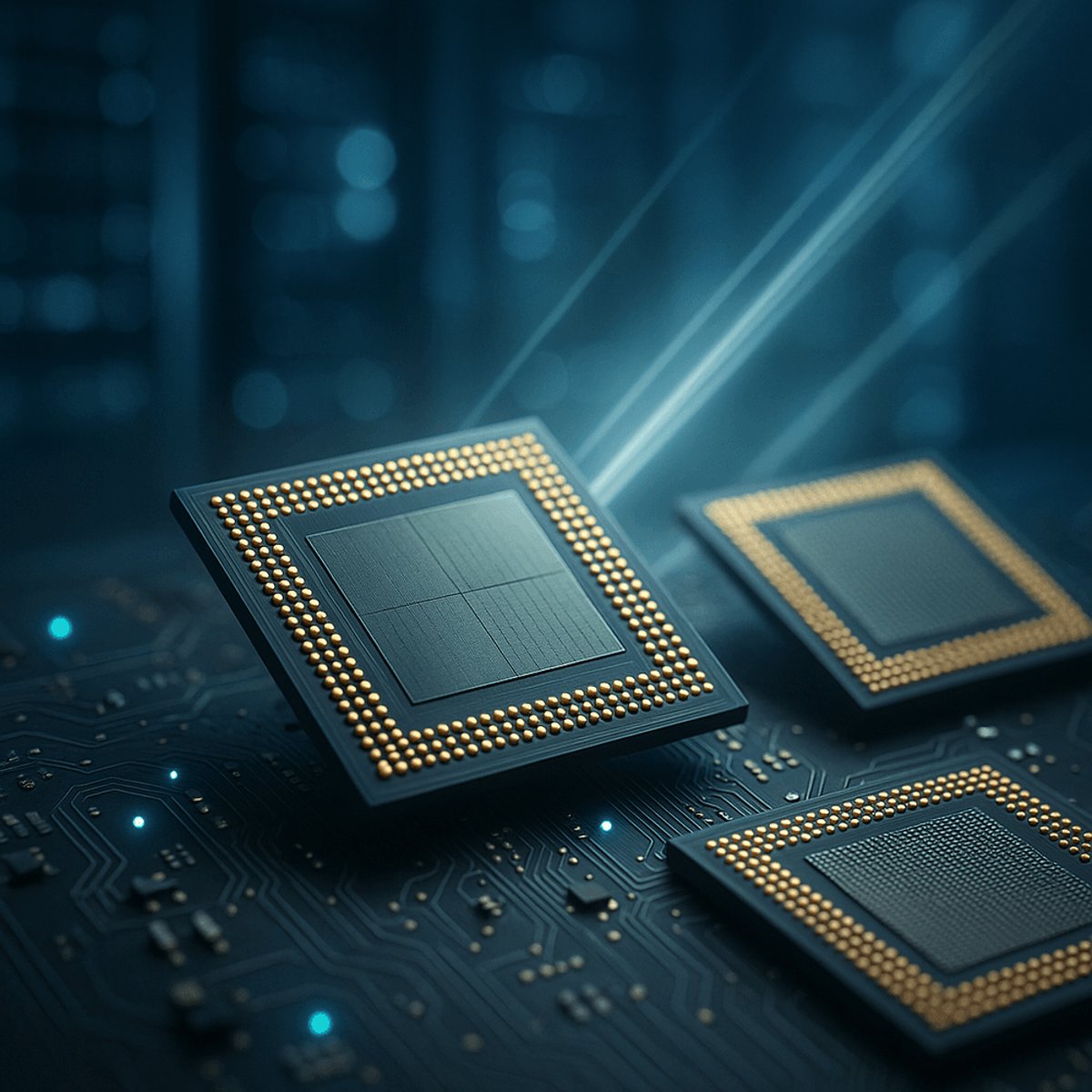
The confidential filing with the SEC comes as SK Hynix expands production capacity at breakneck speed to keep pace with insatiable demand for high-bandwidth memory. These specialized chips sit right next to Nvidia's H100 and H200 accelerators, acting as the ultra-fast memory that feeds AI models during training and inference. Without enough HBM, even the most powerful GPUs become bottlenecked.
According to CNBC, the listing is expected to take the form of American Depositary Receipts (ADRs), allowing U.S. investors to trade shares without navigating Korean exchanges. The timing is strategic - SK Hynix currently supplies more than half of the world's HBM3 and HBM3E chips, with Nvidia consuming the lion's share for its data center accelerators.
The numbers tell the story of a company in hypergrowth mode. SK Hynix's operating profit surged 340% year-over-year in Q4 2025, driven almost entirely by HBM sales. The company's HBM revenue is expected to triple in 2026 as Microsoft, Meta, and Google race to build out AI infrastructure. Yet SK Hynix trades at just 8 times forward earnings on the Korean Stock Exchange - a fraction of the multiples commanded by American semiconductor peers.
That valuation gap is exactly what makes a U.S. listing attractive. American depositary shares of foreign tech companies often trade at premiums to their home market listings, especially when they're plugged into secular growth stories like AI. Taiwan Semiconductor Manufacturing Company saw its U.S.-traded ADRs consistently outperform its Taiwan-listed shares during the chip boom of 2020-2021.
"SK Hynix is basically the picks-and-shovels play for AI infrastructure that most investors don't even know exists," one semiconductor analyst at a major U.S. bank told industry observers. "Everyone's focused on Nvidia and the hyperscalers, but without HBM supply, none of those AI clusters get built."
The company has already committed $15 billion to expanding HBM production through 2027, including a new fabrication facility in South Korea dedicated entirely to advanced memory packaging. That facility is expected to come online in late 2026, potentially doubling SK Hynix's HBM output just as next-generation AI accelerators from Nvidia and AMD hit the market.
But the U.S. listing also carries geopolitical implications. SK Hynix is majority-owned by SK Group, one of South Korea's largest conglomerates, and has significant manufacturing operations in both South Korea and China. As U.S.-China tech tensions escalate, American investors have grown increasingly cautious about supply chain exposure. A U.S. listing would give SK Hynix more direct access to American capital while potentially signaling deeper alignment with U.S. tech policy.
The confidential filing means SK Hynix can keep financial details under wraps until it's ready to publicly launch the offering - typically 15-30 days before the first investor roadshow. The company hasn't disclosed pricing, timing, or the percentage of shares that would trade in the U.S., but market watchers expect an announcement within the next quarter.
Competitors are watching closely. Micron Technology, the U.S.-based memory giant, has been ramping its own HBM production but still lags SK Hynix and Samsung in market share. Samsung, meanwhile, has struggled with HBM3E qualification issues that delayed shipments to Nvidia. SK Hynix's first-mover advantage in HBM has translated into contracts that extend well into 2027, giving the company revenue visibility that's rare in the notoriously cyclical memory business.
For U.S. investors, the listing represents something bigger than just another foreign tech stock. It's a direct investment in the physical infrastructure that makes AI possible - the unglamorous but essential memory chips that determine whether a model trains in hours or days, whether inference happens in milliseconds or seconds. As AI workloads continue to explode, that infrastructure is becoming as valuable as the algorithms themselves.
SK Hynix's move into U.S. capital markets isn't just about raising money - it's a statement about where the AI infrastructure battle will be fought and financed. As American tech giants pour hundreds of billions into data centers, the companies supplying the critical components are finally getting their moment in the spotlight. For investors who missed the early innings of the AI trade through Nvidia or hyperscalers, SK Hynix offers a second-order play with potentially less volatility and more predictable revenue streams. The real test will be whether Wall Street values the company as a cyclical memory maker or as essential AI infrastructure - a distinction worth tens of billions in market cap.