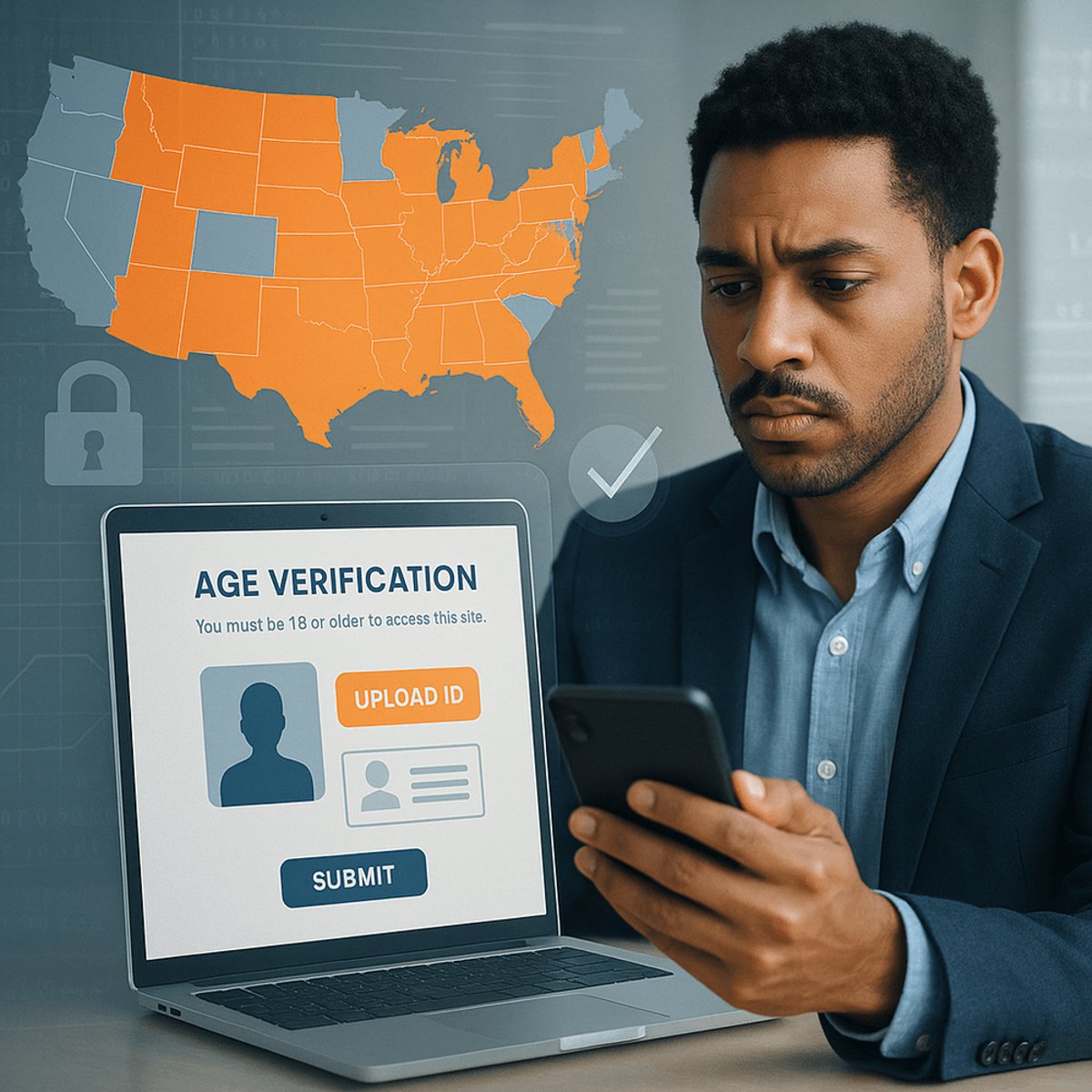
The age-gated internet just became reality for half of America. With Missouri's new law taking effect this week, 25 states now require ID verification to access adult content online, while Congress considers 19 additional bills targeting online safety. Digital rights advocates are sounding alarms that these measures will create more surveillance, not safer spaces.
The digital landscape shifted dramatically this week as Missouri became the 25th state to enforce age verification requirements, marking a tipping point where half of America now lives under some form of online ID mandate. The law requires users to verify their identity before accessing adult content - a process that typically involves uploading government IDs or undergoing facial recognition scans through third-party services.
The timing couldn't be more critical. Just as Missouri's requirements went live, Congress held hearings on 19 separate online safety bills that could reshape internet access nationwide. Among the most controversial is the Kids Online Safety Act (KOSA), which sailed through the Senate with bipartisan support last year, and the Reducing Exploitative Social Media Exposure for Teens Act (RESET), which would ban anyone under 16 from social media platforms entirely.
Fight for the Future, a digital rights organization, isn't waiting quietly. They've launched a week-long resistance campaign across Reddit, LinkedIn, and livestreams, arguing these bills will make the internet more exploitative, not safer. "We're seeing this huge wave towards ID checks being the norm in tech policy," says Sarah Philips, a campaigner with the group.
The global momentum is undeniable. The UK passed its Online Safety Act this year mandating age verification, while Australia's historic teen social media ban goes into effect December 10. Major platforms are already falling in line - Instagram, YouTube, Snap, and TikTok have all confirmed they'll comply with Australia's requirements to deactivate accounts for users under 16.
But critics see a darker pattern emerging. "These are censorship laws," Philips argues, drawing connections to book bans and restrictions on healthcare information. "In the south, where I live, these same proposals mimic a lot of the arguments that you see behind book bans and behind laws that criminalize gender affirming health care or abortion information."
The privacy implications are staggering. Age verification typically relies on third-party services that store sensitive personal data - companies that have proven vulnerable to breaches. When every adult must prove they're not a child, the surveillance net captures everyone, regardless of age.
Over 90 human rights groups signed a coalition letter in March opposing these mandates. "The internet is not improved by treating its users like criminal suspects," wrote David Swanson from RootsAction.org.
At Tuesday's House Energy and Commerce Committee hearing, experts warned against government overreach. Kate Ruane from the Center for Democracy and Technology testified that "the government and social media platforms should not be the sole arbiters of the content children can see and services that they can access online."
The legislative package reveals Congress's broader struggles with tech regulation. Instead of comprehensive privacy laws or antitrust action, lawmakers are defaulting to verification mandates that may miss the mark entirely. According to The Verge, a revised KOSA actually removes tech companies' liability for platform harms.
Philips warns the bills could get attached to must-pass legislation like the National Defense Authorization Act, fast-tracking them without proper scrutiny. The Trump administration's proposed 10-year moratorium on state AI regulations adds another wild card to an already complex mix.
The stakes extend far beyond protecting children online. As Philips puts it: "The thing that people misunderstand most about age verification is that it actually applies to all of us. If we age-gate the internet and implement mandates, that means you have to prove that you're not a child - whether you're 18 or 50."
What started as child protection measures has evolved into a fundamental reshaping of internet access, with profound implications for privacy, free expression, and digital rights. As Congress weighs these 19 bills and more states consider similar laws, the battle lines are drawn between those who see age verification as necessary protection and advocates who warn of a surveilled, censored internet. The outcome will determine whether the open web survives or transforms into something requiring constant identity verification - a change that would affect every American, regardless of age.