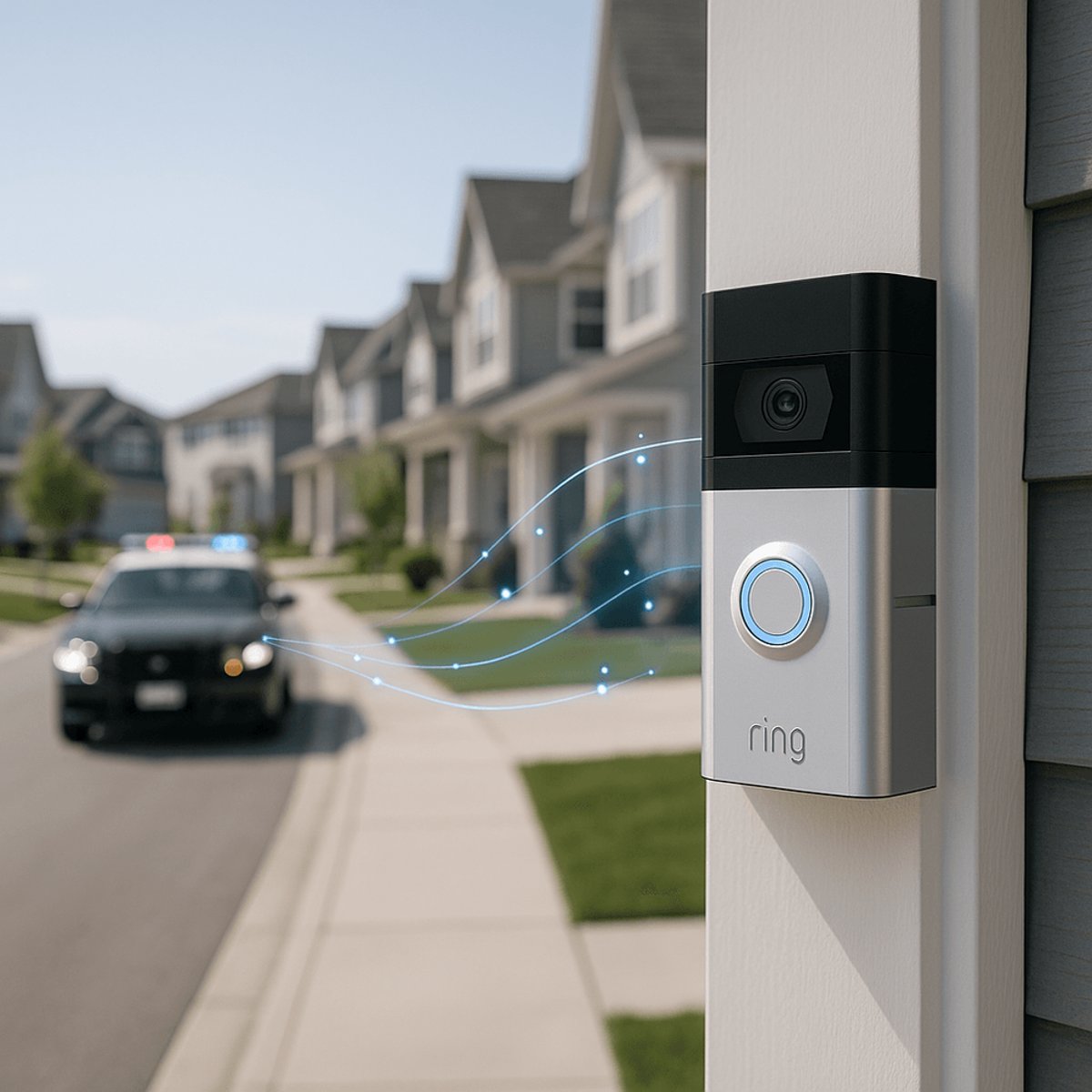
Amazon just deepened its surveillance footprint with a new deal that lets Ring camera owners share footage directly with police through Flock Safety's law enforcement platform. The partnership comes as communities nationwide debate rising crime levels and the role of private surveillance in public safety, with Ring footage now flowing into systems used by 5,000 police agencies.
Amazon Ring cameras are about to become a much bigger part of police investigations. The company's new partnership with surveillance tech firm Flock Safety creates a direct pipeline from millions of doorbell cameras to law enforcement databases, marking Ring's most ambitious push into police work yet.
The deal lets Ring owners voluntarily share footage through Flock's FlockOS platform, which already serves an estimated 6,000 communities and 5,000 law enforcement agencies nationwide. When police need video evidence from a crime scene, they can now ping Ring cameras in the area through what's called Community Requests - and homeowners decide whether to share.
"For me, it is clear and obvious we have a crime problem in America," Flock Safety CEO Garrett Langley told CNBC. "Being able to partner with them will lead to much safer communities, and doing it in a way that allows the public to opt in."
It's Ring's second major law enforcement partnership in recent months, following a similar deal with Axon Enterprise, the taser and body camera company. Both deals represent a strategic shift for Amazon's home security division, which has faced years of privacy criticism and regulatory scrutiny.
The timing couldn't be more politically charged. A recent AP poll found two-thirds of Americans consider crime a major problem, with that number jumping to 81% in cities. Tech CEOs and political leaders are increasingly calling for aggressive law enforcement measures, creating a receptive environment for surveillance partnerships.
But this isn't Ring's first rodeo with police collaboration. The company shuttered its previous Ring Request for Assistance program in 2024 after it was used by at least 2,500 police agencies, according to Consumer Reports. Privacy advocates had criticized that system for lacking proper security controls.
Langley insists the new system is different. "RFA was inside the Ring data app. There was no chain of custody," he explained. "In this case, while the request goes out in the Ring app, any footage shared by users goes into the Flock platform, which is fully secure."
The numbers behind the partnership are staggering. Politico estimated 10 million Americans own Ring cameras, creating a massive potential surveillance network. Flock Safety already supports law enforcement in making close to one million arrests annually, and "this will help that number go up," Langley said.
For Flock Safety, which ranked No. 7 on CNBC's 2025 Disruptor 50 list, the partnership represents pure user acquisition. The company isn't monetizing the Ring integration directly, instead betting it will drive adoption of core surveillance products among its law enforcement customers.
Privacy advocates aren't buying the improved security claims. "What companies like Flock and Ring fail to acknowledge is that their technology doesn't make people safer, it just subjects them to a round-the-clock warrantless digital dragnet," said Electronic Frontier Foundation attorney Jennifer Pinsof. "That's an affront to our freedoms, and a recipe for abuse."
The criticism hasn't hurt investor sentiment. Axon's stock has surged 500% over five years and 50% this year alone, signaling Wall Street's confidence in the law enforcement technology market. Even as some communities cancel Flock contracts amid privacy debates, others are expanding partnerships.
Langley frames the debate in stark political terms. "We tried the social experiment of being soft on crime and it didn't end well," he said, suggesting political momentum favors expanded surveillance.
The rollout timeline remains fluid, with Flock Safety describing launch as "imminent" across its platform. Once active, the system will give police a streamlined way to request footage without door-to-door canvassing - while giving homeowners more control over when and how they share video evidence.
The Ring-Flock partnership signals a new era where private home security seamlessly integrates with police investigations, potentially transforming how crimes are solved while raising fundamental questions about privacy and surveillance overreach. As millions more doorbell cameras come online and political pressure for crime solutions intensifies, this model could become the template for law enforcement nationwide - making every Ring owner a potential witness in their neighbor's case.