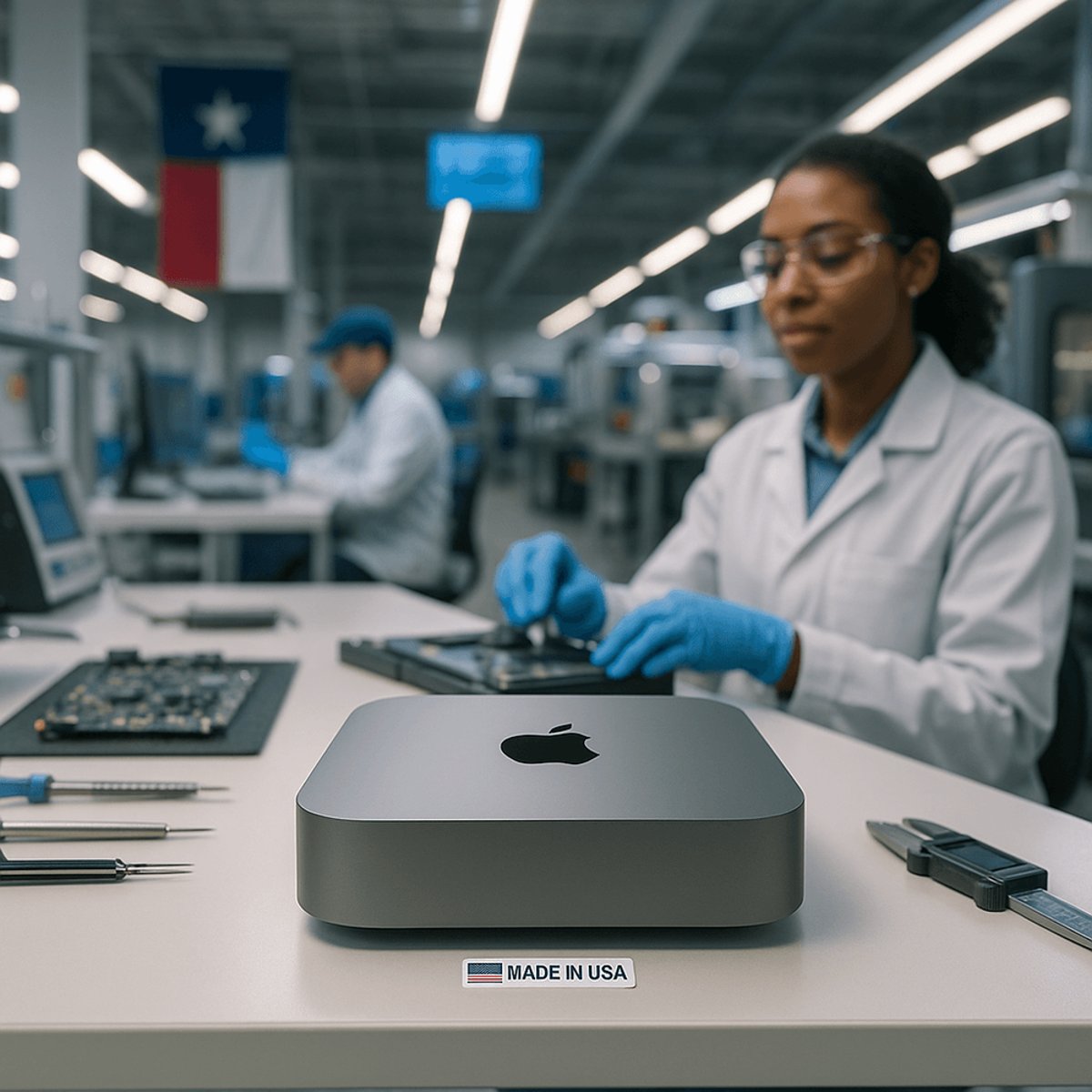
Apple just made a major supply chain shift that could reshape American tech manufacturing. The company announced it's expanding factory operations in Houston, Texas, to produce the Mac mini domestically for the first time in the product's history. The move signals Apple's growing commitment to U.S.-based manufacturing amid ongoing global supply chain pressures and potential trade policy shifts.
Apple is bringing Mac mini production home. The Cupertino giant announced today it's significantly expanding its Houston, Texas manufacturing footprint to produce the compact desktop computer domestically - a first for the product line that's been manufactured overseas since its 2005 debut.
The announcement, made through Apple's official newsroom, represents a notable shift in the company's supply chain strategy. While Apple has assembled Mac Pro units in Austin, Texas since 2019, the Mac mini represents a higher-volume product that serves both consumers and enterprise customers.
The timing isn't coincidental. Tech manufacturers have spent the past few years rethinking their Asia-heavy supply chains after pandemic disruptions exposed vulnerabilities. Apple has been gradually diversifying production - adding manufacturing in India and Vietnam for iPhones while maintaining its massive Chinese manufacturing base. But domestic U.S. production of a mainstream Mac product marks a different kind of commitment.
Houston's selection as the production site makes strategic sense. Texas has positioned itself as a tech manufacturing hub, offering tax incentives and a business-friendly regulatory environment. The state already hosts Apple operations, along with major facilities from Samsung, Tesla, and others. The existing tech ecosystem provides access to skilled workers and supply chain partners.
The Mac mini itself has become increasingly important to Apple's lineup. The latest models, powered by Apple's M-series chips, deliver impressive performance in a compact form factor that appeals to creative professionals, developers, and businesses looking for space-efficient computing power. Moving production stateside could potentially reduce shipping times and costs for U.S. customers while giving Apple more direct control over quality and production schedules.
What remains unclear is the scale and timeline. Apple's announcement doesn't specify when Houston-made Mac minis will start shipping, how many units the facility will produce annually, or whether this represents a complete shift of Mac mini production or a partial onshoring effort. The company also hasn't disclosed investment figures or job creation numbers, though expansion of this type typically involves hundreds of millions in capital expenditure and hundreds of new positions.
The broader implications extend beyond one product line. If Apple can successfully manufacture the Mac mini domestically at competitive costs, it could pave the way for other products to follow. The company's in-house silicon design - the M-series chips that replaced Intel processors - gives Apple more flexibility in manufacturing decisions since it controls the entire technology stack.
But challenges remain significant. U.S. labor costs run substantially higher than in Asia, and the domestic supply chain for components like displays, batteries, and specialized connectors remains underdeveloped. Apple will likely need to balance domestic final assembly with imported components, at least initially.
Competitors are watching closely. Microsoft has explored domestic manufacturing for Surface devices, while Google has discussed U.S. production for Pixel phones. If Apple demonstrates a viable model for profitable domestic tech manufacturing, others may accelerate their own reshoring plans.
The announcement also carries political weight. U.S. policymakers have pushed for years to revive domestic tech manufacturing, viewing it as both an economic opportunity and a national security priority. Apple's move - whether driven by business logic, political pressure, or both - provides a high-profile example that could influence policy discussions around manufacturing incentives and trade.
For Houston specifically, landing expanded Apple production represents a significant win in the city's efforts to diversify beyond its energy industry roots. The facility could anchor a broader tech manufacturing ecosystem, attracting suppliers and partners who want proximity to Apple's operations.
Apple's Houston expansion represents more than just one product's manufacturing shift - it's a test case for whether high-volume tech production can succeed in the U.S. If the Mac mini gambit works, expect the trickle of reshored manufacturing to become a flood. The Houston facility could prove that American tech manufacturing isn't just politically appealing but economically viable, potentially reshaping where and how consumer electronics get made for years to come. For now, the industry is watching to see if Apple can pull off what others have struggled to achieve: making 'Made in USA' work at scale.