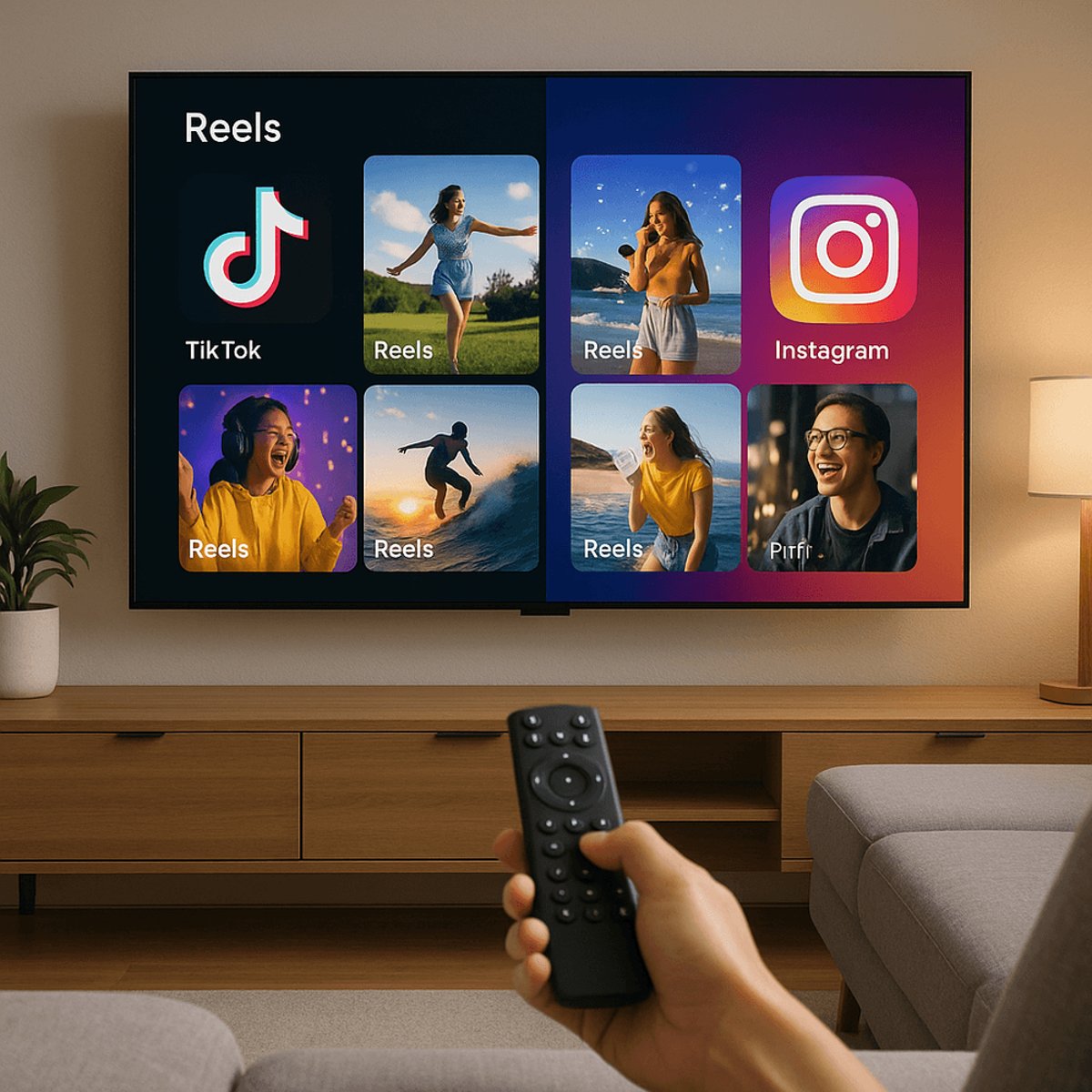
Meta is making its biggest play yet for the living room screen. The company just launched a dedicated Instagram app for Google TV devices, bringing Reels directly to televisions in what looks like a clear shot at YouTube's dominance in the TV streaming space. The move signals Meta's determination to compete wherever video consumption happens, even if that means partnering with Google's platform to challenge Google's own video empire.
Instagram is coming to your TV, and that changes the competitive dynamics in a space YouTube has owned for years. Meta quietly rolled out a native Instagram app for Google TV devices, letting users scroll through Reels on their living room screens for the first time. It's an unexpected alliance - Meta using Google's TV platform to compete with Google's video juggernaut - but it reveals just how critical the TV battleground has become.
The timing isn't random. YouTube has been absolutely crushing it on television sets, capturing more TV viewing time than Netflix in some markets. According to Nielsen data, YouTube accounted for nearly 10% of all TV viewing in the U.S. last year, while traditional streaming services scrambled to keep pace. Meta watched that happen from the sidelines, with Instagram locked inside smartphones while competitors claimed the biggest screen in every home.
Bringing Reels to TVs flips the script on what short-form video can be. Instagram built its video empire on vertical, mobile-first content that people scroll through during commutes and coffee breaks. Now Meta is betting that same content works in horizontal, lean-back mode on 65-inch screens. It's a risky translation - what captivates someone holding their phone might feel awkward blown up on a wall-mounted display.
But Meta has been testing the waters for this moment. The company already lets creators upload horizontal video to Reels, and Instagram's algorithm has been pushing longer-form content over the past year. TikTok made similar moves with its TV app experiments, though those never gained serious traction beyond curiosity installs. The difference here is Meta's scale and its willingness to integrate Instagram deeply into connected TV ecosystems.
Google finds itself in an interesting position. Its Google TV platform benefits from having Instagram's massive user base and content library available to device owners. More apps mean more reasons to buy Google TV hardware or smart TVs running the platform. Yet every minute someone spends watching Reels on their TV is potentially a minute not spent watching YouTube. Google's left hand is helping Meta's right hand compete with Google's crown jewel.
The app launch solves a problem Meta created for itself by ignoring TVs for so long. While YouTube built robust TV apps and Netflix optimized for the lean-back experience, Instagram stayed stubbornly mobile. That made sense when smartphones were the growth frontier, but now with mobile usage plateauing and TV streaming exploding, Meta needs to be everywhere video happens. Creators have been asking for this - they want their Reels content accessible on every screen where audiences gather.
What makes this launch particularly notable is how it extends Meta's competition with YouTube beyond just TikTok-style shorts. YouTube Shorts grabbed quick attention as Google's answer to Reels, but YouTube's real dominance comes from its stranglehold on TV viewing. By bringing Instagram to Google TV, Meta is finally fighting YouTube on its home turf, even if that turf is technically Google's property.
The rollout appears to be happening without much fanfare - no major press event, no executive quotes, just a quiet appearance in the Google TV app store. That low-key approach might signal Meta is testing the concept before going all-in with marketing. It also suggests this is just the opening move in a broader connected TV strategy that could expand to Roku, Amazon Fire TV, and other platforms.
For advertisers, Instagram on TV opens fascinating possibilities. Video ads that ran only on mobile suddenly have a TV-sized canvas, with all the premium pricing that comes with living room inventory. Meta's been building out its video ad business for years, and TV placement gives those efforts a legitimacy boost. Brands that split budgets between social video and TV advertising might find they can consolidate spending through Instagram's TV app.
Creators will need to think differently about content if TV viewing takes off. Vertical video designed for phone screens doesn't automatically work horizontally on TVs, even if the app handles the conversion. The pacing, text sizing, and visual composition that works for mobile scrolling might need adjustment for viewers sitting 10 feet away from a screen. That could spark a new wave of TV-optimized Reels, creating yet another format variation for creators to master.
Instagram's arrival on Google TV marks the end of Meta's mobile-only era and the beginning of a much more complex battle for attention across every screen. Whether Reels can actually compete with YouTube's TV dominance remains to be seen - the viewing behaviors are different, the content formats need work, and YouTube has a multi-year head start. But Meta is finally in the game, using Google's own platform as a launching pad. The living room just got more crowded, and the real winners might be viewers who suddenly have more short-form video options than they ever wanted on their TVs.