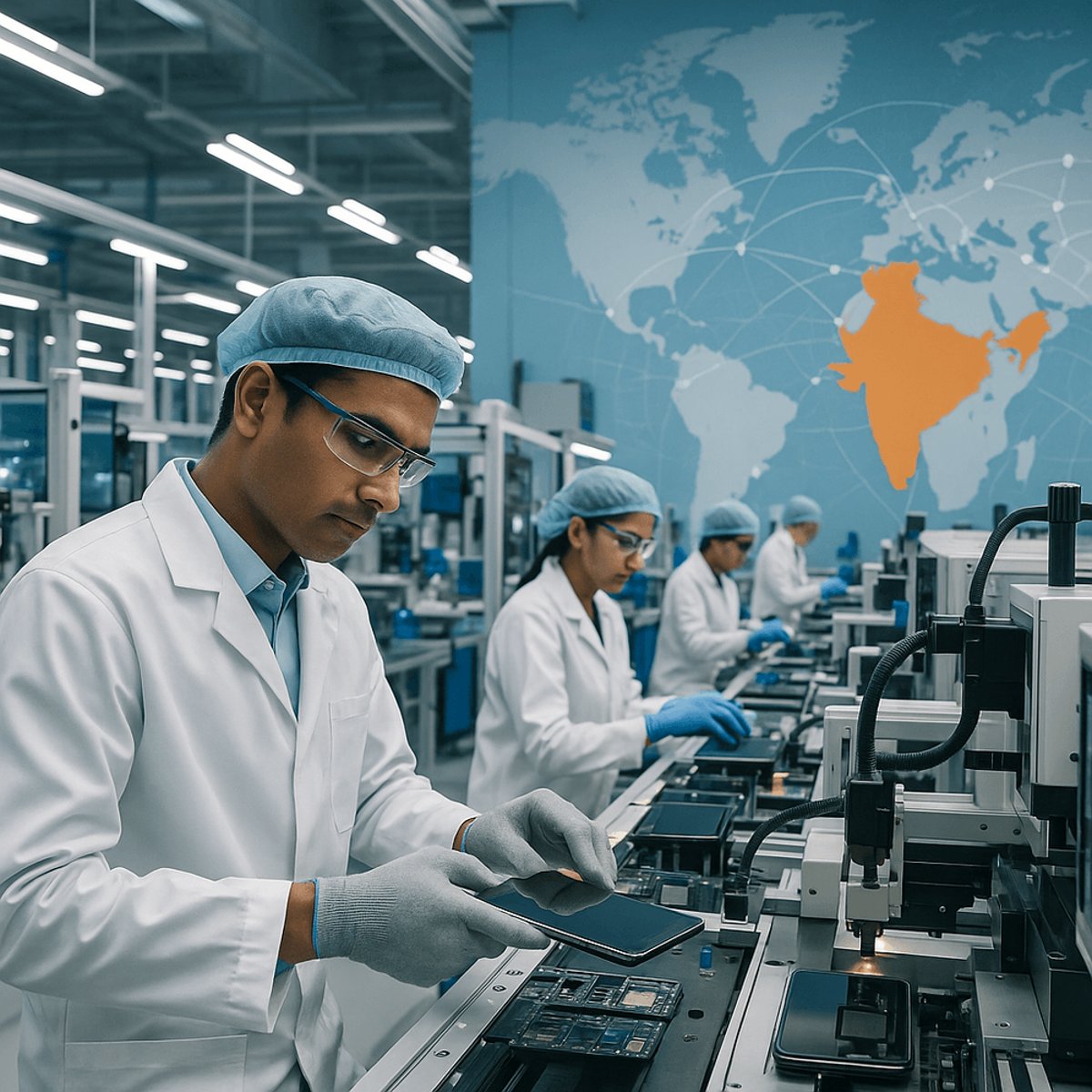
Apple just hit a major manufacturing milestone that signals a dramatic reshuffling of global tech supply chains. The company produced 55 million iPhones in India last year - representing one in every four units worldwide - as it accelerates its pivot away from China amid growing geopolitical and operational uncertainties. The shift marks Apple's most aggressive supply chain diversification move yet, transforming India into a critical manufacturing hub that now rivals traditional production centers.
Apple's bet on India just paid off in a big way. The tech giant produced 55 million iPhones in the country during 2025, crossing the symbolic threshold of 25% of its global manufacturing output, according to a TechCrunch report. It's a stunning acceleration of a strategy that seemed almost impossible just five years ago when India accounted for barely a fraction of iPhone production.
The numbers tell a story of urgency. Apple's been systematically reducing its dependence on China, where political tensions, COVID-related lockdowns, and rising labor costs created a perfect storm of supply chain vulnerabilities. The Cupertino company watched competitors struggle with factory shutdowns and shipping delays, then quietly started moving production capacity to India at a pace that caught even industry watchers off guard.
Apple isn't doing this alone. The company's partnered with contract manufacturers including Foxconn, Pegatron, and Tata Electronics to build out massive production facilities across India. These aren't small operations - we're talking about factories employing tens of thousands of workers, equipped with the same precision manufacturing capabilities that made China the world's factory floor for decades.
The Indian government's production-linked incentive scheme sweetened the deal considerably. Under the program, manufacturers get financial incentives tied to production volumes, making India competitive with established manufacturing hubs. Apple's been one of the biggest beneficiaries, though the company's also investing heavily in training programs and supply chain infrastructure that goes well beyond what government subsidies cover.
What makes this shift remarkable isn't just the scale - it's the speed. Moving iPhone production requires relocating entire ecosystems of suppliers, training thousands of workers to meet Apple's notoriously strict quality standards, and building logistics networks from scratch. The fact that Apple managed to hit 25% production share in India while maintaining its quality reputation and meeting global demand shows serious operational muscle.
The timing couldn't be better for India's ambitions. Prime Minister Modi's "Make in India" initiative has been pushing to transform the country into a global manufacturing powerhouse, and Apple's commitment provides validation that attracts other tech companies. We're already seeing ripple effects - other smartphone makers and electronics manufacturers are expanding their Indian operations, creating a competitive manufacturing cluster.
But challenges remain. India's infrastructure still lags behind China's in critical areas like port efficiency and power reliability. Labor productivity, while improving, hasn't reached Chinese levels yet. And the supplier ecosystem that makes China so attractive - where you can source almost any component within hours - takes years to replicate elsewhere.
The geopolitical implications run deep. Apple's diversification reduces leverage that Chinese officials might have in any future trade disputes. It also gives the U.S. and its allies more options for securing critical technology supply chains outside of potential adversary control. India's growing role as a manufacturing hub could reshape trade relationships across Asia and beyond.
For Apple, the 55 million units represent more than diversification - they're insurance. The company learned painful lessons from supply chain disruptions during the pandemic and isn't interested in repeating them. By building genuine manufacturing alternatives, Apple gains negotiating power with all its production partners and flexibility to shift volumes based on costs, risks, or market access considerations.
The shift also positions Apple to tap into India's massive domestic market more effectively. Manufacturing locally helps the company meet local content requirements, avoid import duties, and price products more competitively for Indian consumers. With India's middle class expanding rapidly, that market access could drive significant future growth.
Competitors are watching closely. Samsung already manufactures extensively in India, but Google and other smartphone makers will face pressure to follow Apple's lead. The message is clear - relying too heavily on any single country for manufacturing creates unacceptable risk in today's geopolitical environment.
Apple's achievement of producing 55 million iPhones in India - a full quarter of its global output - represents more than a supply chain milestone. It's a fundamental restructuring of how the world's most valuable company thinks about manufacturing risk, market access, and geopolitical exposure. The move validates India's emergence as a credible alternative to China for high-end electronics manufacturing while giving Apple the flexibility it needs to navigate an increasingly uncertain global landscape. Other tech giants will need to decide quickly whether to follow Apple's diversification playbook or risk getting caught flat-footed when the next supply chain crisis hits. The question isn't whether competitors will diversify - it's whether they can move fast enough to catch up.