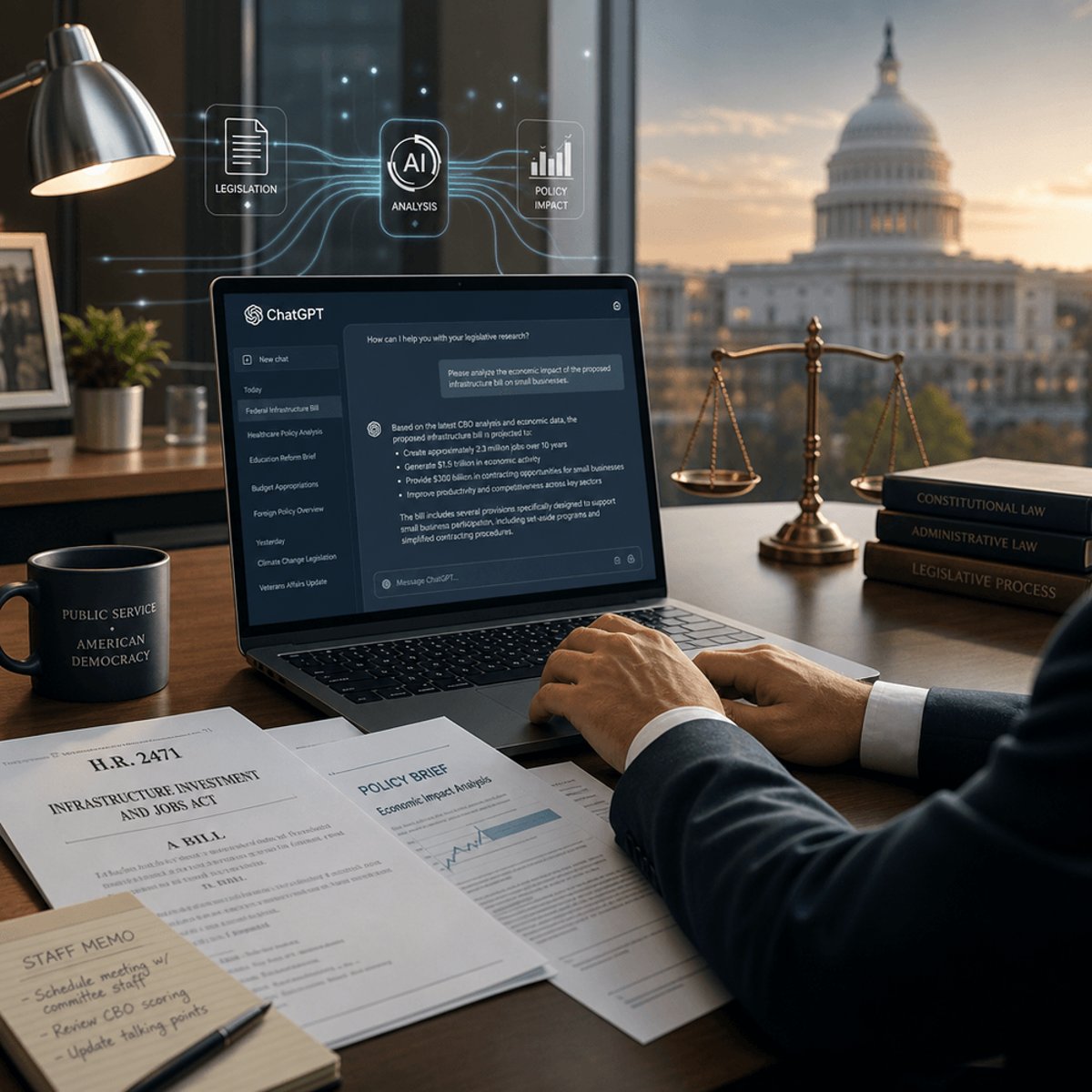
Capitol Hill has made its choice. House spending records reveal that OpenAI's ChatGPT has become the dominant AI tool across congressional offices, where staffers are using the chatbot to draft memos, summarize complex legislation, and handle constituent communications. The disclosure marks a significant win for OpenAI in the government sector and raises fresh questions about AI's expanding role in lawmaking at the highest levels of American democracy.
OpenAI just scored one of its most significant institutional wins yet. House spending records obtained by TechCrunch show that ChatGPT has become the overwhelmingly dominant AI tool among congressional offices, with lawmakers and their staffers turning to the chatbot for everything from drafting internal memos to distilling hundreds of pages of proposed legislation into digestible summaries.
The spending data paints a picture of rapid AI adoption on Capitol Hill. Congressional offices are shelling out for ChatGPT subscriptions at rates that dwarf spending on competing AI platforms, effectively making OpenAI the de facto AI provider for America's legislative branch. It's a remarkable position for a company that launched ChatGPT less than four years ago and now finds its technology embedded in the day-to-day operations of government.
What are staffers actually using ChatGPT for? The applications run deeper than you might expect. Beyond basic memo drafting and legislative summaries, congressional offices are leveraging the chatbot to handle constituent communications - the endless stream of emails, letters, and inquiries that flow into every congressional office. That's a significant use case that suggests AI is moving from experimental tech to essential infrastructure in how elected officials interact with voters.
The spending records don't reveal exact dollar amounts or which specific offices are the heaviest ChatGPT users, but the pattern is clear. When congressional staffers need AI assistance, they're reaching for OpenAI's tool over alternatives from Google, Microsoft, or Anthropic. That brand dominance mirrors ChatGPT's position in the broader market, where it's become virtually synonymous with AI chatbots in the public consciousness.
But the revelation also raises thorny questions about data security, transparency, and the appropriate role of AI in democratic institutions. Congressional offices handle sensitive constituent information and work on legislation that affects millions of Americans. What safeguards are in place when that information flows through a commercial AI system? Are there guidelines about what can and can't be fed into ChatGPT? The spending records don't answer these questions, and it's unclear whether standardized protocols exist across congressional offices.
OpenAI has been making aggressive moves into the enterprise and government sectors, positioning ChatGPT as a productivity tool for organizations beyond just individual consumers. The company offers enterprise versions of ChatGPT with enhanced security features and data privacy controls, though it's not clear from the spending records whether congressional offices are using these specialized versions or standard subscriptions.
The timing is notable. Congress has been grappling with how to regulate AI even as it adopts the technology internally. Multiple committees have held hearings on AI safety, bias, and potential regulatory frameworks. OpenAI CEO Sam Altman testified before the Senate Judiciary Committee in 2023, calling for AI regulation. Now his company's product has become the tool of choice for the very lawmakers considering how to oversee the industry.
Competitors are watching closely. Microsoft, which has invested over $13 billion in OpenAI and integrates ChatGPT into its products, has been pushing its own Copilot AI tools for government and enterprise use. Google is marketing its Gemini AI to organizations, while Anthropic positions its Claude chatbot as a safer, more transparent alternative. But on Capitol Hill at least, OpenAI has already won the battle for mindshare and wallet share.
The adoption pattern mirrors what's happening across corporate America, where ChatGPT has become embedded in workflows from customer service to software development to financial analysis. But the stakes feel different when the institution is Congress. These are the people writing laws about AI governance, antitrust, and data privacy - all while using a tool from one of the industry's dominant players.
What's not captured in the spending records is how effective congressional offices find ChatGPT, or whether there have been any notable errors or mishaps. AI chatbots are known to hallucinate - generating plausible-sounding but incorrect information - which could be particularly problematic when summarizing complex legislation or responding to constituent concerns. There's no public reporting yet of ChatGPT leading a congressional office astray, but the risk is inherent in the technology.
The disclosure also highlights a broader trend of AI becoming infrastructure rather than novelty. Just as congressional offices adopted email, word processing, and digital research tools over past decades, AI chatbots are now being woven into the basic fabric of how legislative work gets done. That normalization is happening faster than most observers expected and with less public debate than such a shift might warrant.
Capitol Hill's embrace of ChatGPT represents more than just a procurement preference - it's a signal that AI has crossed the threshold from experimental technology to essential tool in the machinery of government. As OpenAI embeds itself deeper into congressional workflows, the questions about oversight, security, and appropriate use will only intensify. Congress is simultaneously trying to regulate AI and depending on it for daily operations, a tension that will likely shape both policy debates and procurement decisions in the months ahead. For now, ChatGPT has won the battle for Capitol Hill, but the war over AI's role in democracy is just beginning.