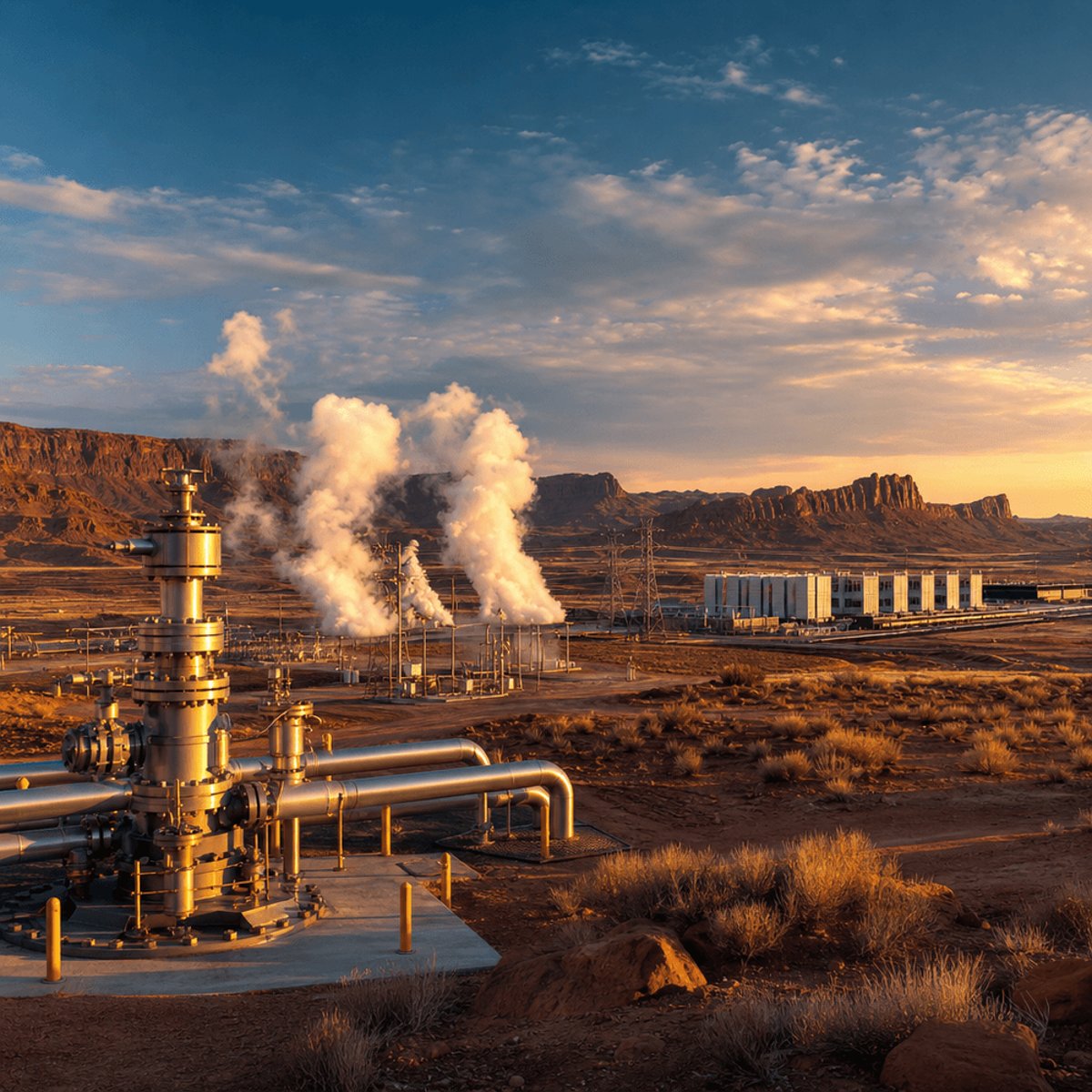
Google just placed a massive bet on rocks. The tech giant has signed a deal with Fervo Energy to buy 400 megawatts of enhanced geothermal power, with an option to scale that up to a full gigawatt, enough to run one of the largest AI data centers on the planet in Utah. It's the clearest signal yet that Big Tech's AI buildout is running headfirst into a power crunch, and that the industry is willing to bankroll unproven energy tech to solve it.
The AI arms race has a new bottleneck, and it isn't chips. It's electricity. Google has struck a deal with geothermal startup Fervo Energy to buy 400 megawatts of power, with the option to expand that commitment to a full gigawatt, enough juice to run one of the biggest AI data centers ever built, according to TechCrunch. The power is destined for a Google data center campus in Utah, a state that's quickly becoming a hotspot for hyperscale AI infrastructure thanks to cheap land, favorable tax policy, and, apparently, promising geology.
This isn't Google's first rodeo with Fervo. The two companies previously partnered on a smaller pilot project in Nevada, a deal that was widely seen at the time as a bet on unproven technology rather than a serious industrial power source. That project, often referred to in industry circles as Project Red, helped prove out Fervo's core technique: borrowing horizontal drilling and fracking methods from the oil and gas industry to unlock geothermal heat in places where traditional geothermal wells wouldn't work. The approach, known as enhanced geothermal systems, essentially lets companies manufacture hot rock reservoirs on demand instead of hunting for naturally occurring ones.
[Image placeholder: Fervo Energy geothermal drilling site]
What's changed since then is scale, and urgency. AI data centers are power hogs unlike anything the grid has dealt with before, with a single large facility now capable of drawing as much electricity as a mid-sized city. That reality has sent tech giants scrambling for any power source that can be built fast and doesn't add carbon to their books. Nuclear, natural gas, solar-plus-storage, and now enhanced geothermal are all getting a fresh look from procurement teams that used to treat energy sourcing as an afterthought.
"We need to bring on new sources of clean, reliable power that can match the pace of AI demand," a Google energy executive said in a statement accompanying the announcement, echoing language the company has used in prior clean energy deals. Fervo, for its part, has leaned into the moment, positioning enhanced geothermal as the rare renewable source that can run around the clock, unlike solar or wind, which depend on weather and daylight. That baseload reliability is exactly what data center operators crave, since AI training and inference workloads don't pause when the sun goes down.
The scale of this deal is what sets it apart. Four hundred megawatts is already a serious industrial commitment, roughly comparable to a mid-sized natural gas plant. But the option to push that to a full gigawatt signals Google isn't just dabbling anymore. It's treating Fervo as a long-term infrastructure partner, not a science experiment. For a company that just a few years ago was Fervo's proof-of-concept customer, that's a meaningful vote of confidence.
It also puts pressure on rivals. Microsoft and Amazon have both been chasing alternative power sources for their own AI buildouts, from small modular nuclear reactors to direct deals with utilities. If Google's geothermal bet pays off in Utah, expect competitors to start knocking on Fervo's door too, or on the doors of the handful of other enhanced geothermal startups racing to commercialize the technology.
There are real risks here. Enhanced geothermal is still young at industrial scale, and drilling costs, well performance, and long-term reliability haven't been tested at anywhere near a gigawatt. Fervo has moved fast, but so has the AI industry's appetite for power, and there's a real question of whether the technology can scale as quickly as the data centers it's meant to feed.
Still, the deal fits neatly into a broader pattern the industry has been watching for the past year: AI companies increasingly acting like utilities themselves, signing decade-long power contracts and even co-investing in generation capacity just to keep their compute pipelines fed. Utah, once a quiet outpost for data centers, is quickly turning into a proving ground for that strategy. What happens at this site over the next few years could determine whether enhanced geothermal becomes a mainstream pillar of AI infrastructure, or just another ambitious bet that didn't scale fast enough.
For readers tracking the AI infrastructure boom, this deal is a preview of what's coming: massive, unconventional power contracts becoming as routine as GPU purchase orders. Google's willingness to scale its Fervo commitment to a full gigawatt shows just how seriously hyperscalers are taking the looming power shortage, and how open they've become to betting on technology that was considered experimental just a few years ago. Whether enhanced geothermal can actually deliver at that scale remains an open question, but if it works in Utah, it won't stay a niche solution for long.