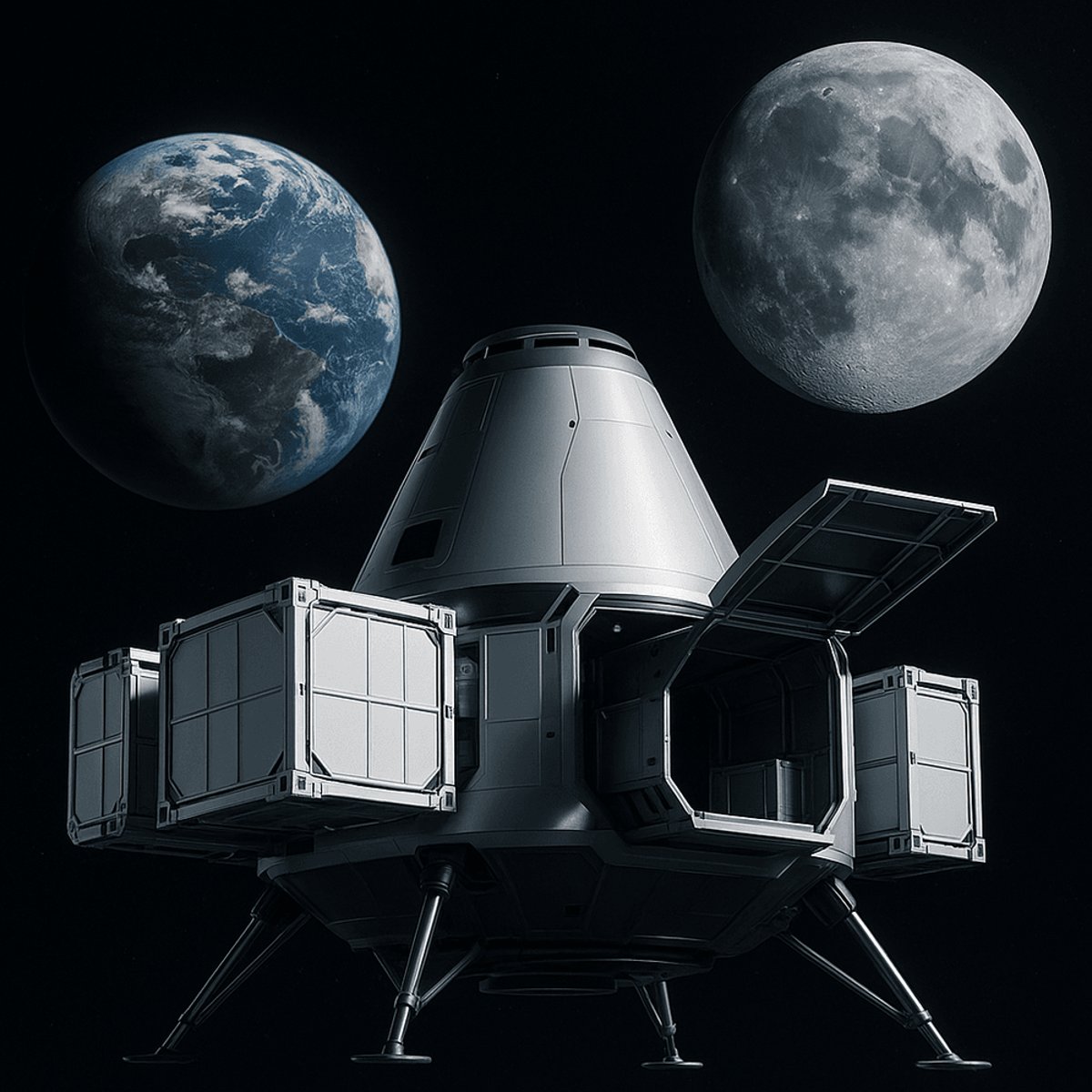
Impulse Space just unveiled plans to haul up to 6 tons of cargo to the lunar surface starting in 2028, positioning itself to capture a critical gap in the emerging moon economy. The startup, founded by former SpaceX propulsion chief Tom Mueller, believes there's massive untapped demand for medium-sized deliveries that current lunar logistics can't handle.
Impulse Space is betting big on a lunar cargo rush that hasn't quite materialized yet. The Los Angeles-based startup detailed Tuesday how it plans to use a custom lunar lander paired with its high-energy "Helios" kick stage to move serious tonnage to the moon without the complexity of orbital refueling that's tripped up other players.
The numbers tell the story of an ambitious timeline. Impulse Space wants to deliver up to 6 tons across two missions by 2028, targeting what founder Tom Mueller calls a "critical gap" in lunar logistics. Mueller should know - he spent years as SpaceX's propulsion chief before launching Impulse in 2021.
That gap sits between NASA's Commercial Lunar Payload Services program, which handles smaller payloads, and the massive human-rated landers being developed by SpaceX and Blue Origin. According to Impulse Space, payloads in the 0.5 to 13-ton range - think rovers, habitat modules, power generators, or lunar terrain vehicles - don't have reliable delivery options.
The technical approach reflects Mueller's engine expertise. Under the proposed architecture, the lander and Helios kick stage launch together on a standard rocket, deploy in low Earth orbit, then Helios transports the lander to lunar orbit within seven days. The vehicles separate, and the lander handles the final descent to the surface.
Impulse Space is already developing the lunar lander engine using the same fuel combination as the Saiph thrusters on its Mira spacecraft. Meanwhile, Helios is "already well into development" with first flight scheduled for late 2026. The company estimates it'll be flying Helios multiple times per year by 2028.
But execution risks are real. As Impulse Space acknowledges, lunar lander engines need to be throttleable, restartable, and deliver high specific impulse for precise control in space's vacuum. The company seemed to hedge its bets in Tuesday's announcement, saying it stands "ready to execute as dictated by industry demand and interest."
The lunar economy remains largely theoretical despite years of hype. NASA's Artemis program has faced delays, and commercial lunar ventures have struggled to gain traction. Intuitive Machines successfully landed on the moon in February 2024, but the broader commercial lunar market hasn't exploded as many predicted.
Still, Impulse Space's timing might be right. The company's focus on mid-sized deliveries could capture demand as lunar operations scale up. If successful, it would establish an entirely new lunar delivery schedule and potentially unlock markets that current small-payload services can't address.
The startup faces competition from established players like Rocket Lab, which is developing its own lunar capabilities, and newer entrants targeting similar payload ranges. But Mueller's propulsion pedigree and Impulse Space's specific focus on the mid-size market could give it an edge.
Impulse Space is making a calculated bet that the lunar economy will need medium-sized cargo services by 2028. While the market remains unproven, the company's technical approach and Mueller's propulsion expertise position it to capture demand if commercial lunar operations finally take off. Success would establish a new category of lunar logistics, but execution risks and uncertain market timing make this a high-stakes gamble on the moon's commercial future.