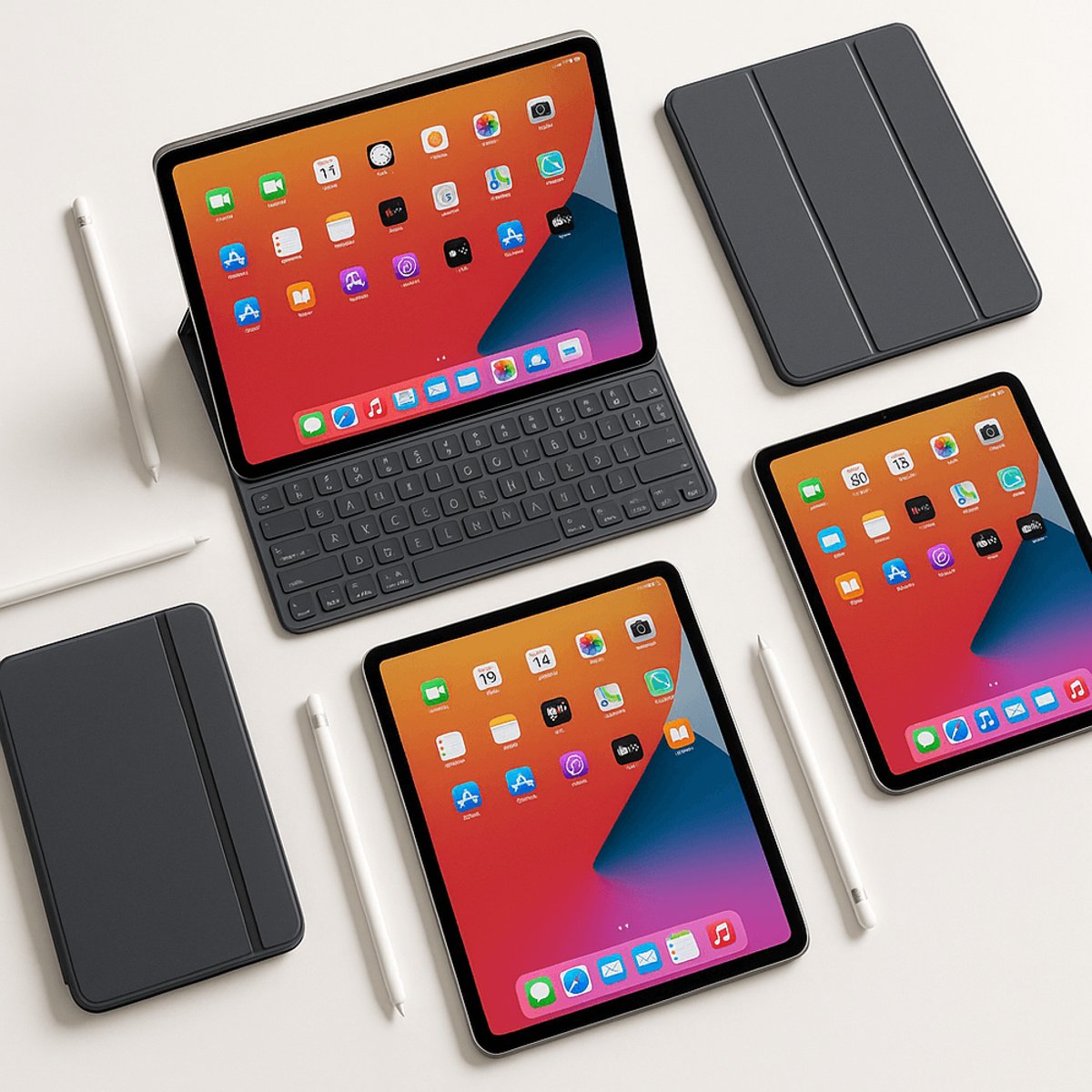
Wired just updated its comprehensive iPad buyer's guide for 2025, breaking down Apple's entire tablet lineup to help consumers navigate the company's increasingly complex product matrix. The guide highlights which models deliver the best value and which ones to skip, addressing the confusion created by Apple's four different Apple Pencil variants and overlapping iPad generations.
Wired just published its definitive iPad buying guide for 2025, and it reveals just how complicated Apple's tablet strategy has become. What started as a simple product line now spans multiple generations with confusing compatibility matrices that even tech-savvy consumers struggle to navigate.
The most glaring example? Apple now sells four different Apple Pencil models simultaneously, each with different price points and iPad compatibility. The original Lightning-connector Pencil still sells for $99, while the newer USB-C version drops to $70 but sacrifices pressure sensitivity. The discontinued second-generation model at $129 works with older iPad Pros, but the new $99 Pencil Pro only supports the latest iPad Air and Pro models.
"It's only compatible with the iPad Air (M2 and M3), iPad Pro (M4 and M5), and 7th-gen iPad Mini," Wired's Julian Chokkattu notes about the Pencil Pro. "C'mon, why isn't it backward-compatible?"
This fragmentation reflects Apple's broader challenge in managing a product line that's evolved from a single device into a complex ecosystem. The company discontinued the second-generation Apple Pencil, forcing users with older iPad Pros to either stick with aging hardware or upgrade their entire setup.
Wired's guide goes beyond just iPads, testing everything from the $50 Zugu Case ("our favorite folio case") to the $260 Logitech Combo Touch keyboard. The publication's hands-on approach reveals practical insights that spec sheets miss - like how the Satechi M1 Wireless Mouse lasted four months on a single charge during testing.
The accessories landscape tells its own story about Apple's ecosystem strategy. Third-party manufacturers like Logitech, Twelve South, and Paperlike have built entire product lines around iPad compatibility, creating a secondary market that often delivers better value than Apple's own accessories.
Particularly telling is Wired's praise for the Mageasy CoverBuddy Case, which solves a problem Apple created by allowing users to keep their case on while connecting to the Magic Keyboard. "This case allows you to magnetically connect it to Apple's Magic Keyboard case without having to take off the case each time," the review explains.
The guide also highlights how Apple's port strategy continues evolving. The $30 Twelve South StayGo Mini USB-C Hub addresses the iPad's limited connectivity, offering HDMI, USB-A, and passthrough charging - functionality that was standard on laptops a decade ago.
For creative professionals, the Apple Pencil confusion creates real workflow challenges. Artists need pressure sensitivity (ruling out the USB-C model), while note-takers might prefer the cheaper USB-C version. But compatibility matrices mean your iPad choice determines your Pencil options, not the other way around.
Wired's testing methodology reveals the publication's commitment to real-world usage. Reviewers actually used accessories for months, discovering that the Logitech K380 keyboard's AAA batteries lasted four months and that the Casetify screen protector is "mostly fingerprint-resistant" despite marketing claims.
The guide's "Great iPad Accessories" section reads like a roadmap for maximizing productivity on Apple's tablets. From the $120 Magic Trackpad for gesture control to the $80 HoverBar Duo 2.0 for flexible mounting, third-party manufacturers are solving problems Apple hasn't addressed.
What emerges from Wired's exhaustive testing is a picture of Apple's iPad strategy in transition. The company's pursuit of thinner, more powerful tablets has created compatibility gaps that force consumers into upgrade cycles or compromise on features they actually need.
Wired's 2025 iPad guide reveals both the promise and complexity of Apple's tablet ecosystem. While the hardware continues advancing with M-series chips and improved displays, the multiplication of models and accessories creates decision fatigue for consumers. The four Apple Pencil variants alone demonstrate how Apple's pursuit of product segmentation can confuse rather than clarify purchasing decisions. For buyers navigating this landscape, Wired's real-world testing provides valuable guidance in an increasingly fragmented market.