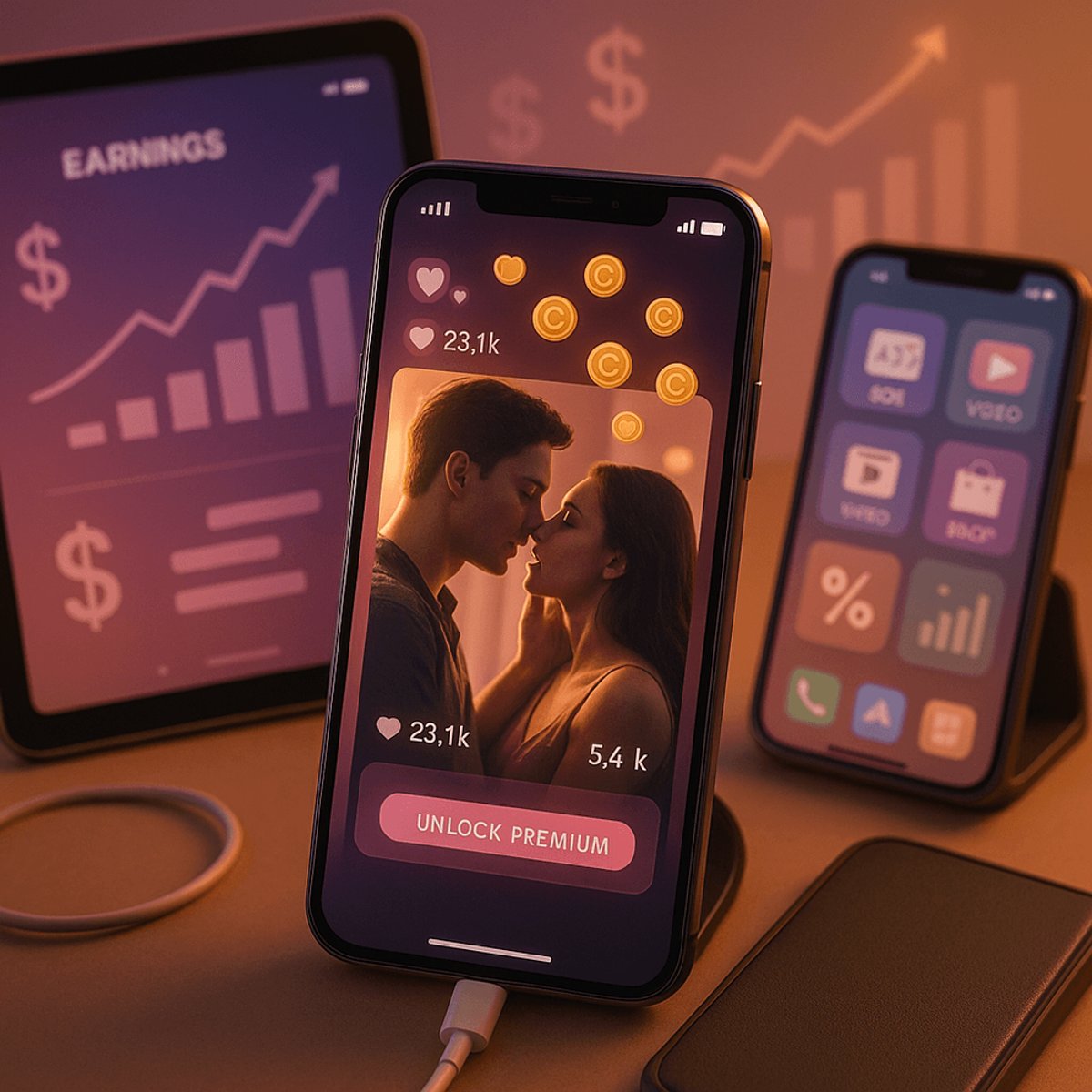
The shows are terrible, but the money is real. Microdrama apps - TikTok-style platforms serving up minute-long episodes of pulpy romance and drama - just pulled in over $1.5 billion in consumer spending last year, and the market's exploding. ReelShort hit $1.2 billion in gross revenue in 2025, up 119% year-over-year, while DramaBox doubled its 2024 numbers to reach $276 million. Now TikTok's jumped in with its own microdrama app, and Hollywood's taking notice with fresh funding rounds.
Five years after Quibi's spectacular $1.75 billion flameout, vertical video drama is printing money - just not the way Hollywood expected. ReelShort and DramaBox are minting billions with shows that make soap operas look like prestige TV, and the formula's deceptively simple: hook viewers with pulpy romance, then deploy every addictive monetization trick from the mobile gaming playbook.
The numbers tell the story. ReelShort pulled in roughly $1.2 billion in gross consumer spending in 2025, up 119% from the previous year, according to app intelligence firm Appfigures. DramaBox followed with $276 million, more than doubling its 2024 revenue. The apps serve up bite-sized episodes - think "college student secretly works at strip club, mysterious teacher finds out" - then gate the good stuff behind tokens, ads, or $20 weekly subscriptions.
TikTok just validated the category by launching PineDrama, its own standalone microdrama app. Meanwhile, GammaTime - a new platform from Hollywood veterans - raised $14 million with backing from Reddit co-founder Alexis Ohanian, Kris Jenner, and Kim Kardashian, Deadline reported. The money's flowing because these apps cracked something Quibi couldn't: they're not trying to be Netflix.
"How are they succeeding where Quibi failed? They're basically OnlyFans for the female gaze," Eric Wei, CEO of Karat Financial and creator economy expert, told TechCrunch. "They do romantasy, where the titles are all like, 'My Alpha.' This is like '50 Shades of Grey,' but for vertical video."
The content quality doesn't matter when the monetization model works this well. These apps borrowed every dark pattern from mobile games - free currency for daily logins, premium choices locked behind paywalls, cliffhangers designed to trigger spending. Users get hooked on free episodes, accumulate tokens that never quite cover the next chapter, then face a choice: watch ads, buy more tokens, or spring for that $20 weekly VIP pass. After a month, that pass costs more than HBO Max, Netflix, Hulu, Disney+, and Paramount Plus combined.
The interactive elements make it worse. Choose the satisfying plot option where the protagonist stands up to her abusive ex? That'll cost tokens. Pick the free option? The ex faces zero consequences and the story drags on. It's engineered frustration designed to extract money.
Quibi raised $1.75 billion, hired Liam Hemsworth and Reese Witherspoon, and tried to sell ten-minute premium episodes to people on the go. It became a punchline. ReelShort serves up shows called "My Sister is the Warlord Queen" and "In Love with a Single Farmer-Daddy" - and it's a hit because it understood the audience and the business model from day one.
Now AI's entering the picture, and it's about to get even more formulaic. Large language models can't write "Succession" or "The Big Bang Theory," but microdramas are so predictable they're basically AI training data. Girl with glasses gets pushed down, jock saves her, he realizes she's pretty without the glasses - these beats practically write themselves.
PocketFM, the Lightspeed-backed audio series platform, already rolled out CoPilot, a tool trained on thousands of hours of content to understand story beats and inject cliffhangers designed to maximize engagement. Ukrainian company Holywater, which raised $22 million for its microdrama app My Drama, calls itself an "AI-first entertainment network."
"Think about it - short-form is a little less overhead than long-form, and vertical is even more overhead," Dhar Mann Studios CEO Sean Atkins told TechCrunch. "I think you'll see a handful of creators start going into that pretty significantly, particularly since they have the experience of low-cost production."
The creator opportunity's real, but so is the business model's darker side. These apps thrive on short attention spans, predatory in-app purchases, and content that feels like "Cocomelon" for adults. The shows are designed to be just engaging enough to trigger spending, but never satisfying enough to make users stop watching.
First popular in China, microdramas are now having their breakout year in the U.S. app market. The format proves that vertical video entertainment works - just not the prestige version Quibi imagined. Instead of competing with streaming services, these apps borrowed from mobile games and romance novels, creating something that's part entertainment, part slot machine.
The microdrama boom proves that vertical video entertainment works - just not the way Hollywood predicted. While Quibi burned through billions trying to create prestige content for mobile, apps like ReelShort and DramaBox succeeded by embracing low-budget production, addictive monetization, and formulaic storytelling. With TikTok entering the space and AI tools making content even cheaper to produce, the category's set for explosive growth. The big question isn't whether microdramas will scale - the $1.5 billion in revenue answers that - but whether the industry can build sustainable entertainment without relying on mobile game dark patterns that turn viewers into spending addicts.