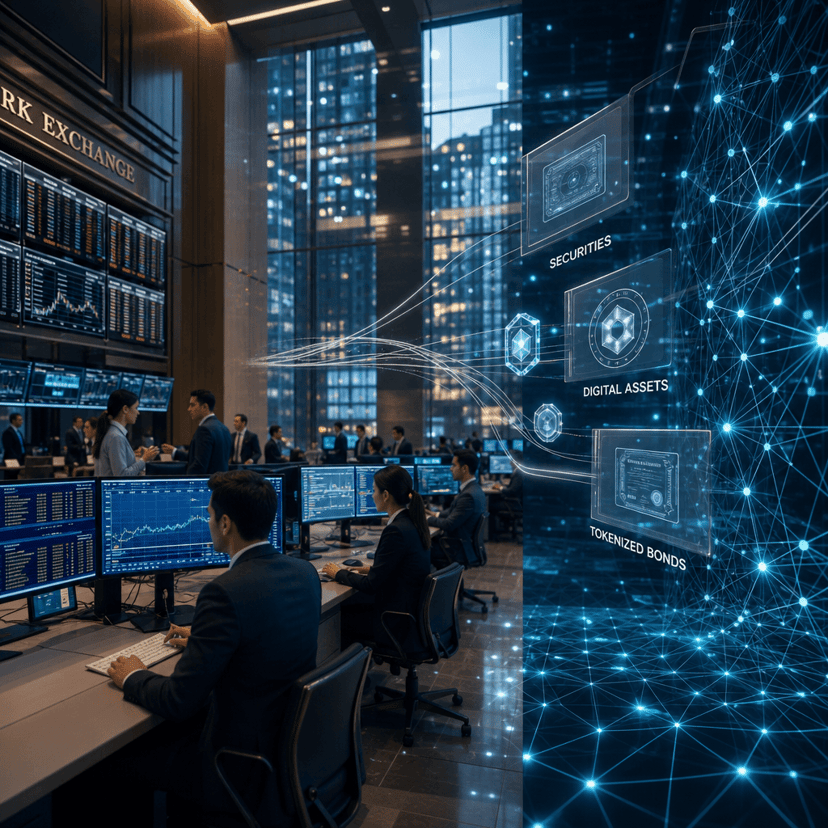
A North Korean IT worker successfully infiltrated a US government agency as a remote employee, the FBI confirmed today in a revelation that exposes critical vulnerabilities in how federal contractors vet remote hires. The case marks the first publicly documented instance of North Korean operatives breaching government systems through the remote workforce, raising urgent questions about screening processes across both public and private sectors as similar infiltrations have hit crypto exchanges and tech companies.
The Federal Bureau of Investigation just confirmed what cybersecurity experts have been warning about for months - North Korean operatives aren't just targeting US systems from afar, they're getting hired to work inside them.
An IT worker tied to North Korea's government successfully secured remote employment with an unidentified US federal agency, according to an FBI investigation reported by TechCrunch. The case represents the first publicly acknowledged breach of a government agency through North Korea's sophisticated remote worker infiltration scheme, a campaign that's been quietly spreading across the tech industry since pandemic-era remote hiring exploded.
The FBI hasn't named the affected agency or disclosed how long the operative worked inside government systems before detection. But the admission alone sends shockwaves through an industry already grappling with supply chain security and insider threats. If North Korean workers can pass federal background checks and security clearances, the implications for private sector hiring are staggering.
This isn't an isolated incident. The investigation reveals North Korean IT workers have successfully embedded themselves across "private organizations and crypto exchanges," according to the FBI's findings. The crypto sector has become a particularly attractive target - these exchanges handle billions in daily transactions and often hire globally distributed teams with minimal in-person verification.
The scheme works because it exploits the fundamental trust model of remote work. North Korean operatives use stolen or fabricated US identities, sometimes employing US-based facilitators who appear on video calls while the actual worker remains overseas. They're not necessarily planting malware on day one. Many perform legitimate IT work while funneling their salaries back to the regime in Pyongyang, generating hard currency that evades international sanctions.
But the access they gain is the real prize. A developer with admin credentials or access to proprietary code repositories can exfiltrate intellectual property, plant backdoors for future exploitation, or map network architecture for later attacks. In the crypto world, that access could mean direct routes to wallet infrastructure or trading systems.
The FBI and Department of Justice have been sounding alarms about this threat since at least May 2024, when they issued advisories warning companies about North Korean IT worker schemes. Those warnings described a systematic campaign to place workers inside Western companies, but stopped short of confirming government agency breaches until now.
Security researchers have tracked these operations for years. The workers often exhibit tell-tale signs - inconsistent time zone activity, reluctance to appear on camera, or communication patterns suggesting multiple people using the same identity. But in a fully remote world where companies hire across continents and never meet employees face-to-face, those red flags are easy to miss or rationalize away.
For crypto exchanges, the threat is particularly acute. Many operate with lean teams, hire aggressively to build out infrastructure, and prize technical skills over traditional employment verification. That's created an opening that North Korean operatives have exploited ruthlessly. The FBI's confirmation that exchanges have been infiltrated alongside government agencies suggests the problem is both deeper and wider than previously acknowledged.
The timing of this disclosure matters. It comes as federal agencies rush to modernize legacy systems and crypto companies race to build institutional-grade infrastructure. Both sectors are hiring at scale, often for specialized roles where qualified candidates are scarce. That desperation creates opportunity for sophisticated adversaries.
What makes this particularly challenging is that many of these workers are technically competent. They're not sending obviously suspicious emails or making amateur mistakes. They're writing code, managing systems, and blending into remote teams while quietly serving a foreign government's intelligence apparatus.
The FBI investigation doesn't detail how the government worker was ultimately detected, but discovery often comes through secondary indicators - financial transaction monitoring, anomalous network behavior, or tips from other agencies tracking North Korean operations. By that point, the operative may have had access for months or years.
Industry experts say the solution requires rethinking how companies verify remote workers. That means more rigorous identity verification, continuous monitoring rather than one-time background checks, and behavioral analytics to flag anomalous activity patterns. For government contractors, it likely means stricter in-person requirements for certain roles, potentially rolling back some of the flexibility that made remote work attractive.
"This is a wake-up call that remote hiring convenience created national security vulnerabilities," said one former NSA official who requested anonymity to discuss sensitive matters. "We optimized for speed and access to global talent without building in the controls needed to verify who's actually on the other end of that Zoom call."
The FBI's confirmation that North Korean operatives have breached US government agencies through remote hiring isn't just a cybersecurity story - it's a fundamental challenge to how modern organizations staff distributed teams. As companies across tech and crypto continue embracing global remote work, the tension between access to talent and verification of identity has never been sharper. What happens next will likely reshape hiring practices across the industry, forcing a reckoning between the convenience of borderless teams and the security risks of trusting digital identities. For now, every CISO reviewing their remote workforce just got a lot more uncomfortable, and every crypto exchange with globally distributed developers is probably scheduling emergency security reviews.