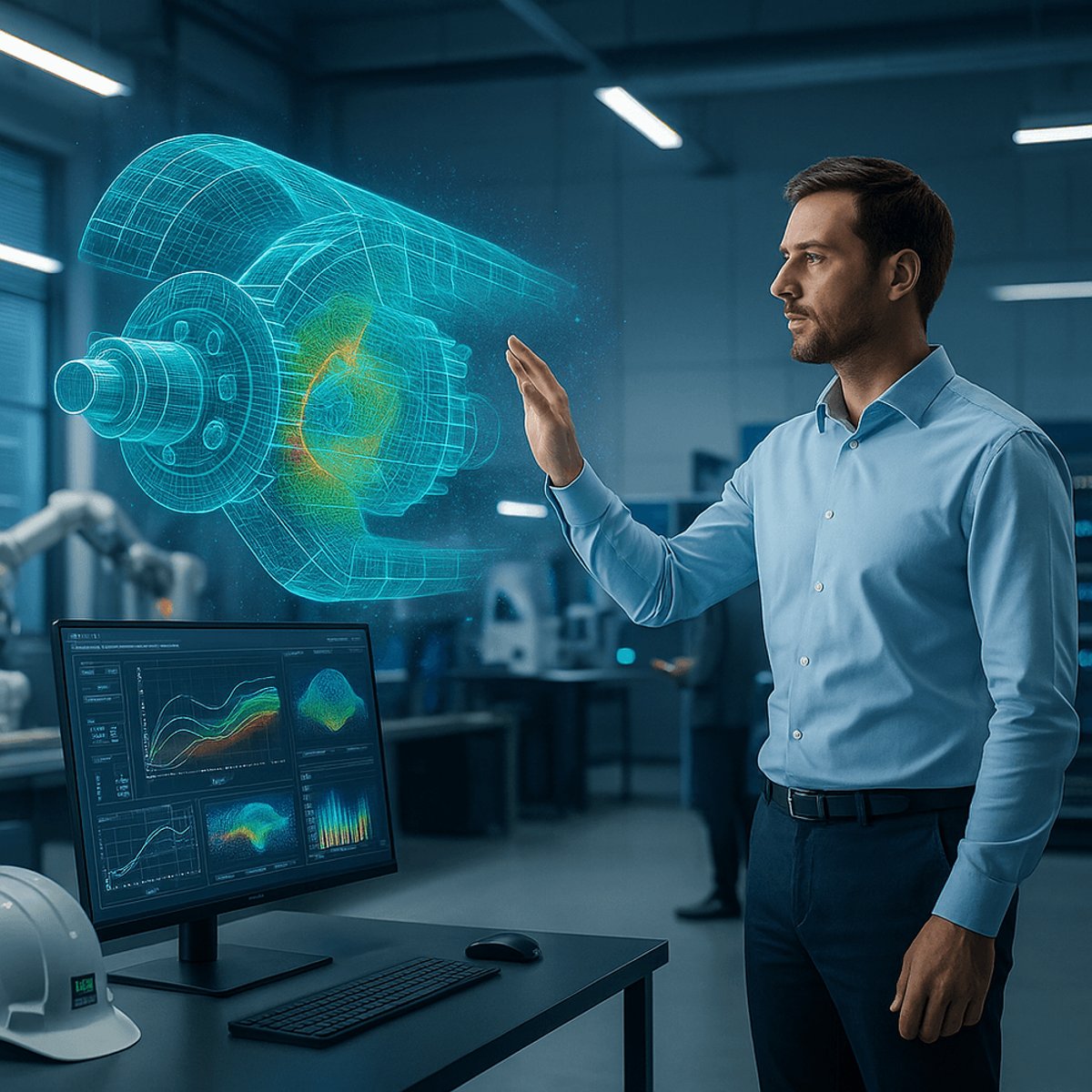
Nvidia is pushing deeper into industrial markets with an expanded vision for its Omniverse platform, positioning digital twins and AI-powered physics simulations as the future of manufacturing. The company's latest move brings accelerated AI infrastructure to factories and design floors, letting engineers test and optimize products virtually before a single prototype gets built. It's a bet that the same GPU technology powering consumer AI can transform how cars, planes, and consumer goods get designed.
Nvidia just opened a new front in the race to commercialize AI infrastructure. The company's Omniverse platform is evolving from a collaboration tool into a full-stack industrial AI system that promises to reshape how products get designed, tested, and manufactured.
The timing isn't accidental. While competitors like Microsoft and Google battle over consumer-facing AI assistants, Nvidia's quietly building the plumbing for what it calls "AI physics" - using machine learning to simulate real-world physics at speeds traditional methods can't match. According to the company's blog post, these digital twins let companies "accelerate and scale the design, simulation and optimization of products, processes and facilities before building in the real world."
The practical implications are massive. An automotive company can now simulate thousands of crash tests in the time it used to take to build one physical prototype. An aerospace manufacturer can model airflow over wing designs without wind tunnels. A consumer electronics firm can stress-test products under extreme conditions without destroying inventory.
This isn't Nvidia's first swing at industrial computing, but it represents a significant evolution. The original Omniverse platform launched as a collaboration environment for 3D design work - think Figma meets Unreal Engine. What's changed is the infusion of AI models trained to understand physics, materials science, and engineering constraints. The result is simulation software that doesn't just render pretty pictures but actually predicts how things will behave in the real world.
The competitive landscape is heating up. Siemens has been pushing digital twin technology for years through its industrial software division. Dassault Systèmes offers similar capabilities through its 3DEXPERIENCE platform. But Nvidia's advantage lies in its GPU dominance - the same chips powering ChatGPT and Stable Diffusion can accelerate physics simulations by orders of magnitude.
The economic argument is compelling. Traditional product development involves expensive physical prototyping cycles. Every iteration requires materials, machining time, and testing. Digital twins collapse that timeline. Instead of waiting weeks for a prototype, engineers get feedback in hours or minutes. The cost savings compound across thousands of design iterations.
But there's a catch. Building accurate digital twins requires enormous amounts of data - CAD models, materials specifications, historical testing data, real-world sensor feeds. Many manufacturers don't have that information digitized, let alone integrated. Nvidia's essentially selling a future where factories are instrumented top to bottom, feeding real-time data into cloud-based simulation engines. That's a multi-year transformation for most companies.
The infrastructure play is classic Nvidia. By positioning its GPUs as essential for industrial AI, the company creates demand beyond the current generative AI boom. When OpenAI training runs slow down or consumer chatbot growth plateaus, manufacturers will still need GPU cycles to optimize their supply chains and product lines.
Wall Street is paying attention. Nvidia's enterprise and industrial segments have been growing faster than consumer gaming in recent quarters, though exact breakdowns remain murky in public filings. The digital twin market itself is projected to hit $73.5 billion by 2027, according to various analyst estimates - a lucrative adjacent market to the AI infrastructure buildout.
What makes this announcement particularly interesting is the timing. Published in mid-March 2026, it arrives as many companies are moving past AI experimentation toward actual deployment. The industrial sector tends to move slower than consumer tech, but once it commits to a platform, switching costs are enormous. Nvidia's racing to become the default choice before competitors establish footholds.
The technical challenges shouldn't be understated. Simulating real-world physics accurately enough to replace physical testing requires models trained on vast datasets. Materials behave differently at different temperatures. Manufacturing processes introduce variations. A digital twin is only as good as its underlying models, and those models need constant refinement as real-world data comes in.
For companies already invested in Nvidia's ecosystem - those running AI workloads on H100 or upcoming Blackwell chips - Omniverse represents a natural expansion. The same infrastructure supporting large language models can power physics simulations. It's infrastructure leverage at scale, which is how Nvidia built its current dominance.
Nvidia's industrial AI push through Omniverse represents a calculated bet that the next wave of GPU demand comes from factories, not chatbots. By embedding its hardware into the product development lifecycle across automotive, aerospace, and consumer goods, the company's building sticky, long-term revenue streams that outlast any single AI trend. The winners will be manufacturers who can afford the upfront digitization costs. The losers might be competitors who waited too long to build comparable simulation capabilities. For Nvidia, it's another way to ensure that whether AI is training models or simulating crash tests, it's happening on their chips.