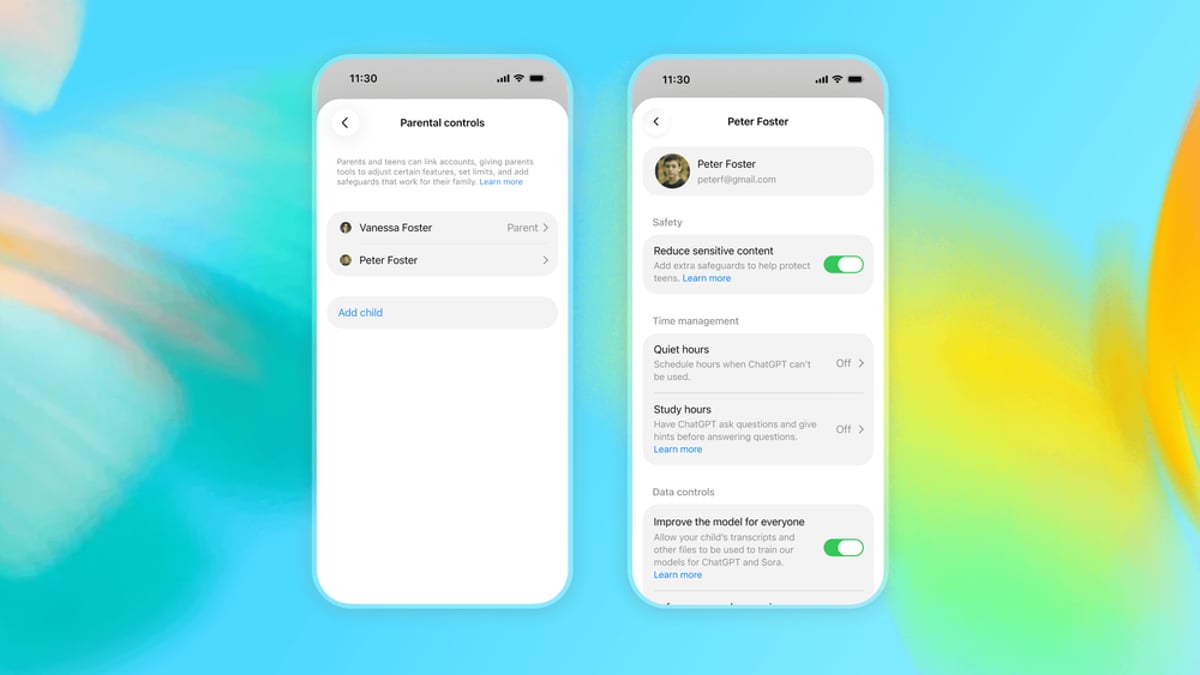
OpenAI just rolled out ChatGPT for Teens, a dedicated mode that bundles youth safeguards and parental controls into one package for users aged 13 to 17. The launch puts OpenAI at the center of a broader industry reckoning over how AI tools impact younger users, as platforms from social media to search engines scramble to implement age verification and teen-specific protections. It's a strategic move that positions the ChatGPT maker as proactive on AI safety while potentially expanding its user base into a demographic it's largely kept at arm's length.
OpenAI is making a calculated bet that controlled access beats outright restriction when it comes to teenagers and AI. The company announced Tuesday it's launching ChatGPT for Teens, a dedicated mode that automatically kicks in for users who identify as 13 to 17 years old, or those the system estimates fall into that age range.
"An experience designed to help teens learn, think critically, deepen understanding, and use AI with confidence," OpenAI said in a blog post published Tuesday. The phrasing is deliberate - OpenAI's framing this as an educational tool, not just a liability management exercise.
The timing isn't coincidental. Tech platforms are facing intense pressure from regulators, parents, and advocacy groups over how digital products affect young users. Social media companies have rolled out teen accounts with restricted features, search engines have tightened content filters, and lawmakers from Brussels to Washington are drafting youth safety legislation. OpenAI's move puts it ahead of that curve, at least optically.
Teen mode automatically applies based on self-reported age during signup, plus whatever age estimation systems OpenAI has built into its platform. The company hasn't disclosed the technical details of how it identifies underage users, but the approach mirrors what Meta and others have implemented - a combination of user input and behavioral signals.
Parental controls sit at the heart of the offering. Parents can monitor usage, set time limits, and review conversation topics, though OpenAI hasn't specified exactly how granular those controls get. The feature set suggests OpenAI studied what worked (and what caused backlash) when social platforms tried similar approaches. Too much surveillance and teens bail. Too little and parents revolt.
Content filtering represents the other major guardrail. ChatGPT for Teens will block or modify responses that veer into inappropriate territory - though defining "inappropriate" for a 13-year-old versus a 17-year-old is where things get messy. OpenAI's presumably built age-specific filters, but the company hasn't shared what gets blocked or how those decisions get made.
The launch marks a strategic shift for OpenAI, which previously set its minimum age at 18 in many markets. Opening the platform to teens means threading a needle: provide useful AI assistance for homework and learning while preventing misuse, all under the watchful eyes of parents, regulators, and critics waiting for the first controversy.
Competitors are watching closely. Google has teen-specific features in some products but hasn't announced a dedicated AI mode for younger users. Microsoft, which has billions invested in OpenAI, could push similar features into Copilot. Anthropic and other AI startups will face questions about their own youth safety approaches.
The regulatory implications extend beyond parental controls. Europe's Digital Services Act and proposed AI Act include provisions for protecting minors online. California's Age-Appropriate Design Code, currently tied up in courts, would require companies to estimate users' ages and apply heightened protections for teens. OpenAI's teen mode looks like insurance against those regulatory futures.
But there's a business angle too. Capturing users early builds long-term loyalty. If ChatGPT becomes the AI assistant teens turn to for homework help, creative projects, and learning, they're likely to stick with it as adults. That's valuable in an AI market where user acquisition costs are climbing and switching between chatbots takes seconds.
The devil's in the implementation. Parents need controls that actually work without being invasive enough to drive teens to alternative platforms. Content filters need to block genuinely harmful material without being so aggressive they make the tool useless for legitimate schoolwork. Age verification needs to be accurate without turning into privacy nightmare.
OpenAI hasn't shared rollout timing beyond "coming soon" or which markets get access first. That suggests the company's still fine-tuning features and possibly coordinating with regulators in key jurisdictions. The announcement plants the flag, but execution will determine whether this becomes industry standard or cautionary tale.
OpenAI's teen mode is a preemptive strike in the coming battles over AI safety and youth protection. By building parental controls and content filters now, the company's positioning itself as responsible while potentially avoiding harsher regulatory mandates later. But the real test isn't the announcement - it's whether the safeguards actually work when millions of teens start pushing against them. If OpenAI gets this right, expect every AI company to clone the playbook. If teen mode becomes a liability magnet or regulatory headache, we might see the industry retreat back to adults-only policies. Either way, this marks the moment AI companies acknowledged they can't ignore the youth market forever.