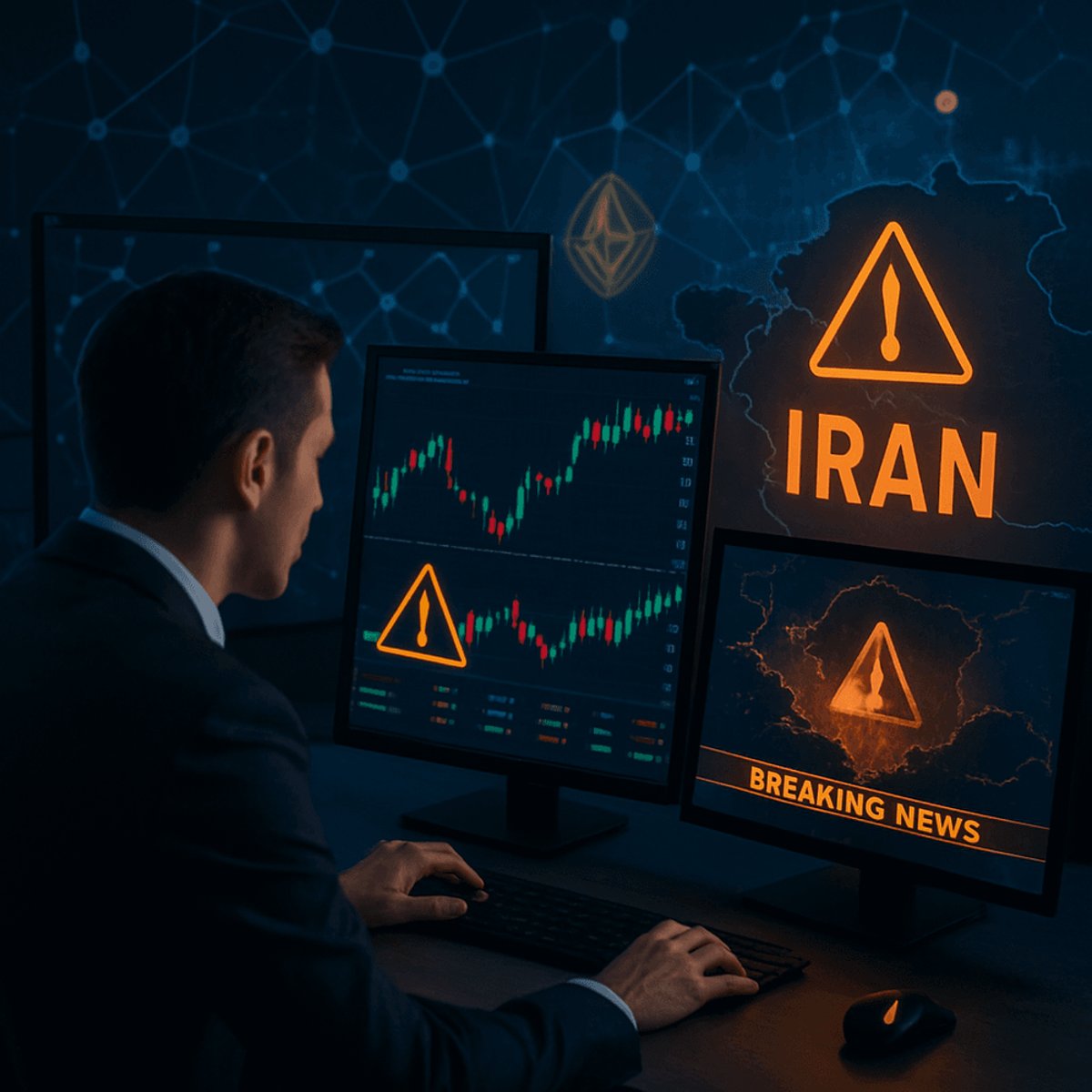
Prediction market platform Polymarket just recorded $529 million in trading volume on markets tied to U.S. military strikes on Iran, raising fresh questions about insider trading on geopolitical events. Six newly-created accounts walked away with $1 million in profits after correctly predicting the strikes would happen by February 28, according to data from TechCrunch. The windfall is reigniting debates about whether betting on warfare crosses ethical lines and whether someone had advance knowledge of military operations.
Polymarket just became the center of a firestorm after logging more than half a billion dollars in bets on whether the United States would bomb Iran. The crypto-based prediction market saw $529 million change hands on markets tied to U.S. military strikes, with six mysterious accounts pocketing $1 million by correctly betting the strikes would happen before the February 28 deadline.
The timing is raising eyebrows across Washington and Silicon Valley. According to TechCrunch, all six winning accounts were created shortly before the bets were placed, a pattern that typically triggers insider trading alarms in traditional financial markets. While Polymarket operates in a regulatory gray zone - it's technically banned for U.S. users but accessible via VPNs - the platform's explosive growth has made it impossible for regulators to ignore.
The $529 million in volume represents one of the largest single-event trading sprees in Polymarket's history, dwarfing even the platform's notorious election betting markets. Polymarket CEO Tarek Mansour has previously defended geopolitical betting as a form of information aggregation, arguing that prediction markets can surface insights that traditional intelligence gathering misses. But critics say betting on military action creates perverse incentives and could encourage leaks of classified information.
This isn't the first time Polymarket has faced scrutiny over suspicious trading patterns. The platform exploded into mainstream consciousness during the 2024 presidential election when it processed over $3 billion in bets, but questions emerged about wash trading and coordinated market manipulation. French authorities are currently investigating whether large traders used the platform to artificially inflate certain outcomes.
The Iran betting frenzy also highlights the growing tension between prediction markets and traditional financial regulators. Kalshi, Polymarket's U.S.-regulated competitor, recently won approval from the Commodity Futures Trading Commission to offer political event contracts, but the agency has drawn a hard line against betting on warfare and assassinations. Kalshi's carefully curated approach stands in stark contrast to Polymarket's anything-goes ethos, where users can create markets on virtually any future event.
The six winning accounts executed their trades with remarkable precision, according to blockchain data reviewed by crypto analytics firms. The accounts deposited funds, placed maximum bets on "yes" outcomes for U.S. strikes by February 28, and withdrew their winnings within hours of the markets settling. The sophistication suggests either incredible luck or access to information that other traders didn't have.
Polymarket operates on the Polygon blockchain, which means every trade is permanently recorded and theoretically traceable. But the platform's pseudo-anonymous nature makes it nearly impossible to determine who's actually behind the accounts. Users only need a crypto wallet to participate, with no KYC verification required. That design choice has made Polymarket a darling of crypto enthusiasts but a nightmare for compliance officers.
The controversy arrives as prediction markets are having their biggest moment yet. Beyond Polymarket and Kalshi, platforms like Augur, PredictIt, and Metaculus are attracting millions in venture funding based on the premise that betting markets produce more accurate forecasts than polls or expert analysis. Proponents point to Polymarket's eerily accurate 2024 election predictions as proof the model works. Skeptics say the Iran situation proves it's a magnet for insider abuse.
The CFTC and SEC haven't commented on the Iran betting specifically, but both agencies have signaled they're watching prediction markets closely. The challenge for regulators is that Polymarket is based offshore and built on decentralized technology, making it nearly impossible to shut down even if they wanted to. The platform processed billions in volume in 2025 despite technically being off-limits to American users.
For Polymarket, the $529 million windfall is both validation and existential threat. The volume proves there's massive demand for prediction markets on high-stakes events. But if regulators or law enforcement determine that classified information leaked into betting markets, the entire industry could face a crackdown that makes the 2010s online poker ban look mild by comparison.
Polymarket's $529 million Iran betting bonanza just turned prediction markets into a national security conversation. If those six accounts had inside information, we're looking at a whole new category of insider trading that current laws weren't designed to handle. The platform proved that decentralized betting markets can process massive volume on world-changing events, but it also showed why regulators are terrified of letting this genie out of the bottle. What happens next will determine whether prediction markets become a legitimate forecasting tool or get strangled in their crib by authorities who can't tell the difference between information aggregation and intelligence leaks. Either way, every trade on Polymarket is now playing out under a microscope.