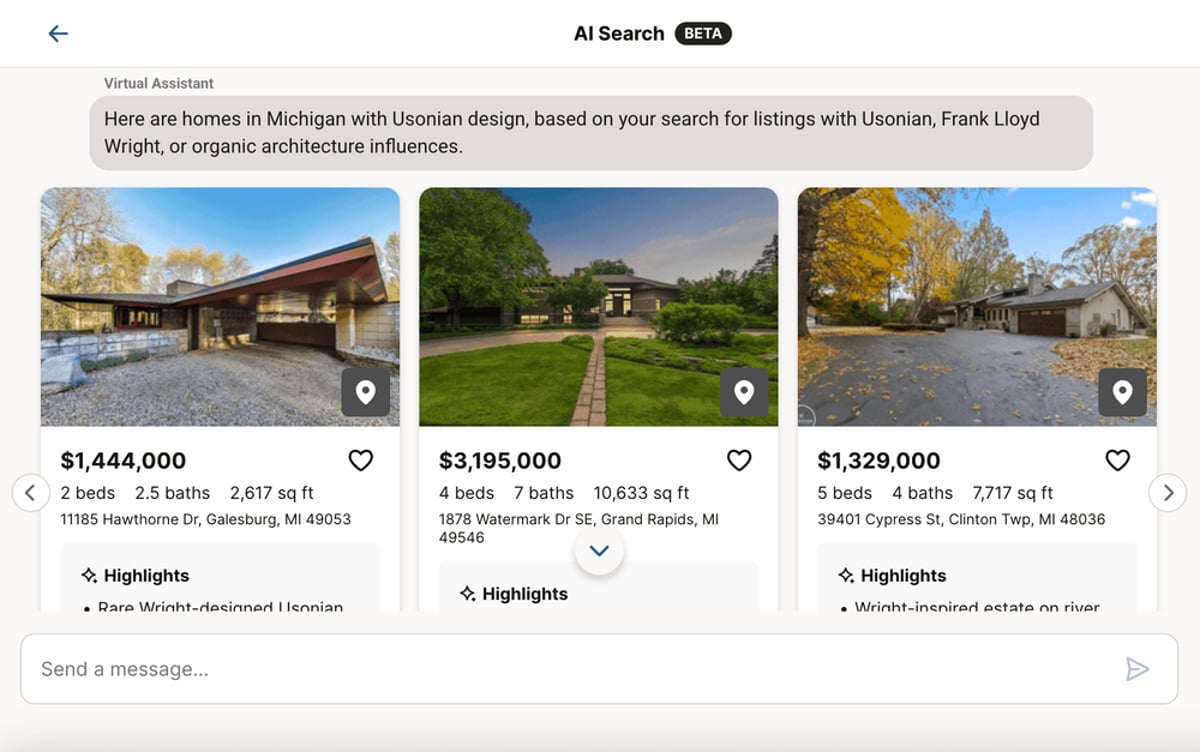
Redfin just launched conversational AI search that's turning heads in the proptech world. Unlike most AI chatbots crammed into apps, this one actually solves a real problem - finding your dream home without wrestling with endless dropdown menus and keyword searches. The feature, currently live on desktop browsers only, lets users describe what they want in plain English and get relevant listings back.
Redfin is betting big on AI where it actually makes sense. The real estate platform quietly rolled out conversational search that's already changing how people hunt for homes - and it's working better than anyone expected.
The feature, spotted by users just weeks after its recent launch, transforms the exhausting process of toggling through dozens of search filters into simple conversations. Instead of manually selecting price ranges, bedroom counts, and neighborhood preferences, users can type "two bedroom house near transit in Seattle under $500k" and get instant, relevant results.
What sets Redfin's approach apart is its semantic understanding. Search for a "tiki bar" and it'll surface properties with tropical themes, even when those exact words don't appear in listings. Ask for homes with "natural wood siding" and it interprets architectural styles beyond literal keyword matching. This contextual intelligence addresses a core frustration in real estate search - the gap between how people describe what they want and how properties are officially categorized.
The AI shows its limits too. It won't help you find "haunted houses" or homes that look like "Pee-Wee's Playhouse," maintaining appropriate guardrails for a platform dealing in major financial transactions. National searches also hit walls - apparently finding a "Polynesian-themed indoor pool" across all 50 states exceeds its current scope.
But within single markets, the results are impressive. The Verge's Allison Johnson discovered a $3 million Bloomfield Hills mansion through AI search that perfectly matched her curved-brick aesthetic preferences. More practically, searches for "modern houses with wood siding in Cincinnati" delivered exactly the architectural style mix she wanted.
This represents a rare win for practical AI integration. Unlike chatbots bolted onto insurance sites or customer service portals, Redfin's AI tackles a genuinely complex information retrieval problem. Traditional real estate search requires users to master platform-specific filter systems and guess which keywords unlock the right inventory. The cognitive load of translating personal preferences into database queries has frustrated buyers for decades.
The timing couldn't be better for Redfin. With mortgage rates keeping many potential buyers on the sidelines, the company needs to retain engagement from "window shoppers" who might convert when conditions improve. AI search turns casual browsing into a stickier experience, potentially capturing more of the lucrative looky-loo market that drives long-term customer acquisition.
Competitors are taking notice. While Zillow has experimented with AI recommendations, Redfin's conversational approach feels more intuitive for how people actually think about home features. The gap highlights different strategic approaches - Zillow's algorithm-driven suggestions versus Redfin's human-like search interface.
The feature's desktop-only availability hints at ongoing development. Mobile optimization would dramatically expand its reach, given that most real estate browsing happens on phones. But the current limitation might reflect processing complexities or user interface challenges that Redfin's engineers are still solving.
Crucially, this AI doesn't threaten human real estate agents. It handles the tedious front-end search process while leaving complex negotiations, paperwork, and relationship management to professionals. That's probably by design - Redfin relies on agent commissions and can't afford to automate away its core business model. The AI becomes a lead generation tool that makes agents more effective rather than replaceable.
Early user feedback suggests the feature works best for buyers with specific but hard-to-filter preferences. Someone wanting a "mid-century ranch backing up to woods" gets better results than traditional search could deliver. But it still struggles with subjective terms like "fully updated," where human and AI definitions diverge.
Redfin's AI search represents something rare in today's tech landscape - artificial intelligence that genuinely improves user experience without overpromising or replacing human expertise. By focusing on the specific pain point of property discovery rather than trying to automate entire transactions, the company has found a sweet spot where AI enhances rather than disrupts. As more platforms rush to add AI features, Redfin's measured approach offers a template for practical AI integration that actually serves users' needs. The real test will be whether this translates into more successful home sales when the market eventually recovers.