Super Micro Computer stock jumped 15% in extended trading Tuesday after the server maker disclosed a new order from SpaceX and revealed improved margin guidance. The move signals growing demand for AI infrastructure as companies race to deploy next-generation data center hardware. The announcement comes as server manufacturers ride a wave of artificial intelligence spending that's reshaping enterprise technology budgets across industries.
Super Micro Computer just gave investors exactly what they wanted to hear. The San Jose-based server maker watched its stock climb 15% in after-hours trading Tuesday following twin announcements that signal the company's growing foothold in the AI infrastructure gold rush.
The catalyst? A newly disclosed order from SpaceX paired with updated margin guidance that suggests Super Micro is finding its footing after a turbulent year. While the company hasn't released specific dollar figures on the SpaceX deal, the market's reaction speaks volumes about investor appetite for AI infrastructure plays.
SpaceX's move into Super Micro hardware reflects a broader trend reshaping enterprise technology. Companies aren't just buying more servers - they're buying fundamentally different machines optimized for the parallel processing demands of large language models and neural networks. These aren't your grandfather's data center boxes.
The timing couldn't be better for Super Micro. Server manufacturers are experiencing what industry analysts call a "once-in-a-decade refresh cycle" as AI workloads force companies to rethink their entire infrastructure stack. Traditional CPU-based servers simply can't handle the computational intensity of training and running modern AI models.
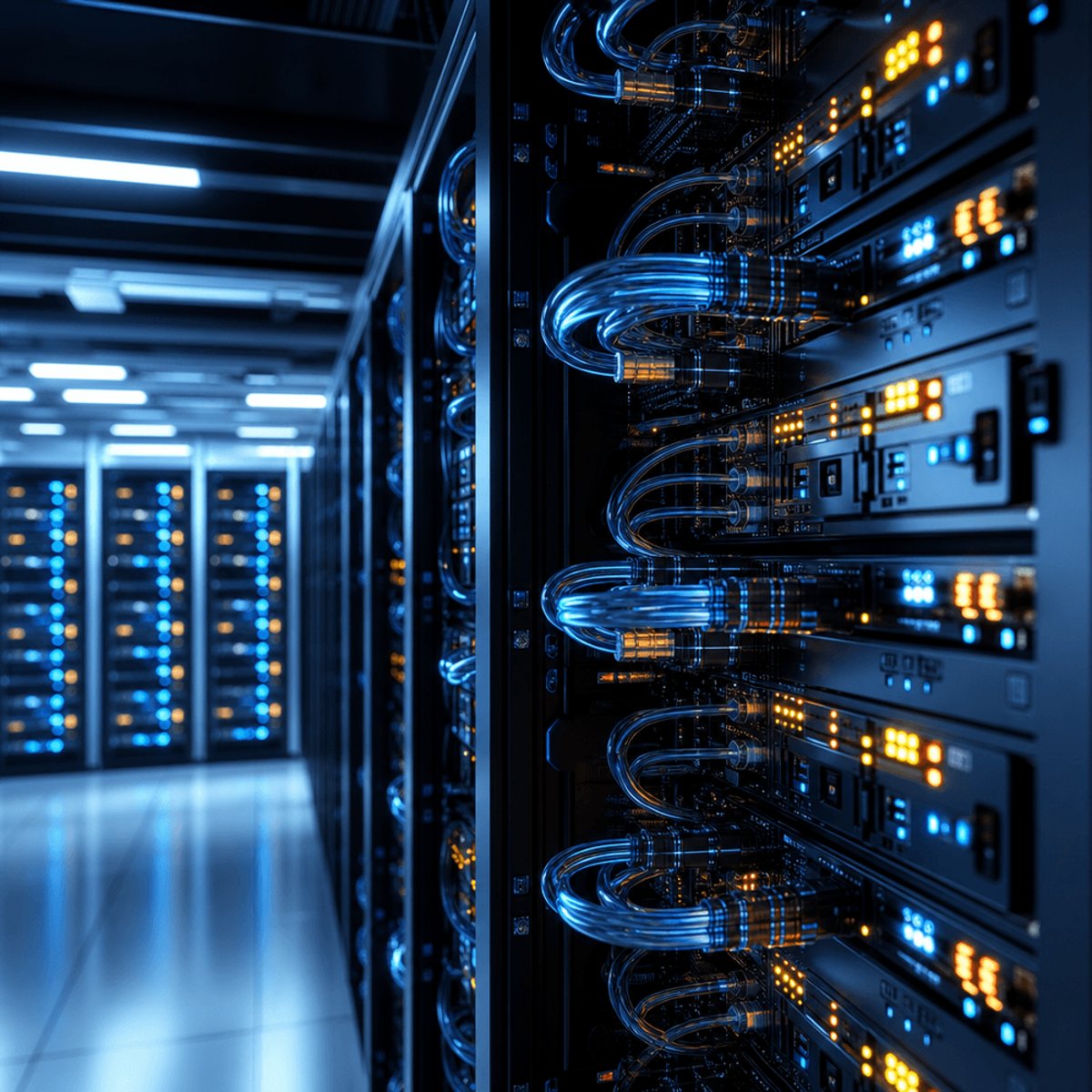
Super Micro has carved out a niche by offering customizable, high-density server solutions that pack more computing power into smaller footprints - exactly what hyperscalers and AI-focused companies need. The company's liquid cooling technology has become particularly attractive as power consumption and heat management emerge as major bottlenecks in AI deployments.
But it's the margin disclosure that has analysts taking a second look. Super Micro has historically operated on razor-thin margins, a consequence of its build-to-order business model and intense competition from rivals like Dell and HPE. Any indication of margin improvement suggests the company may have more pricing power than previously thought.
The SpaceX connection adds another dimension to Super Micro's story. Elon Musk's aerospace venture has been quietly building out significant computing infrastructure, likely to support everything from satellite data processing to internal AI development. SpaceX's Starlink network alone generates massive amounts of telemetry data that requires serious computing horsepower to analyze in real-time.
This isn't Super Micro's first dance with high-profile tech customers. The company has long supplied hardware to cloud giants and research institutions, but landing SpaceX puts it in the same conversation as Nvidia, whose GPUs power most AI training workloads, and AMD, which has been aggressively courting AI customers.
The broader server market is experiencing unprecedented demand. According to industry data, spending on AI-optimized servers is expected to reach $150 billion annually by 2027, up from roughly $30 billion in 2023. That's not just growth - that's a fundamental market expansion driven by every company from startups to Fortune 500 giants trying to build AI capabilities.
For Super Micro, the challenge now is execution. The company faced scrutiny earlier this year over accounting practices and supply chain management. Tuesday's stock surge suggests investors are willing to look past those concerns if the company can deliver on its AI infrastructure promises. But Wall Street has a short memory when revenue growth stalls.
The margin disclosure is particularly crucial. If Super Micro can maintain healthier margins while scaling production, it would mark a significant evolution in the company's business model. Higher margins mean more cash to invest in R&D, better ability to weather supply chain disruptions, and ultimately more sustainable growth.
Competitors aren't standing still. Dell Technologies recently announced its own AI-focused server lineup, while Hewlett Packard Enterprise has been pushing its AI-native infrastructure story. The race to dominate AI server sales is just getting started, and customer wins like SpaceX will be critical differentiators.
What makes this moment particularly interesting is the convergence of multiple technology shifts. Companies need servers that can handle AI workloads. They need better power efficiency. They need liquid cooling. They need faster networking. Super Micro's ability to integrate these technologies into cohesive systems gives it an edge over traditional server vendors still operating with decade-old playbooks.
Super Micro's 15% surge is more than just a good day for shareholders - it's a signal that the AI infrastructure market is moving from hype to actual deployment. The SpaceX order validates the company's technical approach, while improved margins suggest it's learning to monetize the AI boom more effectively. But the real story is what comes next. As AI workloads move from experimental to mission-critical, the companies that can deliver reliable, efficient, scalable infrastructure will capture outsized returns. Super Micro just put itself firmly in that conversation. Now it needs to prove it can stay there.