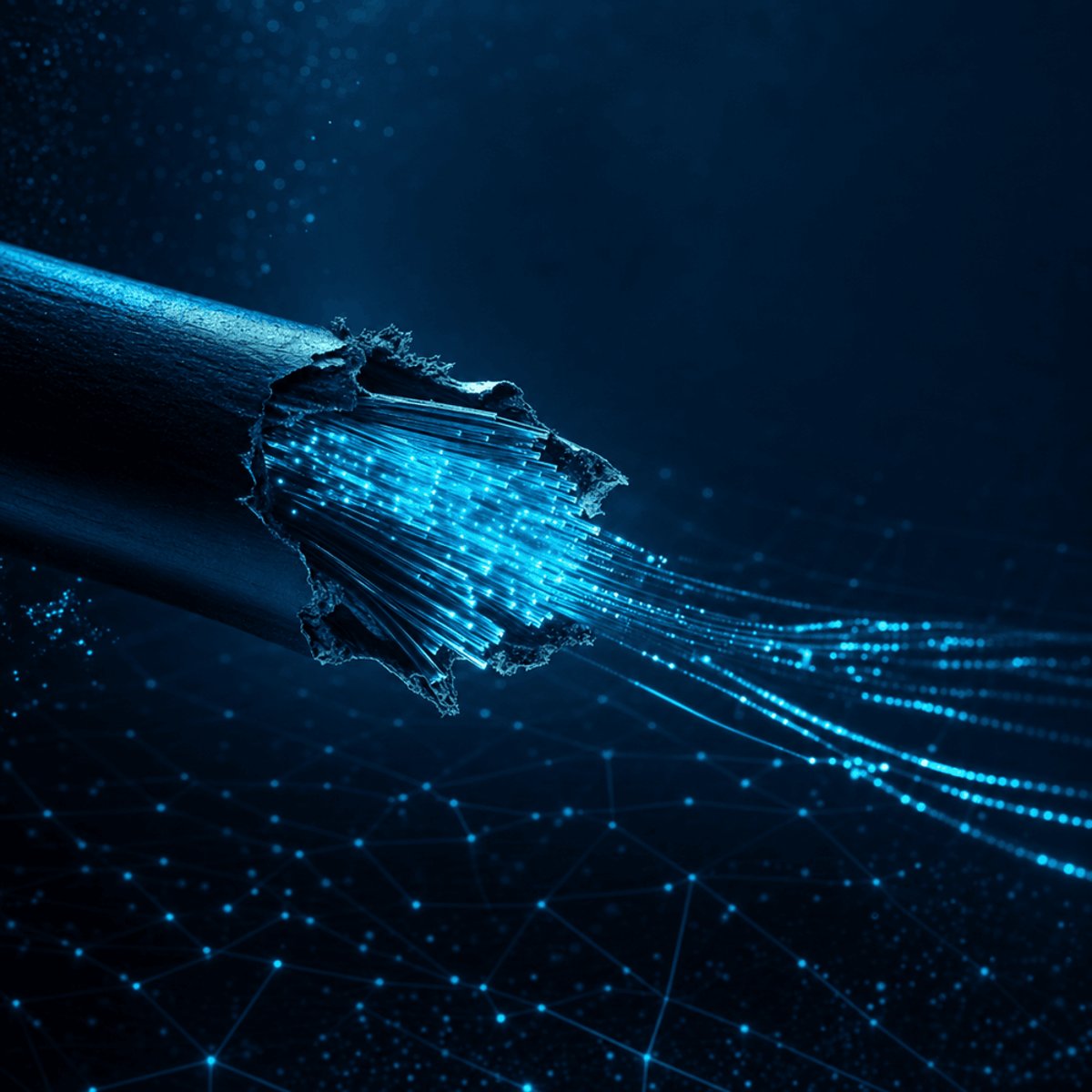
The Gulf's race to become an AI superpower just hit a massive infrastructure roadblock. As Microsoft, Google, and Amazon pour billions into Middle East data centers, the region's undersea cable network—the invisible backbone of the internet—can't keep pace with AI's voracious bandwidth demands. Recent cable disruptions have exposed a critical vulnerability that threatens to derail the region's tech ambitions, forcing hyperscalers to rethink how they connect one of the world's fastest-growing AI markets to the global internet.
The problem isn't just about speed—it's about survival. When undersea cables get severed by ship anchors or damaged by natural events, the impact used to mean slower Netflix streams. Now, with AI training runs and inference workloads demanding constant, massive data flows between Gulf data centers and global hubs, even brief disruptions can cost millions and cripple critical services.
Microsoft has been particularly vocal about the infrastructure gap. The company's aggressive push into Saudi Arabia and the UAE, including partnerships with local sovereign wealth funds, depends on rock-solid connectivity to its global Azure network. AI models don't work in isolation—they need constant access to training data, model updates, and integration with services running in other regions. When cables fail, the entire value proposition of Gulf-based AI infrastructure starts to crumble.
Google and Amazon face similar challenges. Both companies have announced major cloud region expansions in the Middle East, betting that local data residency requirements and low-latency demands will drive enterprise customers to Gulf-based infrastructure. But AI changes the math. Large language models and machine learning workloads generate exponentially more data traffic than traditional cloud services. A single training run can saturate bandwidth that would normally serve thousands of conventional applications.
The geography makes everything harder. Most undersea cables connecting the Gulf to Europe and Asia funnel through choke points like the Red Sea and the Strait of Hormuz—areas prone to both geopolitical tensions and physical disruptions. Multiple cables have suffered damage in recent years, and the incidents are becoming more frequent as maritime traffic increases and climate change affects sea conditions.
Industry insiders say the hyperscalers are now pushing Gulf governments to treat cable infrastructure as critical national security infrastructure, not just a utility. That means faster permitting for new cable routes, investment in diverse pathways that avoid traditional choke points, and potentially government co-investment in cable projects. The conversations have intensified as AI workloads become central to national development strategies across the region.
The stakes are enormous. Saudi Arabia's Vision 2030 and the UAE's AI strategy both hinge on becoming regional tech hubs that can compete globally. If the infrastructure can't support reliable AI operations, those ambitions hit a wall. Hyperscalers know this, and they're using their leverage—billions in potential investment—to accelerate infrastructure upgrades that would normally take years to materialize.
Some solutions are already emerging. New cable routes that bypass traditional paths are in planning stages. Satellite backup systems are being deployed for critical redundancy. Edge computing architectures that reduce dependence on constant connectivity to distant data centers are gaining traction. But these fixes take time and massive capital investment—resources the region is scrambling to mobilize.
The broader lesson extends beyond the Gulf. As AI deployment accelerates globally, every region faces similar infrastructure reality checks. The difference is that the Gulf's compressed timeline—trying to build world-class AI capabilities in a few years rather than decades—makes every bottleneck more visible and more urgent. What happens here could preview infrastructure challenges that other emerging AI markets will face.
For now, the hyperscalers are playing a delicate game. They need to maintain momentum on their Gulf expansions to capture market share and satisfy local partnership commitments. But they also can't promise capabilities that the underlying infrastructure can't deliver. That tension is driving increasingly frank conversations with Gulf officials about the true cost and complexity of building AI-ready infrastructure from scratch.
The Gulf's AI ambitions are colliding with infrastructure reality, and the outcome will shape the region's tech future. Hyperscalers have the capital and technical expertise to help solve the undersea cable problem, but only if Gulf governments move with unprecedented speed on permitting, investment, and strategic planning. The next 18 months will reveal whether the region can build the invisible infrastructure needed to support its very visible AI aspirations—or whether bandwidth bottlenecks will force a slower, more measured approach to becoming a global AI hub. For Microsoft, Google, and Amazon, the answer will determine whether their multi-billion dollar Gulf bets pay off or become cautionary tales about infrastructure before ambition.