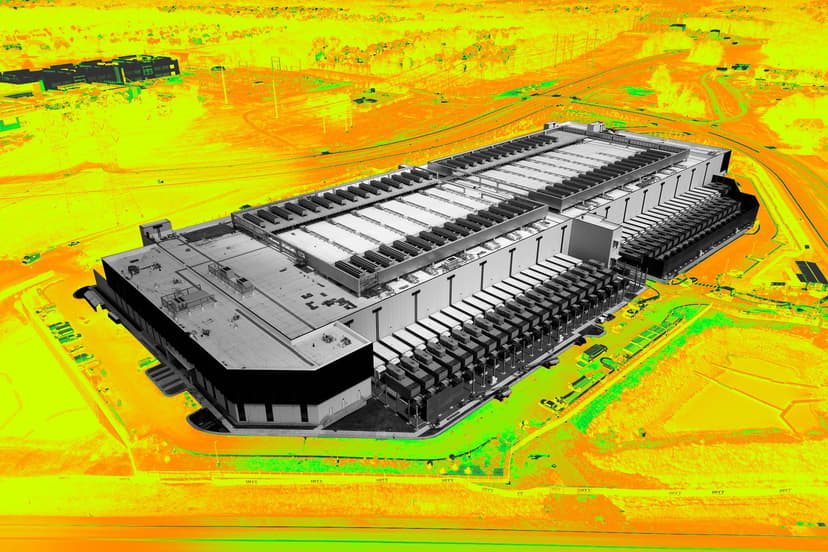
Taiwan Semiconductor Manufacturing Company just made the biggest manufacturing bet in US history. The world's largest chipmaker announced a staggering $100 billion additional investment in Arizona, riding the wave of a 77% second-quarter profit surge fueled by insatiable AI chip demand. The move reshapes the global semiconductor supply chain and signals TSMC's long-term commitment to domestic US production as geopolitical tensions with China continue to escalate.
TSMC just put its money where the geopolitical pressure is. The Taiwanese chipmaking giant announced Thursday it's pouring an additional $100 billion into its Arizona operations, doubling down on US manufacturing just hours after revealing second-quarter profits soared 77% compared to last year.
The timing isn't coincidental. TSMC's profit explosion comes directly from the AI chip gold rush, with Nvidia and Apple driving unprecedented demand for advanced processors. According to the company's quarterly filing, revenue from high-performance computing chips - the backbone of AI data centers - jumped 85% year-over-year, now accounting for nearly 60% of total revenue.
But the Arizona announcement represents something bigger than just following the money. TSMC's expanded commitment transforms what was already the largest foreign direct investment in US history into an unprecedented manufacturing bet. The new funding brings TSMC's total Arizona investment to over $140 billion, creating what will become the most advanced semiconductor manufacturing complex outside of Asia.
"This isn't just about building fabs - it's about rebuilding America's semiconductor independence," industry analyst Dan Hutcheson told reporters. "TSMC is essentially creating a backup Taiwan in the Arizona desert."
The stakes couldn't be higher. As tensions between Washington and Beijing simmer over Taiwan's status, the US has pushed aggressively to reshore critical chip production. The CHIPS Act allocated $52 billion in subsidies specifically to lure manufacturers like TSMC stateside. But getting TSMC to commit this level of capital required more than government handouts - it needed proof that US-based production could be profitable.
That's where this quarter's numbers matter. TSMC's 77% profit surge demonstrates that even with higher US labor costs and construction expenses, the economics of domestic chip production can work. The company's gross margin held steady at 54%, suggesting Arizona operations won't crater profitability once they ramp up.
The expanded Arizona complex will house six fabrication plants, up from the three originally planned. Most critically, TSMC confirmed the facilities will produce its most advanced 3nm chips by 2026 and breakthrough 2nm processors by 2028 - matching the cutting-edge technology currently exclusive to Taiwan. That timeline positions US-based production to serve the next generation of AI chips just as current Taiwan fabs reach capacity constraints.
Nvidia has already signaled it will be a major customer for the Arizona output. CEO Jensen Huang mentioned during Nvidia's recent earnings call that "geographic diversity in our supply chain is now a strategic priority, not just a risk management exercise." Translation: Nvidia wants chips made in America, even if it costs more.
Apple, meanwhile, has been quietly lobbying TSMC to dedicate Arizona capacity specifically for iPhone and Mac processors. Sources familiar with the negotiations say Apple offered long-term volume commitments in exchange for guaranteed access to US-manufactured chips - a hedge against potential disruptions from a Taiwan crisis.
The market reaction was swift. TSMC's stock jumped 8% in early trading, while US chip equipment makers like Applied Materials and Lam Research surged on expectations of increased tool orders. The announcement also boosted construction and industrial stocks tied to the Arizona project.
But challenges remain enormous. TSMC has struggled with Arizona construction delays and workforce training issues. The company publicly complained last year about the "lack of skilled workers" compared to Taiwan, where generations of engineers have specialized in semiconductor manufacturing. To address this, TSMC is partnering with Arizona State University on specialized training programs and has committed to bringing 2,000 Taiwanese engineers to Arizona temporarily.
The $100 billion also raises questions about return on investment. Building fabs in the US costs roughly 40-50% more than equivalent facilities in Taiwan, according to industry estimates. TSMC is betting that premium pricing from security-conscious customers like Apple and Nvidia, combined with CHIPS Act subsidies and tax incentives, will offset those higher costs.
Geopolitically, the move gives Washington exactly what it wanted - a domestic source for the most advanced chips in the world. But it also creates tension for TSMC, which must balance its US expansion against pressure from Beijing, which views efforts to replicate Taiwan's chip capabilities as preparation for a potential conflict.
For the semiconductor industry, TSMC's Arizona bet represents a fundamental shift. For decades, the most advanced chipmaking concentrated in Taiwan and South Korea because that's where costs were lowest and expertise deepest. Now, national security concerns are overriding pure economics, reshaping where and how the world's most critical technology gets manufactured.
TSMC's $100 billion Arizona expansion marks the moment semiconductor manufacturing became inseparable from geopolitics. The company's 77% profit surge proves AI demand is real and sustainable enough to justify massive US production investments, even at premium costs. For tech giants like Nvidia and Apple, having access to US-made cutting-edge chips provides both supply security and political cover. For Washington, it's a major win in the race to reduce dependence on Taiwan for critical technology. The question now is whether TSMC can execute on this scale in an unfamiliar manufacturing environment - and whether other chipmakers will follow suit with their own American manufacturing bets.