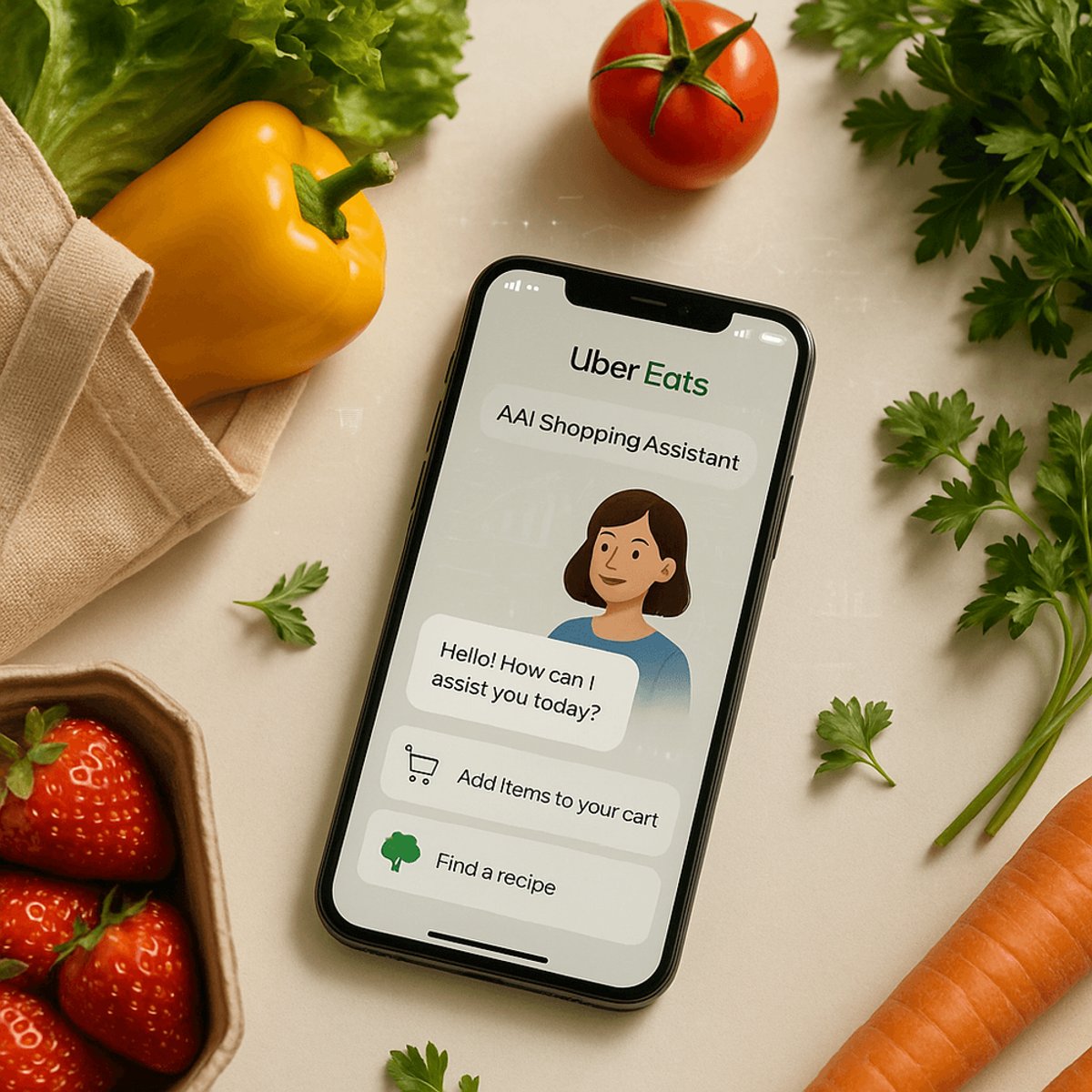
Uber is betting that AI can make your grocery runs smarter. The delivery giant just launched an AI-powered cart assistant within Uber Eats, designed to help users build better shopping lists and discover products faster. The move signals Uber's broader push to embed artificial intelligence across its platform, transforming from a logistics company into an AI-first consumer service. It's the latest salvo in the increasingly automated battle for grocery delivery dominance.
Uber just made grocery shopping a lot less painful. The company rolled out an AI-powered cart assistant inside Uber Eats today, marking its most aggressive move yet to automate the entire shopping experience. The feature helps users build shopping lists, suggests items based on past orders, and can reportedly understand natural language requests like "things for taco night" or "healthy snacks for kids."
It's a calculated bet that consumers want less friction between craving and delivery. Uber has been systematically adding AI features across its platform over the past year, from route optimization to customer service chatbots, but this marks the first time the company is putting machine learning directly into the shopping cart. The timing isn't coincidental - grocery delivery has become a battleground where margins are razor-thin and customer retention depends on convenience.
The grocery delivery wars have been heating up since the pandemic normalized the behavior. Amazon has been expanding Amazon Fresh, Instacart went public in 2023, and DoorDash has been aggressively courting grocery partners. According to industry estimates, the U.S. online grocery market hit $1.7 trillion in 2025, with delivery and pickup services capturing about 12% of total grocery sales. Everyone's fighting for a bigger slice, and AI personalization has emerged as the differentiator.
Uber's approach appears focused on reducing decision fatigue. Instead of scrolling through thousands of products, users can rely on the AI to surface relevant items based on purchase history, dietary preferences, and seasonal patterns. The technology likely leverages large language models similar to those powering ChatGPT, trained on millions of grocery transactions to understand shopping patterns and predict what users actually need.
This isn't Uber's first rodeo with AI-assisted discovery. The company has been testing recommendation engines in restaurant delivery for months, using machine learning to suggest dishes based on time of day, weather, and previous orders. Applying that same logic to groceries makes sense - the basket sizes are larger, the repeat purchase rates are higher, and the opportunity for personalization is massive.
But the real competition isn't just about features. Instacart has been building AI tools for years, including smart search and personalized aisles. Amazon has decades of recommendation engine data and recently integrated Alexa-powered shopping lists into Fresh. DoorDash acquired grocery tech startup Chowbotics and has been quietly building out its own AI capabilities. Uber is late to the game, but it's coming in with scale - the company already has 150 million active users across its mobility and delivery platforms.
The technical challenge is significant. Groceries are fundamentally different from restaurant meals - they require managing inventory across thousands of stores, dealing with substitutions when items are out of stock, and understanding complex dietary restrictions. An AI assistant needs to know that if someone orders almond milk regularly, they probably don't want dairy-based suggestions. It needs to understand that "pasta ingredients" means more than just noodles.
Industry observers see this as part of Uber's broader transformation. CEO Dara Khosrowshahi has been vocal about making AI central to the company's strategy, telling investors last quarter that machine learning would touch every part of the user experience. The company has been hiring AI researchers from Google, Meta, and OpenAI, building out teams focused on recommendation systems, natural language processing, and predictive logistics.
The grocery assistant launch also hints at where Uber sees its future margins. Delivery fees alone won't drive profitability - the company needs to increase basket sizes and repeat purchase frequency. An AI that makes shopping easier could keep users coming back, turning grocery delivery from an occasional convenience into a weekly habit. If Uber can get users to consolidate more of their grocery spending onto the platform, the unit economics start looking a lot more attractive.
What remains unclear is how sophisticated the AI actually is. The announcement provided minimal technical details, leaving questions about whether this is a true conversational interface or just enhanced search with predictive suggestions. Can it handle complex queries like "ingredients for meal prep on a keto diet under $50"? Does it learn from corrections when it gets recommendations wrong? These details matter for adoption.
The rollout appears to be gradual, likely starting in select markets before expanding nationwide. That's standard practice for Uber, which typically tests new features in smaller cities before deploying them in major metros. The company will be watching metrics like average order value, repeat purchase rate, and time spent in the app to gauge whether the AI assistant actually changes behavior.
Uber's AI cart assistant represents more than just a convenience feature - it's a signal that the company sees its future in becoming an AI-powered everything app. As grocery delivery matures from pandemic necessity to everyday habit, the winners will be platforms that make shopping feel effortless. Whether Uber's AI can actually deliver on that promise depends on execution details we haven't seen yet. But the direction is clear: every delivery platform is racing to put machine learning between consumers and their carts, and Uber just threw down its bid. The next few months will reveal whether this AI assistant becomes an indispensable shopping companion or just another feature that users ignore on their way to checkout.