Adobe just dropped a bombshell on the mobile video editing market. The creative software giant is bringing its flagship Premiere video editor to iPhone for free this month, promising 'pro-level' editing capabilities that could reshape how creators work on mobile. With AI-powered features and direct social media integration, Adobe is making a major play to capture the growing mobile-first creator economy.
Adobe just made its biggest mobile move yet, bringing the full power of Premiere video editing to iPhone in a free app launching later this month. The announcement marks a dramatic shift from the company's previous mobile-only offering, the simplified Premiere Rush, to something that promises near-desktop capabilities in your pocket.
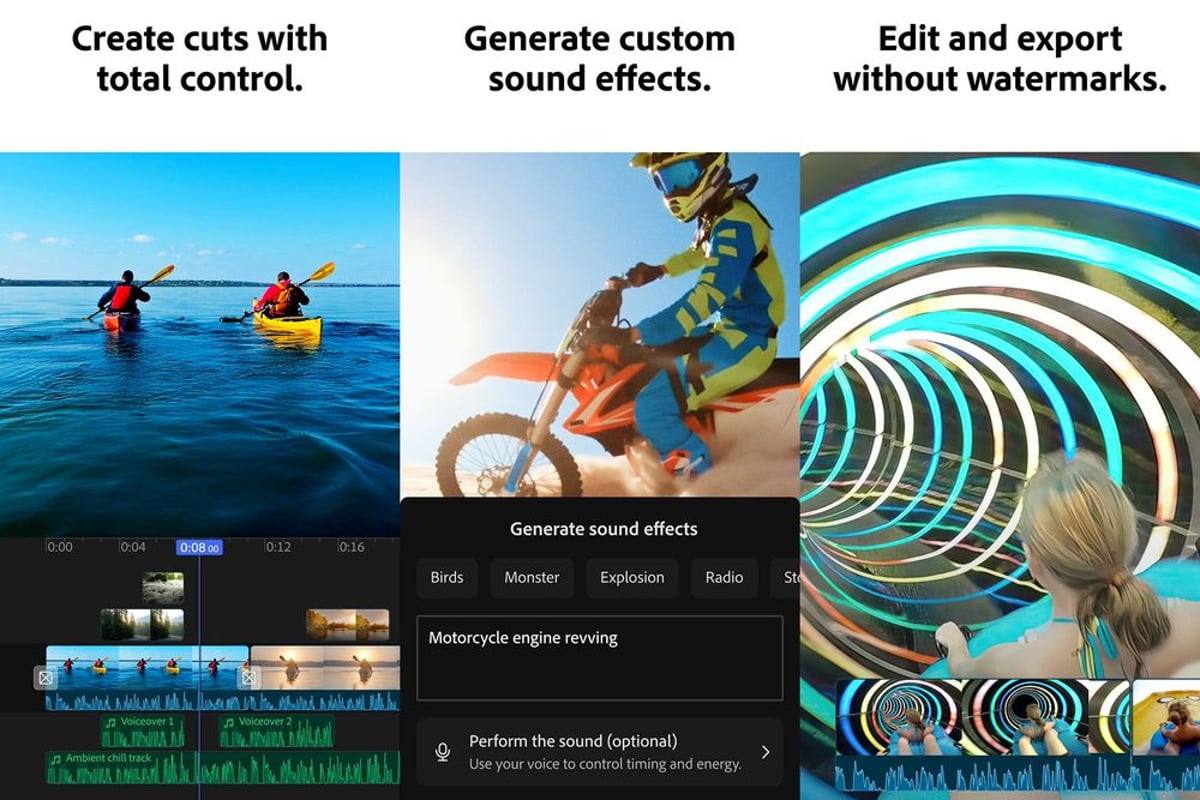
The timing couldn't be more strategic. As mobile video consumption continues to dominate social platforms, Adobe is positioning itself to capture the massive creator economy that's increasingly editing and publishing directly from smartphones. The new Premiere app features a familiar multi-track timeline with support for unlimited video, audio, and text layers — essentially bringing the core DNA of Premiere Pro to iOS.
[embedded images]
But Adobe isn't just porting desktop features to mobile. The company is leaning heavily into AI-powered workflows through its Adobe Firefly platform, offering generative sound effects and AI-enhanced speech processing built directly into the mobile editing experience. "We're bringing that same creative power that filmmakers, designers, animators, and YouTube creators use to produce hit commercials, iconic music videos, Oscar-winning films, and viral content to the most convenient place to move from capture to publish: your phone," Mike Polner, Adobe's vice president of creator product marketing, told The Verge.
The social media integration runs deeper than typical export options. Adobe has built one-tap publishing to TikTok, YouTube Shorts, and Instagram with automatic content resizing that optimizes aspect ratios for each platform — a clear acknowledgment that mobile-first creators need seamless workflows between editing and distribution.
What's particularly striking is Adobe's freemium approach. While the core editing functionality comes free, the company plans to monetize through cloud storage and generative AI credits — a model that mirrors how Adobe has been experimenting with AI-powered upsells across its Creative Cloud suite. This suggests Adobe sees mobile as a gateway drug to its broader creative ecosystem, rather than just another revenue stream.
The move puts significant pressure on existing mobile video editing players like InShot, CapCut, and even Apple's own iMovie. Adobe's desktop Premiere Pro commands industry respect and a $22.99 monthly subscription, so bringing that brand recognition to mobile for free represents a major competitive threat.
[video_iframe]
Historically, Adobe has been cautious about mobile, launching the simplified Premiere Rush in 2019 as a stepping stone rather than a full-featured editor. The company's internal data likely shows that mobile editing is no longer just about quick social posts — creators are producing increasingly sophisticated content entirely on smartphones, especially in markets like India and Southeast Asia where mobile-first workflows dominate.
For Apple, this represents both validation of iOS as a serious creative platform and potential competition for its own video editing tools. The iPhone's computational photography and video capabilities have been steadily improving, and Adobe's endorsement through a flagship app launch suggests professional mobile video editing has reached a tipping point.
The Android version, still in development, will be crucial for Adobe's broader mobile strategy. Android dominates globally, particularly in emerging markets where mobile-first creators are driving video consumption growth. Adobe's staggered rollout suggests they're using iOS as a testing ground before the more complex Android ecosystem deployment.
Industry watchers should pay close attention to how this affects Adobe's desktop revenues. If mobile Premiere proves capable enough for professional workflows, it could accelerate the shift away from traditional Creative Cloud subscriptions — or conversely, serve as a powerful funnel into Adobe's premium offerings.
Adobe's move to bring full Premiere functionality to iPhone represents more than just a mobile app launch — it's a fundamental bet on the future of content creation. By combining professional-grade editing tools with AI-powered features and seamless social media integration, Adobe is positioning itself at the center of the mobile-first creator economy. The real test will be whether mobile creators embrace the complexity of multi-track editing or prefer the simplicity of existing social-first tools. Either way, Adobe just raised the stakes for everyone in the mobile video editing space.