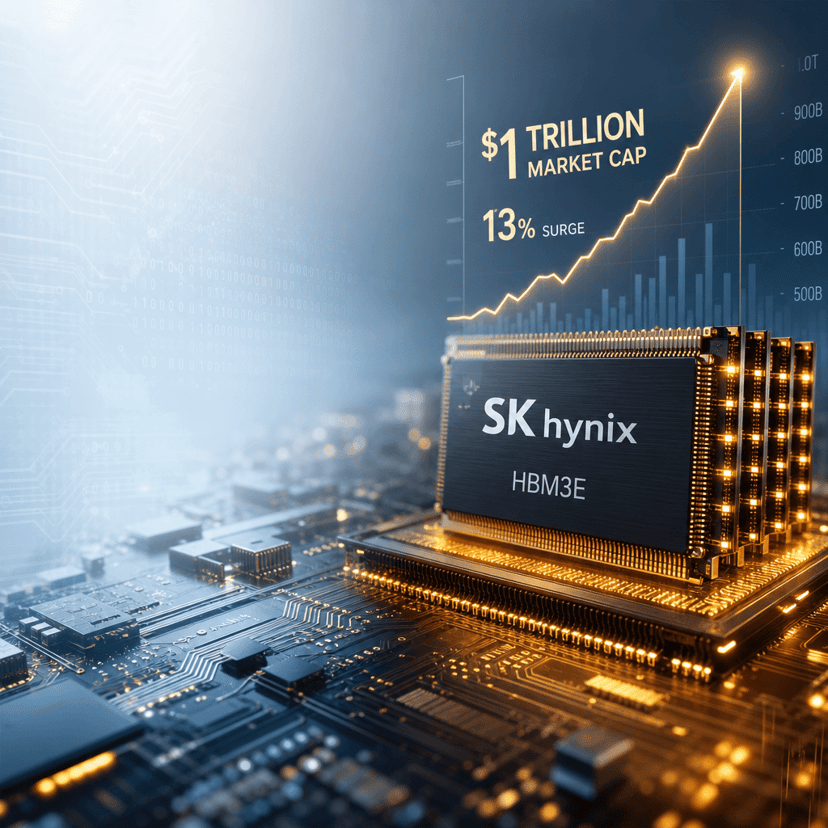
AI chip stocks are whipsawing through their most volatile stretch in months as Wall Street debates whether enterprise appetite for AI infrastructure remains sustainable. But executives insist demand is 'almost unlimited' even as companies pivot to what insiders are calling 'valuemaxxing' - squeezing maximum value from AI investments rather than blanket spending. The tension between bullish supplier forecasts and cautious enterprise budgets is creating wild swings in semiconductor valuations and forcing a reckoning about AI's near-term economics.
Nvidia and the broader AI chip ecosystem are caught in a credibility test. After two years of explosive growth fueled by enterprises racing to build AI capabilities, stock volatility is spiking as investors question whether the infrastructure gold rush can continue at this pace.
But chip executives aren't backing down. Speaking at recent industry events, multiple semiconductor leaders described AI demand as 'almost unlimited' - a stark contrast to the nervous trading patterns that have sent AI-related stocks swinging double digits in single sessions. The disconnect reveals a fundamental tension: suppliers see insatiable appetite for compute power, while enterprises are quietly shifting strategies.
Enter 'valuemaxxing' - the buzzword making rounds in enterprise IT circles. Rather than the blank-check approach that defined 2024 and 2025, companies are now obsessing over return on AI investment. That means scrutinizing which workloads actually need cutting-edge chips versus what can run on last-generation hardware. It means demanding proof that data center expansions will generate revenue, not just capabilities.
The shift is subtle but significant. Microsoft, Amazon, and Google - the hyperscalers driving much of AI chip demand - are still ordering at scale. But their enterprise customers are getting pickier. CIOs who rushed to secure GPU clusters in 2024 are now asking harder questions about utilization rates and business outcomes.
Stock volatility reflects this uncertainty. AI chip stocks that seemed untouchable six months ago are now trading on every data point about enterprise spending patterns. A cautious comment from a cloud provider sends shares tumbling. Upbeat demand forecasts trigger rallies. The market is desperately trying to price whether current AI infrastructure spending represents sustainable growth or a bubble approaching correction.
Chip executives argue the volatility is noise. Their view: enterprises are simply maturing from panic buying to strategic deployment. Demand isn't disappearing - it's getting more sophisticated. Companies that overspent in the initial AI frenzy are now optimizing their investments, but the aggregate appetite for compute continues growing as AI applications move from experiments to production.
The data center buildout supports this optimistic take. Construction of AI-focused facilities continues at record pace, with projects requiring 18-24 month lead times. If enterprises were truly pulling back, those pipeline projects would be getting canceled. Instead, they're proceeding - suggesting confidence in long-term demand even if quarterly spending gets choppy.
But the 'valuemaxxing' trend introduces real risk. If enterprises successfully extract more performance from existing infrastructure, the upgrade cycles chip makers depend on could stretch out. If AI applications fail to generate expected revenue, budget scrutiny could intensify fast. The semiconductor industry has seen boom-bust cycles before, and current volatility suggests investors fear history repeating.
What happens next depends on enterprise earnings over coming quarters. If companies start showing tangible AI-driven revenue growth, the investment thesis holds. If AI remains mostly a cost center, the valuemaxxing mindset could harden into something more restrictive. Chip suppliers are betting their 'unlimited demand' narrative will be validated by real-world AI economics.
For now, the market is pricing maximum uncertainty. Every earnings call becomes a referendum on AI spending sustainability. Every data center announcement gets dissected for signs of acceleration or deceleration. The volatility won't settle until enterprises prove they can turn AI infrastructure into profitable business outcomes - or until investors accept that the buildout will happen regardless of near-term ROI pressure.
The AI infrastructure story is entering its second act. The first was characterized by frenzied buildout and unlimited budgets. This phase - defined by valuemaxxing and ROI scrutiny - will test whether the technology can deliver on its economic promise. Chip executives maintain demand fundamentals remain rock solid, but stock volatility shows investors need proof. The next few quarters of enterprise earnings will determine whether 'almost unlimited' demand is reality or sales pitch. What's certain is that AI spending is maturing from land grab to strategic investment, and the companies that adapt to valuemaxxing mindset will shape the industry's trajectory.