The National Transportation Safety Board has temporarily blocked public access to its entire online docket system after users deployed AI tools to reconstruct the voices of deceased pilots from visual spectrogram images of cockpit recordings. The unprecedented move highlights how rapidly advancing voice synthesis technology is colliding with decades-old protocols for aviation accident investigations, raising urgent questions about privacy, ethics, and the limits of transparent government records.
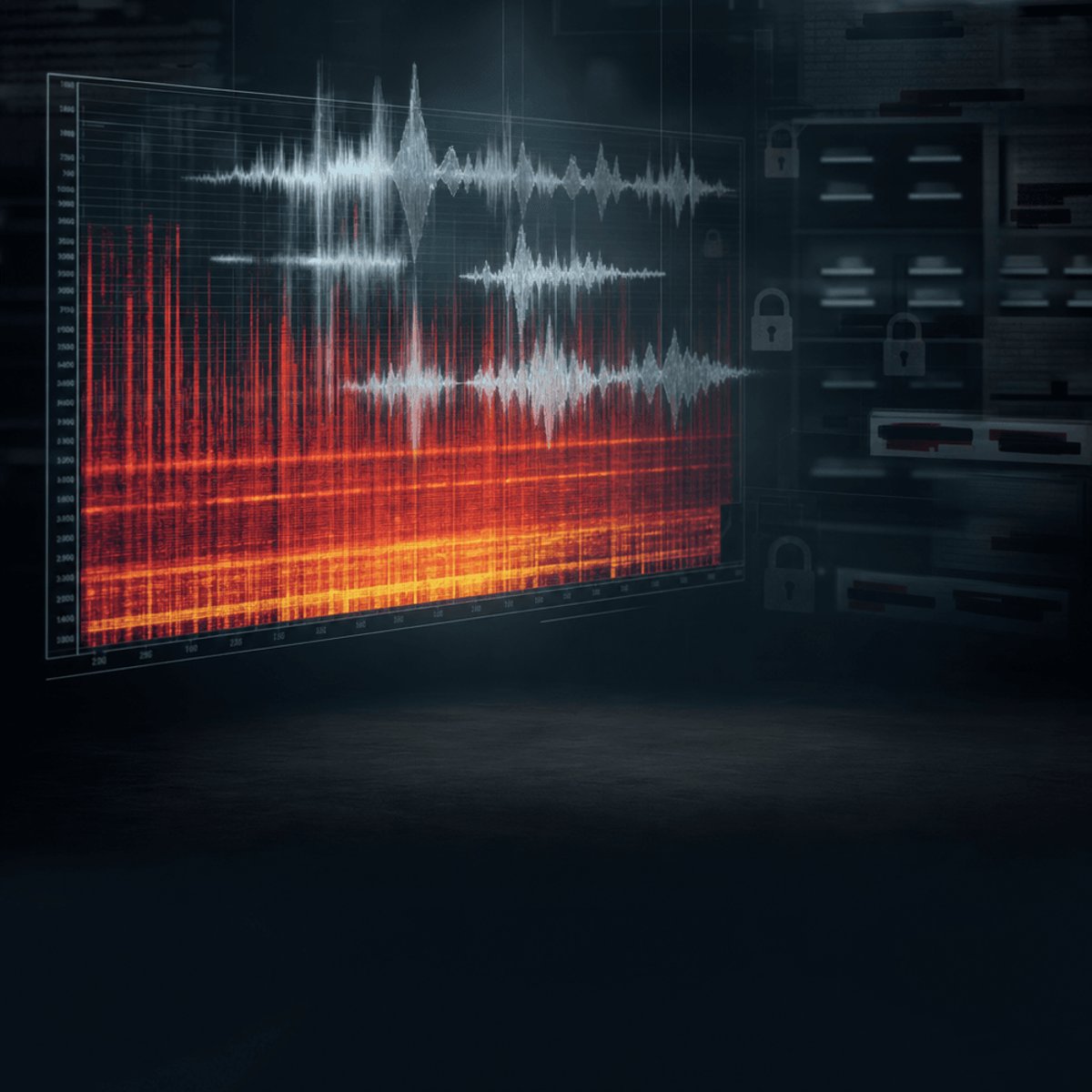
The National Transportation Safety Board just discovered that its long-standing approach to protecting sensitive crash recordings has been rendered obsolete overnight. According to reporting by TechCrunch, individuals used AI-powered audio reconstruction tools on publicly available spectrogram images - visual representations of sound frequencies - to regenerate the actual voices of pilots who died in crashes.
The agency responded by taking the extraordinary step of temporarily shutting down its public docket system, which researchers, journalists, and families of crash victims rely on to access investigation materials. It's a stark admission that the safety protocols designed to balance transparency with dignity have been outpaced by technology.
Spectrograms have been a standard workaround in aviation investigations for years. When cockpit voice recorder transcripts alone can't convey crucial details like tone, urgency, or overlapping voices, investigators publish spectrogram images - essentially visual fingerprints of sound waves - that show timing and intensity without revealing the actual audio. The practice allowed experts to analyze communication patterns while protecting the privacy of deceased crew members and their families.
But modern AI voice synthesis tools have changed the equation entirely. These systems, built on the same deep learning architectures powering everything from OpenAI's voice products to consumer apps, can now reverse-engineer audio from spectrograms with startling accuracy. What was once a one-way transformation - sound to image - has become bidirectional.
The implications extend far beyond aviation. Voice reconstruction from spectrograms represents a fundamental shift in what can be considered truly redacted. If visual representations of audio can be converted back to speech, then any investigation or legal proceeding that relies on spectrogram publication as a privacy safeguard is now vulnerable.
Aviation safety advocates have spent decades fighting for black box transparency, arguing that public access to cockpit recordings helps prevent future accidents by allowing independent analysis. But that principle was always balanced against respect for victims and their families. Crash investigations are already traumatic; the thought of deceased loved ones' final moments being synthesized and shared online adds a disturbing new dimension.
The NTSB hasn't indicated how long the docket system will remain offline or what policy changes might follow. The agency faces a nearly impossible challenge: maintaining the transparency that makes aviation the safest form of transportation while adapting to AI capabilities that didn't exist when current protocols were designed.
This isn't the first time AI voice technology has sparked ethical concerns. The music industry has grappled with AI-generated songs using deceased artists' voices, while deepfake audio has emerged as a tool for fraud and misinformation. But applying these capabilities to government crash investigations crosses into new territory - one where regulatory frameworks have no ready answers.
Other agencies are likely watching closely. The Federal Aviation Administration, military aviation investigators, and international safety boards all use similar spectrogram publication practices. If the NTSB determines that spectrograms can no longer protect privacy, it could trigger a wholesale rethinking of how sensitive audio materials are handled across government.
Some experts argue the solution isn't to restrict access but to acknowledge that perfect privacy protection may no longer be possible in the age of AI. Others suggest the answer lies in stronger legal prohibitions on unauthorized voice synthesis from investigation materials, though enforcement would be challenging given the global nature of AI tools.
The incident also reveals how quickly synthetic media capabilities are advancing beyond public awareness. Most people understand that AI can generate fake videos or clone voices from samples. Fewer realize that even visual representations of sound - once considered safe proxies for the real thing - can now be converted back to audio that captures tone, emotion, and individual vocal characteristics.
For now, researchers and families awaiting investigation updates are locked out of the NTSB's digital records. The agency's response underscores both the seriousness of the breach and its unpreparedness for this scenario. Aviation investigations depend on meticulous documentation and public confidence. Both are now in question.
The NTSB's emergency shutdown of its public docket system marks a turning point in how AI capabilities are forcing institutions to reconsider long-standing practices. What worked for decades - publishing spectrograms instead of audio - collapsed in the face of voice synthesis technology that few anticipated. The agency now faces the unenviable task of redesigning transparency protocols for an era where the line between protected and public information has fundamentally blurred. How it responds will likely set the template for government agencies worldwide grappling with similar challenges at the intersection of AI, privacy, and public records.