SoftBank CEO Masayoshi Son just dropped a bombshell that's sending shockwaves through Silicon Valley: artificial intelligence is now designing OpenAI's next generation of models, marking what could be the industry's first glimpse of recursive self-improvement in action. In an exclusive interview with CNBC, Son walked back his previous ten-year forecast for artificial superintelligence, calling it "conservative" and suggesting the timeline has accelerated dramatically. For an investor who's poured billions into the AI race, the admission carries weight that extends far beyond typical Silicon Valley hype.
The claim arrives at a pivotal moment for OpenAI, which has been racing to maintain its lead against rivals like Anthropic and Google DeepMind. If Son's assertions hold up, they suggest OpenAI has quietly achieved what AI researchers have long considered a critical inflection point: the moment when AI systems become sophisticated enough to meaningfully contribute to their own evolutionary leap forward.
Son's comments to CNBC mark a dramatic shift from his earlier public statements. The billionaire investor, whose SoftBank Vision Fund has bet heavily on AI infrastructure and applications, previously pegged artificial superintelligence as a decade-away milestone. Now he's suggesting that timeline was too cautious, with AI-assisted model design serving as evidence that the field is progressing faster than even optimists anticipated.
The implications ripple across multiple dimensions. For OpenAI, deploying AI systems in the model development process could dramatically compress research cycles and unlock architectural innovations that human engineers might never discover independently. It also raises thorny questions about transparency and safety - if AI systems are designing their successors, how do researchers maintain oversight and alignment with human values?
Industry insiders have long speculated about when AI would cross the threshold from tool to collaborator in its own development. DeepMind has published research on neural architecture search, where algorithms explore design possibilities faster than humans can. But Son's comments suggest OpenAI may have moved beyond academic experiments to production-scale AI-assisted development.
The timing coincides with mounting competitive pressure. Anthropic recently raised additional capital to fund its constitutional AI research, while Google has been integrating AI capabilities across its product stack. Meta continues releasing open-source models that are closing the gap with proprietary systems. In this environment, any edge in development speed or architectural innovation carries enormous strategic value.
For SoftBank, which has invested in OpenAI through complex financing structures, Son's public comments serve dual purposes. They validate the firm's massive AI bets while potentially pressuring competitors to reveal their own capabilities. The SoftBank chief has built his reputation on bold predictions about technological inflection points, though his track record remains mixed.
The superintelligence timeline revision also injects fresh urgency into policy debates. If AI capabilities are accelerating beyond previous projections, regulators and safety researchers face compressed timelines to establish guardrails and governance frameworks. The White House and European Union have been working on AI safety standards, but those efforts assumed a more gradual progression curve.
What remains unclear is the precise nature of AI's contribution to OpenAI's model development. Are we talking about AI systems optimizing hyperparameters and architecture search, or something more fundamental - AI proposing novel training paradigms or loss functions? The distinction matters enormously for assessing both capabilities and risks.
Competitors are likely scrambling to assess whether Son's claims represent genuine breakthroughs or investor theater. Anthropic CEO Dario Amodei has emphasized the importance of AI safety research keeping pace with capabilities. If OpenAI has indeed achieved recursive self-improvement, it could force the entire industry to reevaluate safety protocols and development practices.
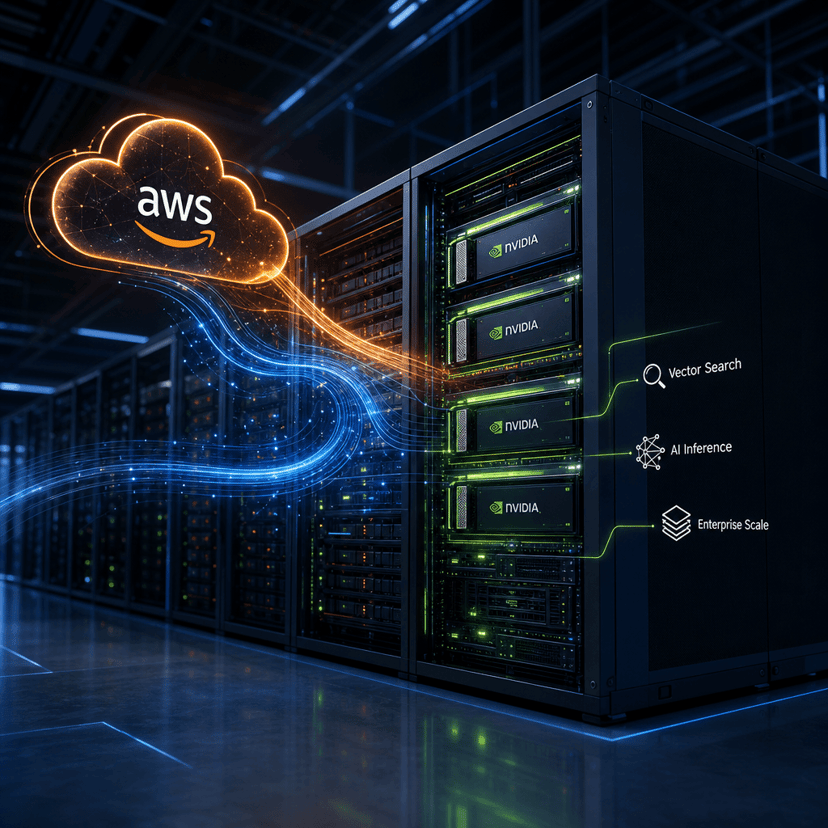
The market impact extends beyond AI pure-plays. Companies betting on specific AI architectures or training approaches could find their roadmaps obsolete if AI-designed models prove dramatically more efficient. Cloud providers like Amazon Web Services, Microsoft Azure, and Google Cloud would need to reassess infrastructure requirements for training and inference.
OpenAI hasn't officially confirmed Son's characterization of its development process, maintaining its typical reticence about internal research methods. But the company's recent hiring spree of top researchers and its massive compute investments are consistent with a push toward more ambitious capabilities milestones.
Son's revelation about AI designing OpenAI's next models represents either a genuine inflection point in AI development or a carefully calibrated message to competitors and investors. Either way, the claim forces the industry to confront questions about recursive self-improvement that were previously theoretical. The next few months will reveal whether OpenAI's upcoming releases showcase capabilities that justify Son's revised superintelligence timeline - and whether the rest of the industry can keep pace with AI systems that are increasingly designing themselves. For now, all eyes are on OpenAI's next model release, which will either validate or deflate the most audacious claim yet about AI's progression toward superintelligence.