A new wave of AI startups isn't just growing fast - they're accelerating. Companies like Anthropic, Glean, and Sierra AI are reporting revenue growth rates that are speeding up quarter over quarter, defying the typical startup trajectory where growth rates slow as companies scale. The phenomenon signals that enterprise AI adoption has moved beyond experimentation into full-scale deployment, creating a rare moment where demand outpaces even the most aggressive supply.
Anthropic just proved that AI startups can break physics. Not the laws of nature, but the iron rule of startup economics that says growth rates slow down as you get bigger. The company behind Claude is growing faster now than it was six months ago, and it's not alone.
Glean, the enterprise search startup, is watching its revenue growth rate climb even as it pushes past the $100 million ARR threshold where most companies start to decelerate. Sierra AI, the customer service platform that emerged from stealth less than two years ago, is reporting similar acceleration. The pattern holds across a cohort that includes Mercor, an AI recruiting platform that's scaling at rates typically reserved for consumer social apps.
This isn't normal. Conventional wisdom says startups grow fast early, then growth rates decline as the law of large numbers kicks in. Going from $1 million to $2 million ARR is a 100% growth rate. Going from $100 million to $200 million is the same dollar amount but harder to achieve. Yet these AI companies are posting higher percentage growth rates in their second and third years than in their first.
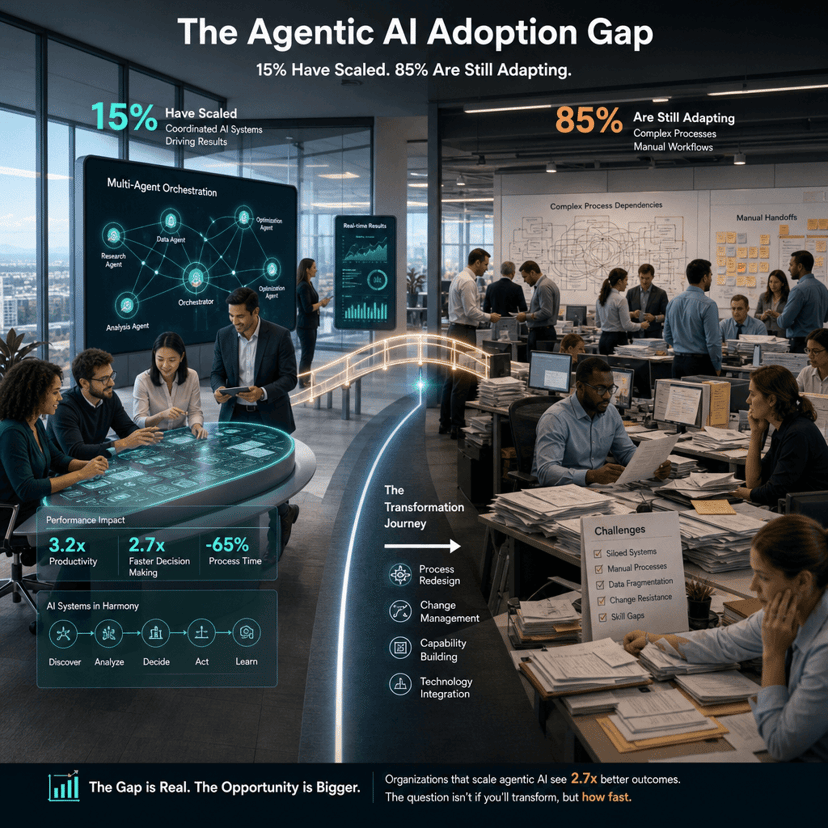
The explanation lies in enterprise behavior. For the past 18 months, companies have been running AI pilots - small tests, proof of concepts, department-level experiments. Those pilots are now converting to company-wide deployments. A Fortune 500 company that spent $50,000 testing Glean with its legal team is now rolling it out to 10,000 employees at $100 per seat. That's not linear growth, it's exponential expansion within existing accounts.
Anthropic is seeing the same dynamic. Early enterprise customers who started with API access for a single use case are now integrating Claude across multiple workflows. The initial contract might have been $20,000 monthly. Six months later, it's $200,000. The company's revenue isn't just growing from new customer acquisition but from existing customers expanding usage faster than anyone predicted.
Even traditional SaaS companies are catching the acceleration wave. Gusto, the payroll and HR platform, added AI-powered benefits recommendations and watched its expansion revenue metrics jump. Clio, which makes practice management software for law firms, integrated AI document analysis and saw similar results. These aren't pure-play AI companies, but AI features are driving their fastest growth in years.
The investor implications are massive. Venture capitalists have spent the past year trying to figure out which AI companies have real traction versus which are riding hype. Accelerating revenue growth is the clearest signal yet. It suggests product-market fit isn't just present but strengthening. It means customers aren't just buying because AI is trendy - they're expanding usage because it's working.
But there's a catch. Accelerating growth requires accelerating investment. These companies are hiring engineers, expanding infrastructure, and building sales teams faster than their revenue is growing. Anthropic reportedly burned through over $500 million in the past year while racing to keep up with demand. Glean raised a massive Series D to fund expansion. The bet is that capturing market share now, while enterprise budgets are unlocked, is worth the burn rate.
The sustainability question looms. Can these acceleration rates continue? History says no - every company eventually hits saturation. But AI optimists argue this time might actually be different. If AI becomes infrastructure rather than just software, if every knowledge worker needs AI tools the way they need email and spreadsheets, then the addressable market is larger than any previous software category. The companies growing fastest now might just be early to a decade-long expansion.
Competitors are taking notice. Microsoft and Google are watching startups like Glean and Sierra AI eat into territory the tech giants thought they owned. The response has been aggressive - both companies have launched competing products and cut prices on AI services. But the startups keep accelerating, suggesting that being AI-native matters more than having infinite resources.
The next quarter will be telling. If these companies report another round of acceleration, it confirms we're in a genuine paradigm shift. If growth rates flatten, it suggests we've hit the top of the S-curve and the land grab is over. Either way, the companies posting the fastest acceleration now are setting benchmarks that will define AI startup expectations for years to come.
The acceleration phenomenon reshapes how we think about AI startup trajectories. These aren't just fast-growing companies - they're companies getting faster, quarter after quarter. That pattern suggests enterprise AI has crossed from early adoption into mainstream deployment, creating a rare moment where the best-positioned startups can capture market share at unprecedented speeds. The question now isn't whether AI startups can grow fast, but whether they can sustain acceleration long enough to build durable competitive moats before the inevitable slowdown arrives. For investors and competitors alike, the companies showing the steepest acceleration curves today are likely defining the AI landscape for the next decade.