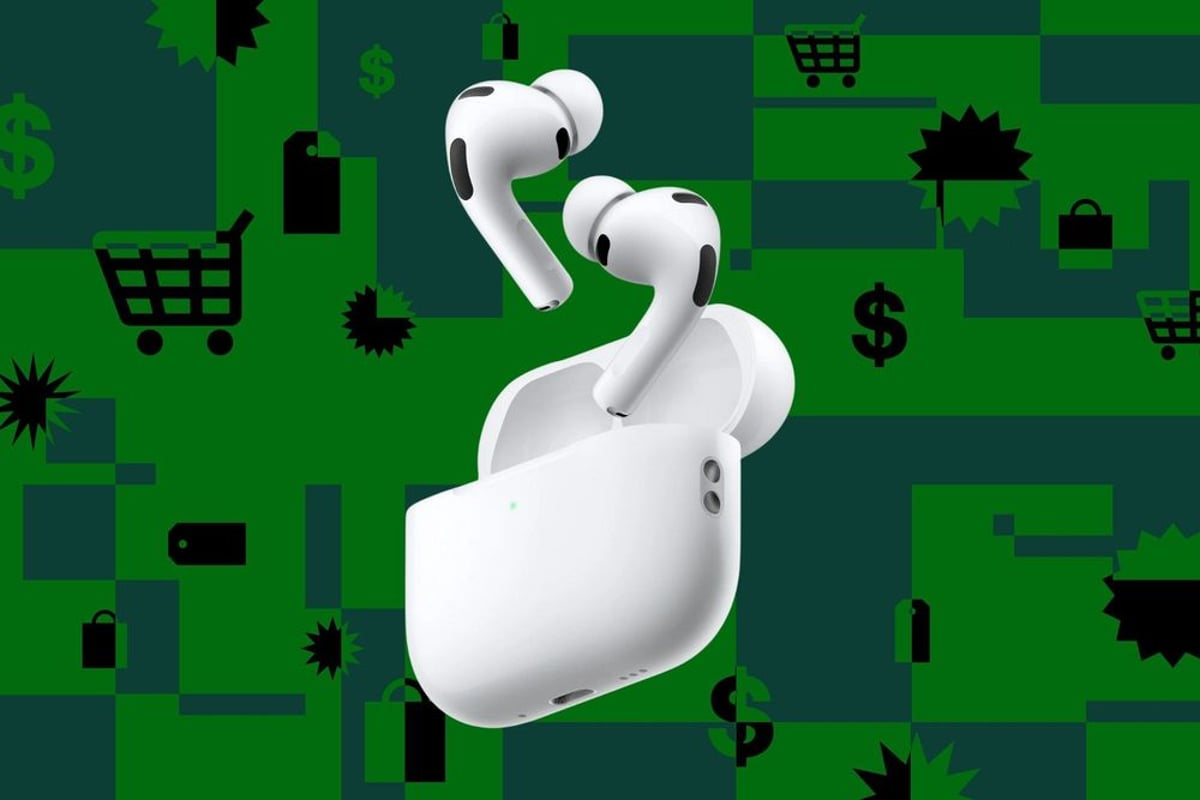
Apple's AirPods Pro 3 just hit their second-lowest price ever at $199.99, down from $249.99, in a coordinated discount across Best Buy, Amazon, and Walmart. The timing comes as retailers battle for consumer electronics market share during Best Buy's spring Upgrade Sale, with the discount sitting just $15 above the earbuds' all-time low since their late 2025 launch.
Apple's premium earbuds are suddenly more accessible as three retail giants match prices in what appears to be a coordinated push to capture spring electronics spending. The AirPods Pro 3, which launched at $249.99 in late 2025, dropped to $199.99 across Best Buy, Amazon, and Walmart as part of Best Buy's broader Upgrade Sale targeting consumer tech categories.
The simultaneous pricing mirrors broader patterns in consumer electronics retail, where major players increasingly coordinate on Apple product discounts to avoid being undercut. According to retail tracking data, AirPods Pro models historically see their deepest cuts during spring and fall promotional windows, with the current $50 discount representing the second-steepest reduction since the third-generation model's debut.
What makes the AirPods Pro 3 noteworthy beyond the discount is Apple's aggressive feature expansion into health and productivity. The third-generation model introduced a built-in heart rate sensor that integrates with Apple's Fitness app, tracking calories burned across more than 50 workout types - a direct play into the wearables health market dominated by Apple Watch. The H2 chip powers real-time translation and conversation awareness features that automatically adjust volume when users speak, positioning the earbuds as productivity tools rather than pure audio accessories.
The hardware improvements extend to fit and durability. Apple added a fifth XXS ear tip size and upgraded the water resistance rating to IP57, addressing long-standing complaints about fit variability. Battery life stretched to eight hours with active noise cancellation enabled, up from the previous generation's six hours, while the angled design promises more secure wear during movement.
But the retail discount story has an interesting counterpoint playing out simultaneously with Meta. The VR headset maker announced price increases starting April 19th - raising the Quest 3S by $50 and Quest 3 by $100 - citing memory shortage pressures according to The Verge. This creates a brief window where consumers can still grab the 128GB Quest 3S at $299.95 and the 512GB Quest 3 at $499 before the hikes take effect.
The contrasting price movements - Apple products dropping while Meta raises prices - reflects different market positions. Apple's mature AirPods line can absorb promotional discounting while maintaining margins through ecosystem lock-in and services revenue. Meta's VR business, still establishing market share and facing actual component cost pressures, lacks the same pricing flexibility.
Retail watchers note that Best Buy's Upgrade Sale serves double duty: moving inventory ahead of potential new product cycles while competing with Amazon's year-round pricing pressure. The sale also includes deals on Amazon-owned Blink's Video Doorbell bundled with Outdoor 4 camera at $43.99 ($96 off), effectively giving away the outdoor camera to drive smart home ecosystem adoption.
The AirPods Pro 3's feature set - including camera remote functionality that lets users snap iPhone photos via stem press and Find My case tracking - demonstrates Apple's strategy of making individual products stickier within its ecosystem. Each feature creates another reason to own multiple Apple devices, making price-conscious buyers at the $199 threshold more likely to remain in the Apple universe long-term.
For Apple, these promotional windows serve as customer acquisition moments. Getting someone into AirPods Pro at $200 versus $250 could be the difference in converting an Android user or retaining someone considering competitors like Sony or Bose. The $50 discount represents a 20% reduction that changes the value calculation for fence-sitters while preserving Apple's premium positioning above budget true wireless options.
The retail coordination itself signals something broader about how major players navigate Apple's pricing structures. While Apple maintains strict MAP (minimum advertised price) policies, periodic promotional windows allow retailers to compete on Apple products without triggering policy violations, creating these synchronized discount events that benefit all parties.
The $199.99 AirPods Pro 3 discount represents more than a simple promotional markdown - it's a snapshot of retail dynamics where coordinated pricing on premium products drives traffic while Apple's ecosystem strategy ensures long-term customer value beyond the initial sale. With Meta moving in the opposite direction on VR pricing due to component costs, the contrasting approaches highlight how market position determines pricing flexibility. For consumers, the window between now and potential new product announcements in fall 2026 offers the rare chance to grab Apple's flagship earbuds at near-historic lows, though the $15 gap to their all-time best price suggests even deeper cuts could materialize if inventory pressures mount.