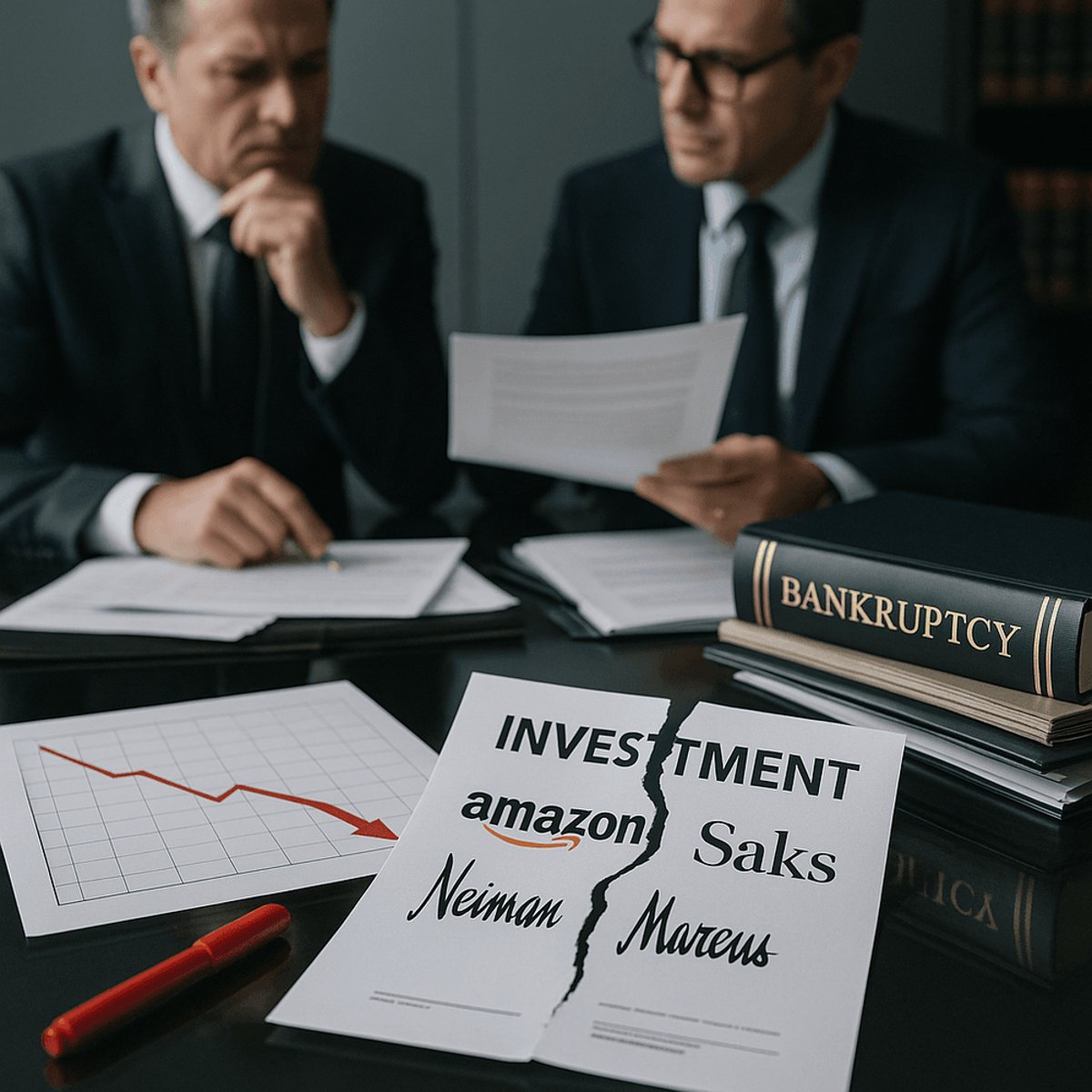
Amazon just watched its $475 million gamble on luxury retail evaporate overnight. The e-commerce giant filed legal papers Wednesday demanding a federal judge reject Saks Global's bankruptcy financing plan, arguing the department store "burned through hundreds of millions of dollars in less than a year" and broke its core agreements. It's a stunning reversal for one of tech's most ambitious retail bets and signals how quickly Amazon's carefully structured investment deal could unravel in bankruptcy court.
Amazon is pulling the emergency cord on its Saks investment. In court papers filed Wednesday just hours after Saks Global filed for Chapter 11 bankruptcy protection, the e-commerce giant's lawyers came out swinging, describing a retail operation that collapsed under its own weight almost immediately after a major acquisition.
The $475 million Amazon invested when Saks acquired Neiman Marcus for $2.7 billion in December 2024 was supposed to be a strategic masterstroke. Amazon would get guaranteed placement for luxury fashion and beauty on its sprawling marketplace through an exclusive "Saks at Amazon" storefront. In return, Saks agreed to minimum payments of at least $900 million to Amazon over eight years in referral fees. The tech company would also provide technology and logistics expertise to modernize the struggling department store chain.
What happened instead, according to Amazon's court filing, was a financial catastrophe. "That equity investment is now presumptively worthless," Amazon's attorneys wrote bluntly. "Saks continuously failed to meet its budgets, burned through hundreds of millions of dollars in less than a year, and ran up additional hundreds of millions of dollars in unpaid invoices owed to its retail partners."
The speed of the implosion is almost breathtaking. Less than 13 months separated the Neiman Marcus acquisition from bankruptcy filing. For a deal Amazon structured to gain influence over the combined company's operations and guarantee revenue streams, the collapse represents a significant setback in the company's broader push to establish deeper roots in luxury retail and physical commerce.
Amazon isn't just writing off the loss quietly. The company is actively fighting to protect its interests in the bankruptcy process. Its filing argues that Saks' proposed bankruptcy financing plan - which would inject $1.75 billion in new capital - actually harms creditors like Amazon by loading the company with fresh debt that creates additional obligations. More importantly, the restructuring plan pushes Amazon further back in the creditor payment line, meaning the tech company stands to recover far less of what it's owed compared to other creditors.
U.S. Bankruptcy Judge Alfredo Perez approved allowing Saks to tap the $1.75 billion financing pool during Wednesday's hearing in Houston, determined to keep the company functioning through restructuring rather than face immediate liquidation. But the judge hasn't yet ruled on Amazon's specific objections.
The tone of Amazon's filing carries an implicit threat. The company wrote that it "hopes" Saks will address its concerns, but if management doesn't, Amazon indicated it may "seek more drastic remedies" - legal code for potentially requesting the appointment of an independent examiner or even a trustee to oversee operations. It's the kind of leverage large creditors wield in bankruptcy negotiations, and Amazon is clearly signaling it's willing to use it.
This situation echoes a strategic pattern for Amazon. The company has made similar conditional investments before. In 2022, Amazon took a 2% stake in food delivery platform Grubhub in exchange for Prime member benefits, then expanded that stake to as much as 18% by 2024 as the relationship deepened. The Saks bet was structured similarly - a minority stake bundled with guaranteed commerce opportunities on Amazon's platform. But the dynamics were always riskier. Department stores have been fighting existential battles for years, and integrating two struggling luxury retailers while managing the operational complexity proved too much for the combined organization.
What's particularly stinging for Amazon is the guaranteed payment structure. Even though the equity investment is essentially worthless, the company still expects Saks to honor the minimum $900 million payment guarantee over eight years. In bankruptcy, that becomes a contractual claim the company will have to fight to collect - a far cry from the passive investment dividend Amazon likely expected when structuring the original deal.
Salesforce, which also took a minority stake in Saks during the Neiman Marcus acquisition, faces similar pressures but hasn't yet signaled whether it will formally object to the bankruptcy plan.
Amazon's $475 million Saks investment represents a rare public setback for the company's retail ambitions - and it's far from over. The coming weeks will show whether Amazon can leverage its creditor position to influence how Saks restructures, protect the guaranteed revenue stream, or potentially expand its ownership stake if the bankruptcy opens that door. For now, Amazon is making clear it won't absorb this loss quietly, signaling to other potential retail partners that when deals go south, the e-commerce giant is willing to fight in court. The luxury retail industry is watching closely - this is what happens when a tech company's playbook meets the brutal realities of a dying department store.