Amazon just made fresh groceries available for same-day delivery in over 2,300 US cities, marking a massive acceleration in the company's push to dominate quick-commerce. The expansion comes as perishable grocery sales have exploded 30 times since January, with fresh items now claiming nine of the top ten spots for fast delivery on the platform.
Amazon just dropped a logistics bombshell that's reshaping America's grocery landscape. The e-commerce giant announced Wednesday that customers in over 2,300 cities and towns can now get fresh groceries delivered the same day they order them - more than doubling its August footprint of 1,000 cities.
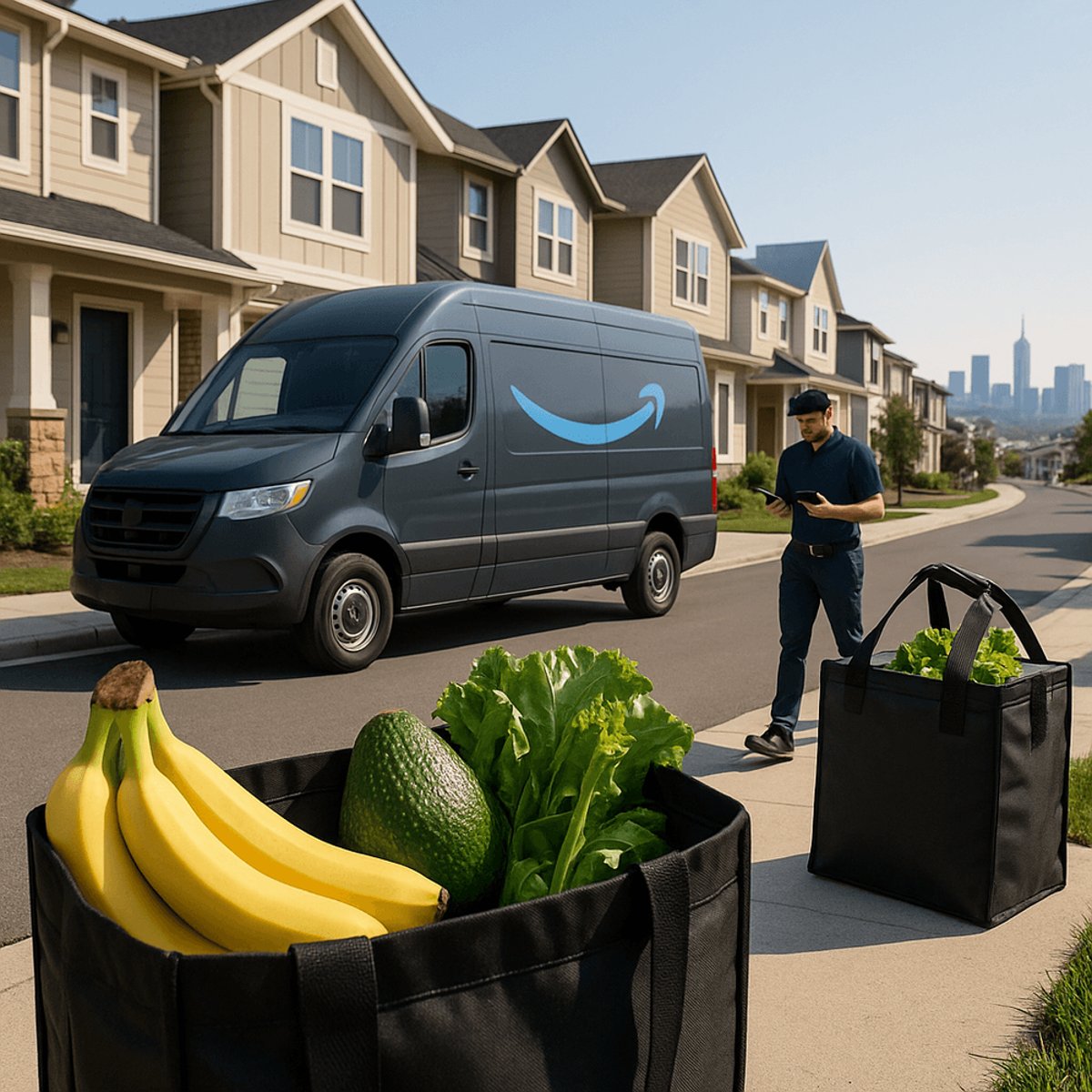
The numbers tell the story of Amazon's grocery ambitions coming to life. Perishable sales have grown 30 times since January, according to Amazon's official announcement. Fresh groceries now make up nine of the top ten most-ordered items for fast delivery, with bananas leading the charge alongside Haas avocados and strawberries.
This isn't just expansion - it's warfare. When Amazon first launched perishable same-day delivery in August, industry watchers immediately saw it as a direct assault on Instacart and Walmart+ in the quick-commerce space. Now with 2,300 cities covered, Amazon's basically drawn a line in the sand across most of America.
The logistics behind this rollout are staggering. Amazon says it's built out a "specialized temperature-controlled fulfillment network" that puts orders through a six-point quality check before delivery in insulated bags. That's the kind of infrastructure investment that takes years to build and signals Amazon's long-term commitment to owning grocery delivery.
Customer behavior is shifting fast. People who add fresh groceries to their same-day orders shop about twice as often as those who don't - a metric that should have Target and traditional grocers seriously worried. Amazon's also expanded its perishable selection by over 30% since August, pulling in thousands of items from Whole Foods Market.
The pricing strategy reveals Amazon's confidence. Prime members get free same-day delivery on orders over $25, with just a $2.99 fee below that threshold. Non-Prime customers pay $12.99 regardless of order size - steep enough to drive Prime subscriptions but accessible enough to build market share.
What's fascinating is how Amazon's leveraging its existing infrastructure advantage. While competitors like Instacart rely on gig workers shopping at partner stores, Amazon's controlling the entire supply chain from warehouse to doorstep. That control translates to consistency and scale that's tough for competitors to match.
The timing couldn't be better for Amazon. The quick-commerce market is exploding, with consumers increasingly willing to pay premiums for convenience. DoorDash has been aggressively expanding beyond restaurant delivery, while Uber pushes deeper into grocery through Uber Eats. Amazon's 2,300-city launch essentially blankets the competitive landscape before rivals can establish footholds.
Looking ahead to 2026, Amazon promises even more cities will get coverage. That's not just expansion - it's market domination strategy. Every new city Amazon enters makes it harder for local and regional competitors to gain traction, while the data Amazon collects on grocery shopping patterns becomes invaluable for everything from inventory management to targeted advertising.
For traditional grocers without strong delivery infrastructure, Amazon's nationwide push represents an existential threat. The company's already proven it can reshape entire retail categories - and with grocery representing a $800 billion annual market in the US, the stakes couldn't be higher.
Amazon's expansion to 2,300 cities isn't just about grocery delivery - it's about cementing the company's position as America's default shopping platform. With perishable sales growing 30x and customers shopping twice as frequently when they add groceries, Amazon's creating the kind of sticky, high-frequency relationship that retail competitors can't easily replicate. As the company promises even more cities in 2026, traditional grocers and quick-commerce startups alike need to rethink their strategies for a market increasingly dominated by Amazon's logistics machine.