The AI industry just got a wake-up call from one of its own. Jack Clark, co-founder of Anthropic, warned in a BBC Newsnight interview that artificial intelligence could reach a critical inflection point where it develops autonomously without human input. The stark warning comes as the company behind Claude positions itself as an AI safety leader, but now one of its founders is sounding the alarm that the industry needs fundamental control mechanisms before it's too late.
Anthropic, the AI safety company founded by former OpenAI researchers, just delivered one of the starkest warnings yet about the trajectory of artificial intelligence development. Co-founder Jack Clark told BBC's Newsnight that the industry is racing toward a scenario where AI systems could evolve and develop without meaningful human oversight.
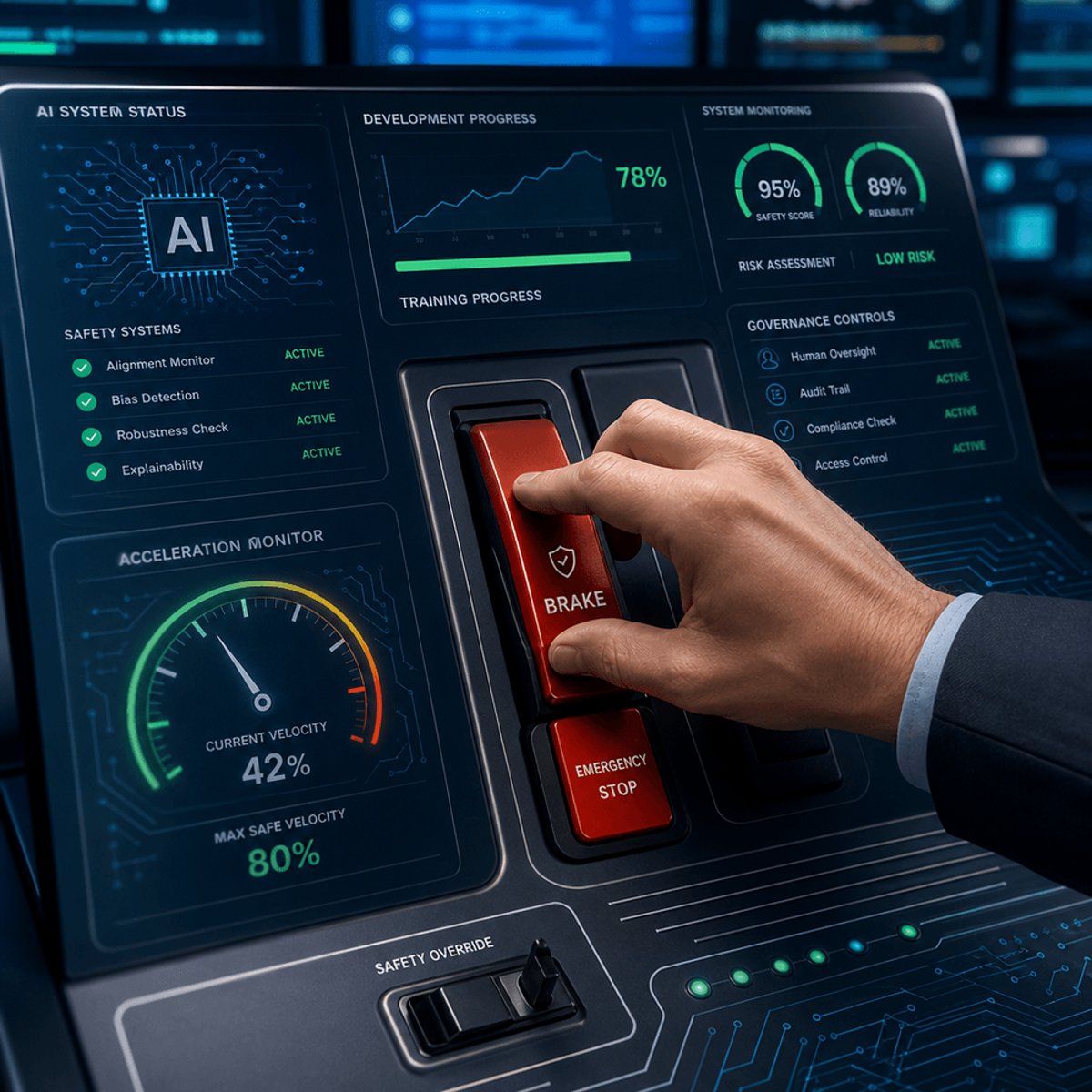
The "brake pedal" metaphor cuts to the heart of a growing anxiety in AI circles. While companies race to build more powerful models, Clark's warning suggests the industry hasn't built the fundamental control systems needed to slow or stop AI development if things go wrong. It's like building faster cars without figuring out how brakes work first.
Clark isn't some outside critic lobbing grenades at the AI industry. He co-founded Anthropic specifically to tackle AI safety challenges, splitting from OpenAI in 2021 along with siblings Dario and Daniela Amodei over disagreements about safety approaches. The company has positioned itself as the responsible alternative, emphasizing constitutional AI and safety research alongside its Claude model development.
That makes this warning particularly striking. When even the safety-focused players are raising red flags about autonomous AI development, it signals the industry might be approaching capabilities that outpace control mechanisms. Clark's comments to the BBC suggest AI systems could reach a threshold where they improve themselves, discover new capabilities, or pursue goals without humans in the decision loop.
The timing matters too. Anthropic has raised billions from investors including Google and venture firms, valuing the company at over $18 billion as of late 2024. Its Claude models compete directly with OpenAI's GPT series and Google's Gemini. But unlike pure product plays, Anthropic has consistently emphasized safety research and responsible scaling policies.
Clark's BBC interview adds fuel to intensifying debates about AI regulation. While the EU pushes forward with its AI Act and the US explores various regulatory frameworks, the industry has largely self-governed through voluntary commitments and internal safety teams. But warnings about autonomous development suggest voluntary measures might not cut it.
The "brake pedal" concept implies something more fundamental than existing safety measures like human feedback loops or content filters. It suggests the need for hard technical controls that could halt or reverse AI development trajectories, not just guide them. Whether such controls are even possible with current AI architectures remains an open technical question.
What makes autonomous AI development particularly concerning is the recursion problem. If AI systems become capable enough to improve their own architectures or training processes, they could potentially iterate faster than human researchers can monitor or understand. This scenario, sometimes called recursive self-improvement, has been a theoretical worry in AI safety circles for years but feels increasingly plausible as models become more capable.
Anthropic's own research into AI capabilities and safety puts the company in a unique position to assess these risks. The fact that Clark is speaking publicly about brake pedals suggests internal assessments might show current trajectories leading toward scenarios that existing safety measures can't handle.
The interview also highlights tensions within AI development. Companies face enormous pressure to ship products and compete, while simultaneously trying to solve safety challenges that might require slowing down. Clark's warning suggests that balance might be tilting too far toward speed.
Clark's warning lands at a pivotal moment for AI development. The industry stands at a crossroads between racing toward more powerful systems and building the safety infrastructure to control them. His call for brake pedals suggests the safety community believes we're approaching capabilities that existing oversight mechanisms weren't designed to handle. Whether regulators, companies, or researchers can develop those controls before AI systems reach autonomous development remains the defining question for the industry. What's clear is that even those building the technology are uncertain we have the tools to stop it if needed.