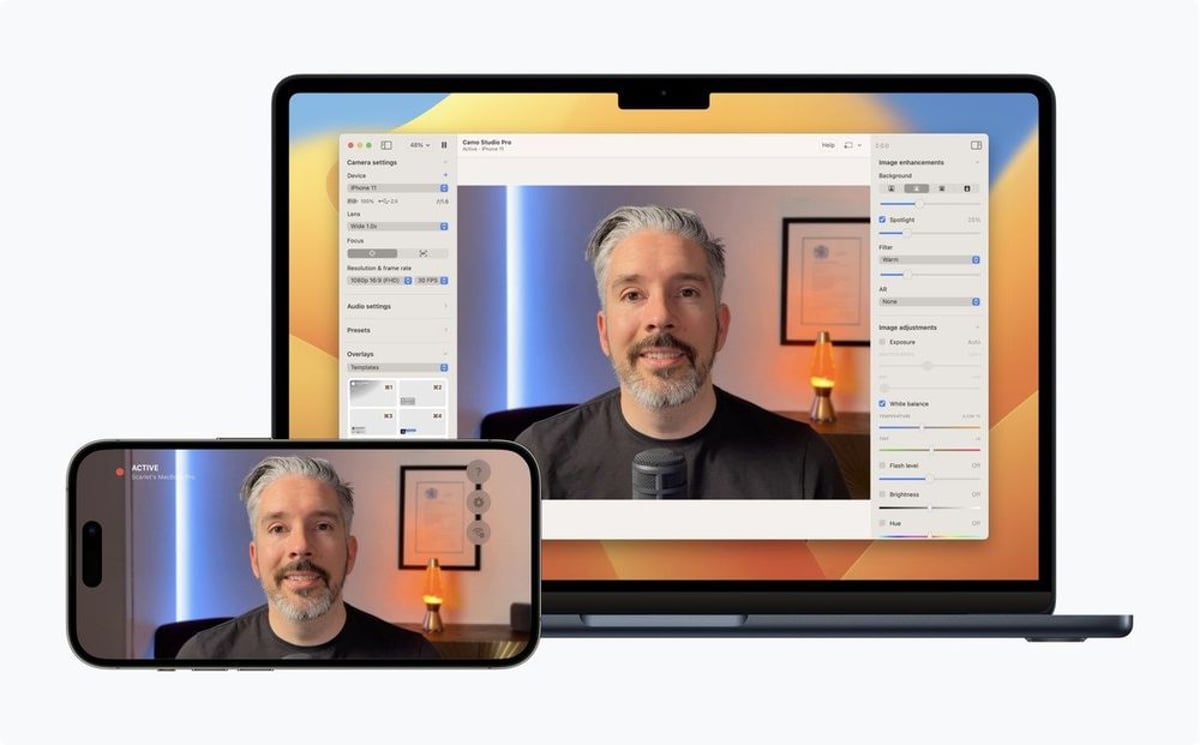
Reincubate just fired a legal shot across Apple's bow, alleging the iPhone maker copied its popular Camo webcam app and used its platform control to crush competition. The London-based developer claims Apple not only infringed its patents but weaponized the App Store and iOS to redirect users toward Continuity Camera, Apple's own phone-to-webcam feature launched in 2022. It's a classic 'Sherlocking' case with a twist - Reincubate says thousands of Apple employees were running Camo internally before the company allegedly pulled the rug out.
Reincubate just became the latest developer to accuse Apple of the tech industry's most feared move - 'Sherlocking' a successful app by building a copycat feature directly into the operating system. The lawsuit, filed this week, alleges Apple didn't just replicate Reincubate's Camo webcam app - it actively undermined the product after thousands of Apple employees had been using it internally.
Camo launched in July 2020 with a simple but powerful pitch: turn your iPhone or Android device into a high-quality webcam for your Mac or PC. The timing couldn't have been better - the pandemic had sent everyone scrambling for better home office setups, and built-in laptop cameras were notoriously terrible. Reincubate's solution was elegant, cross-platform, and quickly gained traction.
Then in 2022, Apple unveiled Continuity Camera at WWDC. The feature did essentially the same thing Camo did - but only between Apple devices. According to the lawsuit filed in federal court, that's when things got ugly. Reincubate claims Apple "copied the technology" and "used its control over its operating systems and App Store to disadvantage that interoperable solution and redirect user demand to Apple's own platform-tied offering."
The allegations cut deeper than simple feature copying. Reincubate CEO Aidan Fitzpatrick reveals in a detailed blog post that Apple was an early cheerleader for Camo. "Thousands of staff" at Apple were running the app internally during beta testing, he says, and the company made "all sorts of promises" about support. The lawsuit claims Camo was being used "across all divisions of the company" and that "at first, Apple encouraged Reincubate to increase its investment in Camo."
But once Camo proved the concept worked and users loved it, Fitzpatrick alleges Apple flipped the script. "They took it and built our features into a billion iPhones, Macs, displays, iPads and TVs, while shutting us out and preventing additional interop we could provide to the ecosystem," he writes. The lawsuit goes further, claiming Apple didn't just copy - it actively worked to "undermine Camo's functionality such that Reincubate could not compete."
The patent infringement claims add a legal dimension beyond antitrust concerns. Reincubate holds patents on the technology that enables smooth, high-quality video streaming from mobile devices to computers - tech it claims Apple lifted wholesale for Continuity Camera. Apple hasn't commented on the lawsuit yet, declining to respond to media requests.
Fitzpatrick says he was initially "puzzled" by Apple's decision to launch Continuity Camera. The feature requires users to physically mount their iPhone near their Mac - not exactly Apple's usual seamless experience. "Connecting two devices and seeking out a mount didn't seem like the sort of setup that Apple would lean into," he writes. If Apple really cared about webcam quality, he argues, they would've just put better cameras in MacBooks. "As I write this the webcams in many Windows devices still outclass the one in my MacBook."
The answer, Fitzpatrick concluded, wasn't about solving user problems - it was about protecting the walled garden. "We'd not come between Apple and users, we'd come between Apple and their walled garden," he writes. By offering a solution that worked across iOS, Android, Mac, and PC, Camo threatened to make Apple's ecosystem less sticky.
This case echoes a pattern that's dogged Apple for years. The term "Sherlocking" originated when Apple's Sherlock search tool absorbed features from the popular Watson app in the early 2000s. Since then, countless developers have watched their innovations get absorbed into iOS or macOS. Recent examples include Apple's weather app incorporating features from Dark Sky after acquiring it, and Screen Time mirroring functionality from parental control apps.
But Reincubate's lawsuit raises the stakes by alleging not just copying, but active sabotage. The company claims Apple used its control over iOS and the App Store to make Camo less functional - though specific technical details of how Apple allegedly did this aren't spelled out in the publicly available complaint.
The legal battle comes as Apple faces mounting regulatory pressure over App Store practices. The EU's Digital Markets Act has forced Apple to allow third-party app stores and payment systems. The US Department of Justice is pursuing an antitrust case over iPhone ecosystem control. Epic Games' multi-year legal fight over Fortnite set precedents about what Apple can and can't do with its platform power.
Fitzpatrick frames the lawsuit as bigger than just Camo. "Whether there's room for developers to stimulate the building blocks of the digital experience, or whether we must limit ourselves to building platforms that stand alone in the cloud, or ideas that are too insignificant to duplicate and freeze out," he writes. It's a question that matters to every developer building on Apple's platforms - which is to say, nearly every developer period.
For now, both Camo and Continuity Camera remain available. Camo still offers its cross-platform advantage - Android and Windows support that Apple will never match. But competing against a free, built-in feature backed by a $3 trillion company is a brutal uphill battle, even with superior functionality. The lawsuit will test whether US courts see that dynamic as normal competition or illegal monopoly abuse.
The Reincubate lawsuit forces a reckoning over where competition ends and platform abuse begins. If Apple really did encourage Camo's development while thousands of its own employees used the app internally, then turned around and copied it while locking out third-party functionality - that's not just aggressive competition, it's the kind of monopoly behavior regulators are increasingly unwilling to tolerate. For developers, the message is chilling: even if Apple employees love your product and the company promises support, you're always one WWDC keynote away from obsolescence. The outcome of this case could set boundaries for what platform owners can copy and when - or confirm that in Apple's ecosystem, the house always wins.