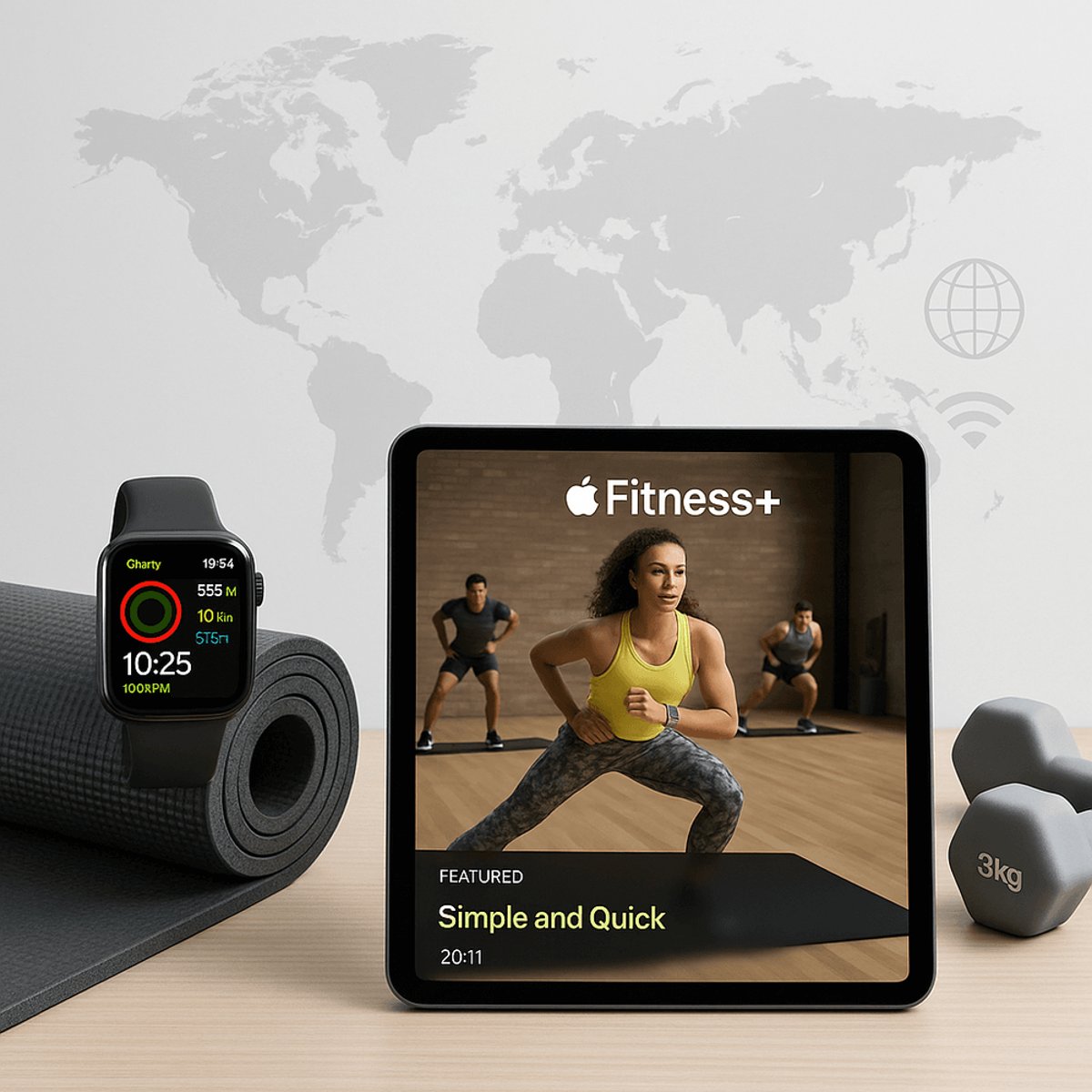
Apple just announced its largest Fitness+ expansion since launch, bringing the fitness service to 28 new markets on December 15. The rollout includes AI-powered dubbing in Spanish, German, and Japanese - marking Apple's first major use of synthetic voices for fitness content. The expansion pushes Fitness+ to 49 countries total, directly challenging Netflix's fitness programming and Peloton's global ambitions.
Apple is making its boldest play yet in the global fitness streaming market. The company's Fitness+ service launches in 28 new territories on December 15, bringing the total to 49 countries - but the real story is how Apple's doing it.
For the first time, Apple is using AI-generated voices to dub hundreds of workout videos in Spanish, German, and Japanese. According to the official announcement, new dubbed episodes will be added weekly, suggesting this isn't a one-time experiment but a core localization strategy.
The timing couldn't be more strategic. Peloton has been struggling with subscriber growth, losing 29% of its connected fitness subscribers over the past year according to recent earnings. Meanwhile, Netflix has been quietly building its fitness library, and Amazon Prime Video recently expanded its wellness programming.
"This is Apple's largest expansion since we unveiled Fitness+ five years ago," the company stated, highlighting markets like India, Hong Kong, Taiwan, and the Netherlands. Japan gets special treatment with a dedicated launch "early next year" alongside Japanese dubbing.
The service's pricing remains aggressive at $9.99 monthly versus Peloton's $12.99 app subscription. But Apple's real advantage lies in hardware integration - Fitness+ works seamlessly with Apple Watch, iPhone, iPad, and the new AirPods Pro 3, which can now display heart rate data directly onscreen during workouts.
Apple's celebrity partnerships continue expanding too. The Artist Spotlight series now features dedicated workout playlists for Taylor Swift, Beyoncé, BTS, and Selena Gomez. The Time to Walk feature just added Formula 1 driver Yuki Tsunoda, clearly targeting international markets ahead of this expansion.
The technical requirements tell another story about Apple's ecosystem strategy. The AI dubbing requires iOS 26.1, iPadOS 26.1, and tvOS 26.1 - basically forcing users to upgrade to Apple's latest operating systems to access localized content.
Custom Plans, Apple's answer to personalized fitness recommendations, automatically creates schedules based on user preferences. It's a direct response to how Spotify uses AI for music recommendations, but applied to fitness routines.
What's particularly interesting is the K-Pop addition to Fitness+ music genres. With BTS already featured in Artist Spotlight, Apple's clearly betting on Korean cultural exports to drive international adoption. The timing aligns perfectly with the service launching in markets with significant K-Pop fanbases.
The expansion also includes three months free for new Apple device purchasers - a sweetener that could drive hardware sales during the holiday season. Given that Apple Watch is required for the full Fitness+ experience, this creates a compelling bundle proposition.
But the AI dubbing raises questions about Apple's broader voice strategy. While Google and Amazon have been using synthetic voices for years, Apple has typically prioritized human voices for premium experiences. This marks a notable shift toward embracing AI-generated content.
Apple's Fitness+ expansion represents more than geographic growth - it's a technology showcase for AI dubbing and a direct challenge to established fitness platforms. By combining hardware integration, celebrity partnerships, and now AI localization, Apple is building a moat around its fitness offering that competitors will struggle to match. The real test comes when users in these 28 new markets decide whether Apple's ecosystem approach beats standalone fitness apps. With Peloton stumbling and Netflix still building its fitness library, Apple's timing couldn't be better.