The calculus is shifting for Western companies navigating Chinese technology. Apple and Ford are among a growing roster of global firms doubling down on Chinese tech partnerships - from AI models to battery systems - even as Washington and Beijing trade sanctions. The reason is simple: Chinese tech has become too advanced and cost-effective to ignore, forcing executives to balance innovation needs against mounting geopolitical risk.
Apple just made a quiet but telling move in its AI strategy. The Cupertino giant is tapping Chinese AI capabilities in ways that would have been unthinkable five years ago, joining Ford and other Western titans in a pragmatic embrace of Chinese innovation that cuts against the grain of deteriorating US-China relations.
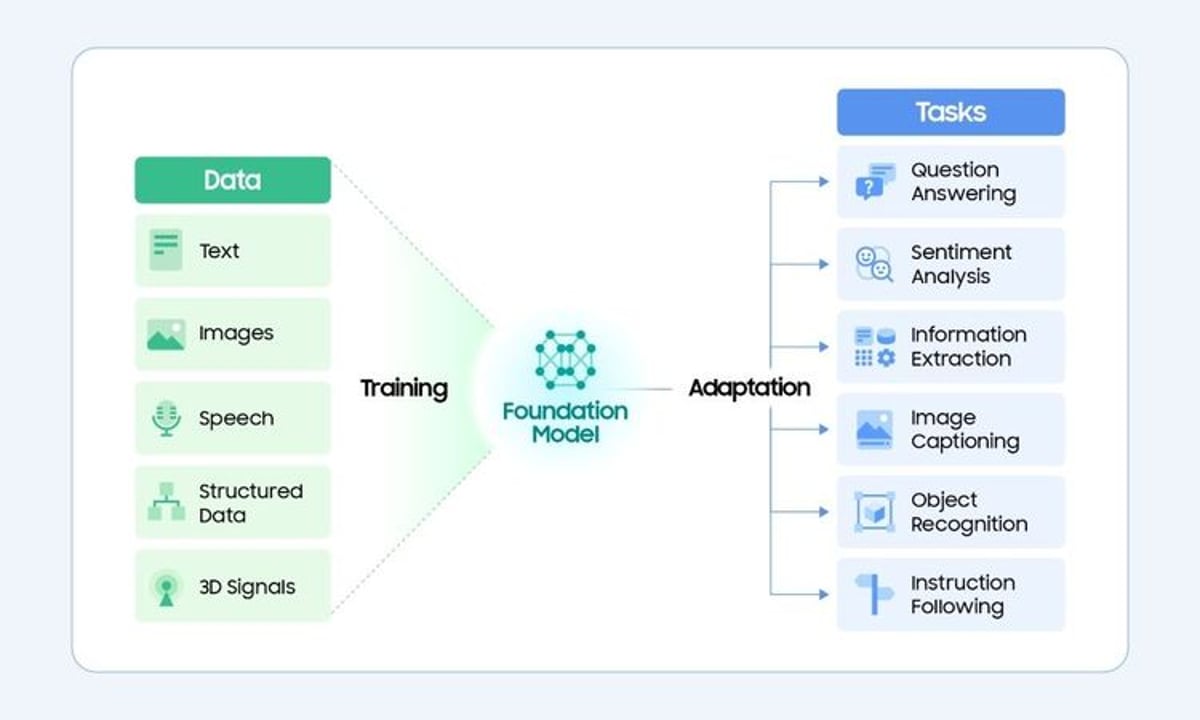
The pivot reflects cold business logic. Chinese firms like DeepSeek have demonstrated AI model efficiency that rivals OpenAI and Google while operating at a fraction of the computational cost. For companies under pressure to deliver AI features without ballooning infrastructure budgets, that's an impossible proposition to ignore. DeepSeek's latest models reportedly achieve comparable performance to GPT-4 class systems while requiring significantly less training compute - a breakthrough that's caught the attention of enterprise buyers worldwide.
Ford is making similar calculations in the battery space. The automaker continues to deepen its partnership with CATL, the Chinese battery manufacturer that controls roughly 37% of the global EV battery market. CATL's newest lithium-iron-phosphate cells deliver energy density improvements that let Ford hit cost and range targets its domestic battery partners can't yet match. It's a dependency that makes some Washington policymakers nervous, but Ford executives argue they can't compete in the EV transition without access to the best battery tech available.
The trend extends beyond these two companies. Western semiconductor firms are licensing Chinese chip design tools. European automakers are integrating Chinese autonomous driving stacks. American manufacturers are deploying Chinese industrial automation systems. In each case, the pattern is the same: Chinese suppliers have climbed the value chain faster than many Western executives anticipated, and their technology now sits at the cutting edge in critical categories.
This creates an uncomfortable reality for policymakers pushing to decouple technology supply chains. While Washington restricts semiconductor exports to China and scrutinizes Chinese software in critical infrastructure, private companies are voting with their procurement dollars. They're concluding that excluding Chinese technology means accepting performance gaps their competitors won't tolerate.
The geopolitical risks remain real and rising. The White House has expanded export controls, tightened investment screening, and pressured allies to limit Chinese tech adoption. Companies relying on Chinese suppliers face potential disruptions from future sanctions, forced technology transfers, and data security concerns. Several Western firms have faced congressional scrutiny for Chinese technology partnerships, and more regulatory friction appears inevitable.
But the competitive pressure cuts the other way. Tesla demonstrated that embracing Chinese manufacturing and supply chains could be a strategic advantage rather than a liability. The company's Shanghai factory uses extensively localized components, including Chinese-made batteries and software systems, and has become its most profitable production site. Other automakers took note.
The AI sector is watching a similar dynamic unfold. As Meta and other US firms race to deploy AI features across their products, they're discovering that Chinese AI companies have solved key efficiency problems that reduce deployment costs dramatically. Some are exploring licensing deals or technical partnerships that would have seemed politically impossible just months ago.
Industry analysts say the Chinese technology sector's rapid advancement reflects massive domestic investment, fierce internal competition, and scale advantages from serving the world's largest internet population. Chinese AI companies train models on datasets Western firms can't easily access. Chinese battery makers benefit from vertical integration into raw material processing that gives them cost structures rivals can't match. These structural advantages aren't easily replicated or regulated away.
For Western executives, the decision framework is becoming clearer, if not easier. They're segmenting their Chinese tech exposure by criticality and sensitivity - using Chinese components in consumer products while maintaining domestic sources for defense or critical infrastructure applications. They're building redundancy into supply chains where possible, even as they acknowledge that dual-sourcing often means accepting inferior alternatives to Chinese suppliers.
The calculations are especially acute in the automotive sector, where the shift to electric vehicles has reshuffled traditional supplier relationships. Legacy automakers find themselves dependent on Chinese battery chemistry innovations, thermal management systems, and increasingly sophisticated software. Ford announced earlier this year it would license CATL's battery technology for a Michigan factory - a hybrid approach that brings Chinese IP to American manufacturing but doesn't eliminate the underlying technology dependence.
Apple faces its own version of this challenge as it builds out AI capabilities for future iOS releases. The company has historically maintained tight control over core technologies, but the economics of training and deploying large language models are pushing even Apple toward external partnerships. Chinese AI efficiency breakthroughs offer a path to deliver features without the massive capital expenditure its US rivals are making on datacenter infrastructure.
What's emerging is a new model of technology interdependence that policymakers haven't quite figured out how to manage. The Cold War offered a template for technology decoupling because Soviet capabilities generally lagged the West. Today's situation is different - Chinese technology leads in specific high-value domains, creating dependencies that are expensive or impossible to eliminate quickly. Companies are making the pragmatic choice to compete today while hoping policymakers and technology evolution will eventually provide alternatives.
That bet may or may not pay off, but for now the direction of travel is clear: Chinese technology is becoming harder to avoid, not easier.
The embrace of Chinese technology by companies like Apple and Ford marks a turning point in how global firms navigate the intersection of innovation and geopolitics. These aren't reckless gambles but calculated decisions that Chinese capabilities in AI, batteries, and other critical technologies have advanced too far to ignore. While policymakers work on decoupling strategies, executives are confronting a harder truth: in some domains, Chinese tech isn't just competitive - it's leading. That reality is reshaping supply chains, corporate strategies, and the balance of technological power in ways that will define the next decade of global competition. The question isn't whether companies will use Chinese technology, but how they'll manage the dependencies they're creating.