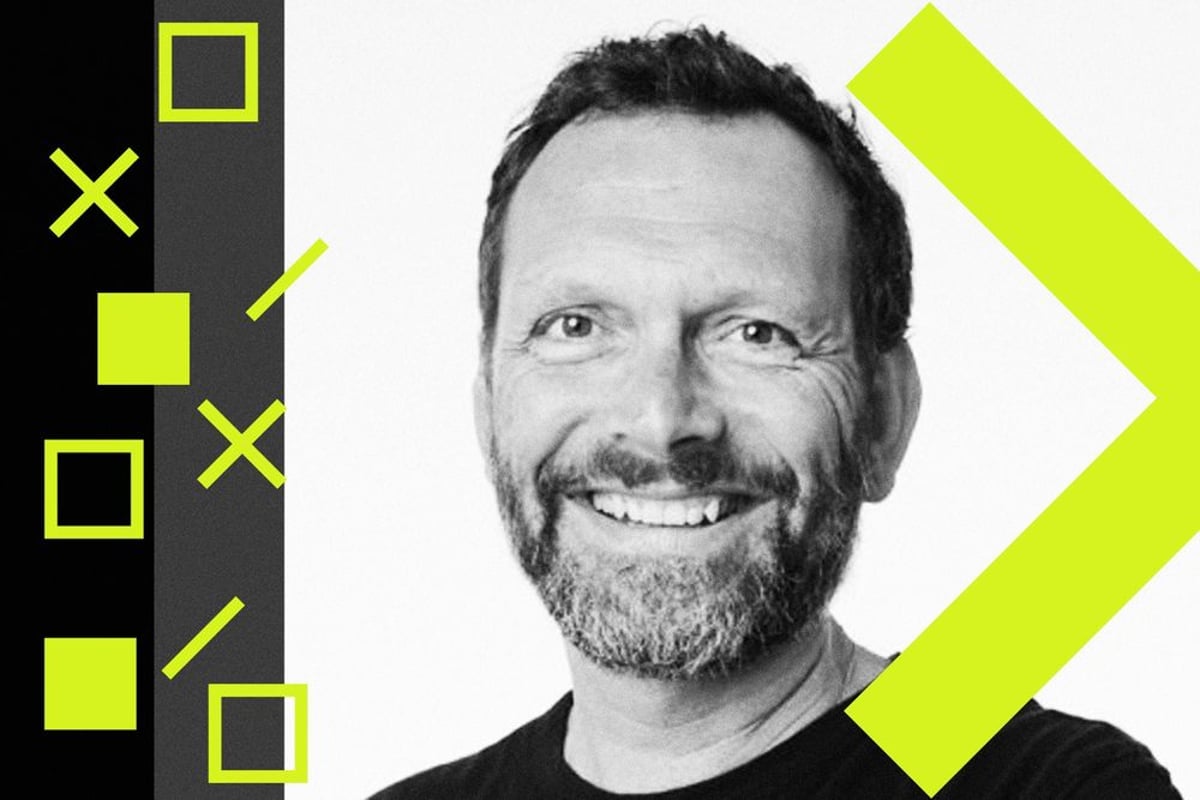
Bluesky just got serious about the long game. Toni Schneider, the former Automattic CEO who built WordPress into an open-source powerhouse, officially dropped the "interim" tag from his Bluesky CEO title after four months at the helm. In a wide-ranging Decoder podcast interview, Schneider laid out a decade-long roadmap that includes handing AT Protocol to standards bodies, launching private communities, and introducing affiliate-style monetization—all while keeping the 50-person company focused on serving "the public good" rather than chasing TikTok-style engagement.
Toni Schneider isn't just running Bluesky—he's architecting its future as infrastructure. The newly permanent CEO, who spent years steering Automattic and the WordPress ecosystem, sat down with The Verge's Decoder podcast to detail how a 50-person company plans to compete with walled-garden giants by doing the opposite: giving away control.
The leadership transition itself tells the story. Jay Graber, Bluesky's founding CEO who shepherded the project out of Twitter's incubator, stepped into a chief innovation officer role to focus on AI integration and protocol development. Schneider, already a True Ventures investor in the company, moved from interim to permanent CEO after what he describes as a gradual two-month process.
"The job is great. The team is great. The mission is what I want to work on for the next 10 years," Schneider told Decoder host Nilay Patel. That decade timeline isn't rhetorical—it's the lens through which he's making irreversible decisions about protocol governance.
The 50-person team is structured around three product groups: the consumer-facing Bluesky app (45 million users), the developer-focused ATmosphere ecosystem (approaching 1,000 daily active apps), and an exploration team led by Graber working on Attie, an AI layer for the protocol. SDK downloads have tripled to nearly a million per month. It's scaling, but the real work is about control—or rather, giving it up.
Bluesky is methodically transferring pieces of AT Protocol to independent entities. The identity directory—the DNS-equivalent lookup system that's core to decentralization—is being handed to a Swiss nonprofit with a separate board. Last week, the IETF officially accepted AT Proto as a work stream, putting it on track to become a blessed internet standard outside Bluesky's control. "We 100% do not want to control the standard," Schneider emphasized, pointing to the WordPress model where Automattic became a billion-dollar company while the open-source ecosystem thrived independently.
But here's the tension: Bluesky the app and AT Protocol the standard serve different masters. The consumer app has a reputation problem—widely perceived as a progressive echo chamber sitting opposite X's hard-right shift. Schneider wants to expand that, pointing to sports content as proof it's possible. "We've made a very concerted effort to bring on sports leagues and sports writers, and it's worked really well," he said. Yet when pressed on whether he wants users to leave X for Bluesky, his answer is careful: "Yes. It can stay on X too."
The protocol's next evolution addresses the app's biggest limitation: everything on AT Proto is currently public. Private data support is rolling out soon, enabling Reddit-style closed communities that still interoperate across the network. "Once we enable private data, I think it's like 10 or 100X the number of use cases we can serve," Schneider said. People are already bending custom feeds into community shapes—BookSky, AstroSky—but true private spaces would unlock DMs, membership groups, and subscription communities while keeping them on the shared protocol.
Moderation scales through that same distributed approach. Bluesky has its own trust and safety team plus contractors, but the protocol lets anyone label content and anyone else choose whether to use those labels. BlackSky, the first major third-party network built for Black users with custom moderation policies, operates independently while still federating with the broader network. "There should be lots of different teams and lots of different systems because each network, each community has its own idea of what moderation should look like," Schneider explained.
Then there's money. Schneider confirmed Bluesky will begin monetizing this year through an affiliate model—taking a percentage of subscriptions driven by traffic the platform sends to publishers. "We would only take a percentage of anything that we actually enable," he clarified, ruling out both traditional ads and crypto schemes. The model needs to work for the entire ATmosphere, not just the Bluesky app, which rules out purely app-based revenue streams. "We make money when everybody else makes money."
It's a bet that echoes WordPress hosting economics: thousands of providers competing on service while the protocol remains neutral. But Bluesky sends two million clicks a day to publishers already—far more than most platforms drowning in link suppression. "We're the number-one referrer to a bunch of publishers, and we want to do more of that," Schneider said. The pitch is simple: help publishers monetize better, take a slice of the upside, avoid the engagement trap that turned every other network into TikTok clones.
On AI, Schneider sees velocity gains rather than wholesale transformation. Bluesky's three-to-four-person exploration team is "launching at very high velocity" with AI tools, but existing product complexity remains. "The building part is faster than what to build. The ideas are just as hard as ever," he noted. AI is making it easier for developers to build on AT Proto—"point to one of the AI coding tools and say, 'Hey, build me a social app'"—but product-market fit still requires human judgment.
The ActivityPub question looms large. Mastodon and Meta's Threads already federate via ActivityPub; shouldn't there be one standard? Schneider expects long-term coexistence because the protocols solve different problems. ActivityPub is server-centric—you run your server, federate if you want. AT Proto is user-centric—millions of personal data servers (PDS) that travel with you. "Both can be wildly successful, and it's not one or the other," he argued, though history suggests standards wars rarely end in peaceful coexistence.
What's clear is Schneider is optimizing for 2036, not 2026. Handing protocol governance to standards bodies is a 20-year decision. Private communities will take years to mature. Monetization will start small. It's the opposite of move-fast-and-break-things—it's move-deliberately-and-build-foundations. "If this thing gets big, will it be truly independent? Or could somebody come in and change their mind and mess with it?" Schneider asked. He's building so the answer is no.
Schneider's Bluesky isn't trying to win the attention economy—it's trying to outlast it. By treating the protocol as public infrastructure and the app as one entrance point among many, he's betting that decentralization wins over decades, not quarters. Whether that vision survives contact with revenue pressures, competitive moats from Meta and others, and the inherent tension between a VC-backed company and protocol neutrality remains the open question. But if WordPress proved you can build a billion-dollar business while keeping the ecosystem open, Bluesky has a playbook. Now it just needs ten years to execute.