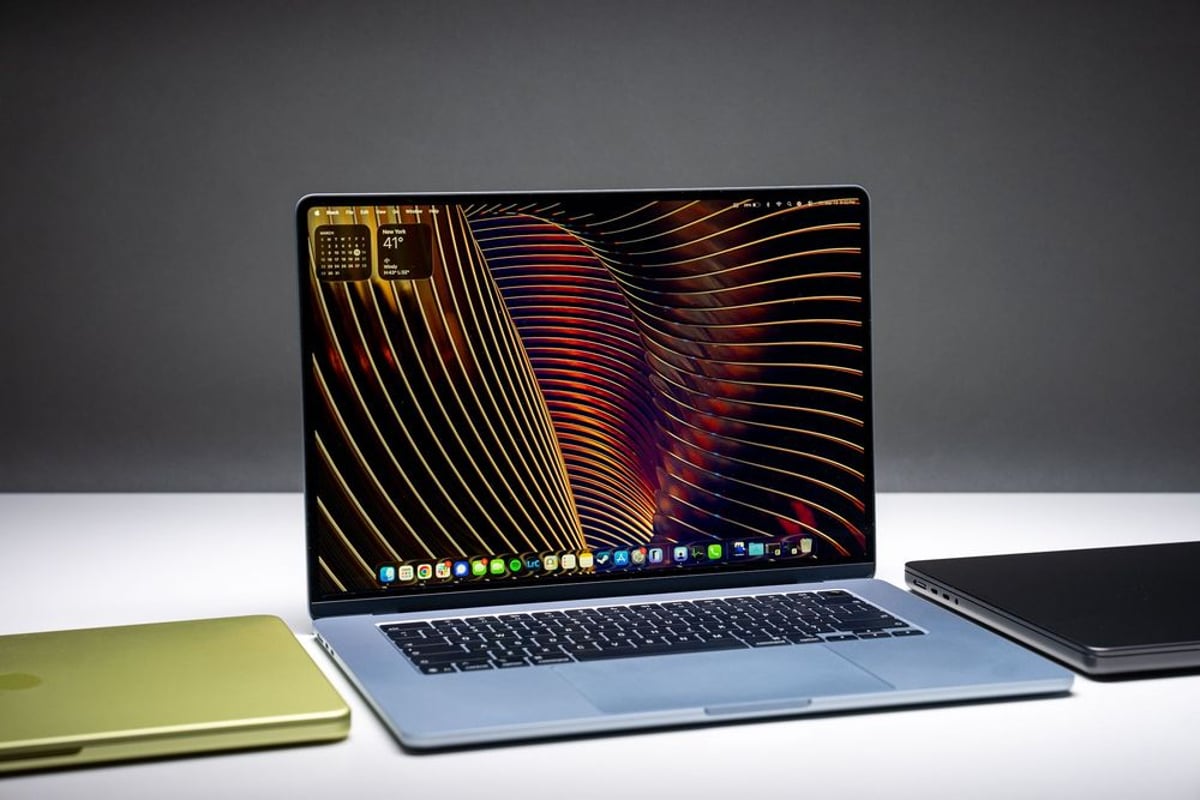
Apple's refreshed MacBook Air for 2026 brings incremental improvements but a less incremental price tag. The new model now ships with the M5 chip, Wi-Fi 7 connectivity, and doubles base storage to 512GB - but it'll cost you $100 more than last year's version. More significantly, the Air now sits in an awkward middle ground between the budget-friendly MacBook Neo (launched at $500 less) and the premium MacBook Pro lineup, forcing Apple's most popular laptop to justify its positioning in a suddenly crowded market.
Apple just unveiled its 2026 MacBook Air lineup, and the updates are about as exciting as a minor point release. The new models pack the M5 chip, Wi-Fi 7 support, and a welcome storage bump to 512GB base capacity - but they also come with a $100 price increase that's turning heads for all the wrong reasons.
According to The Verge's hands-on review by Antonio G. Di Benedetto, the 2026 Air is "just as outstanding a computer as last year's model" - which is both a compliment and an indictment. When your big selling point is maintaining the status quo while charging more, you're walking a thin line.
The M5 chip delivers the expected generational performance improvements, though Apple hasn't released detailed benchmarks yet. Wi-Fi 7 adds future-proofing for users investing in next-gen routers, and the storage doubling from 256GB to 512GB addresses a long-standing complaint about Apple's base configurations. But here's the thing: none of these upgrades feel essential enough to justify the premium.
What's really reshaping the Air's value proposition isn't what Apple added - it's what Apple launched alongside it. The MacBook Neo, introduced earlier this year, undercuts the 13-inch Air by a whopping $500. Di Benedetto calls it "an awesome little computer" that doesn't invalidate the Air but certainly "paints it in a new light."
This creates a fascinating dilemma for Apple shoppers. The Neo runs on the A18 Pro chip (borrowed from iPhone technology) and sacrifices some processing power and premium features, but it delivers a fully capable macOS experience at a price point that makes the Air look indulgent. Meanwhile, users willing to spend Air money might start eyeing the MacBook Pro lineup, which offers significantly more power for not much more cash.
Apple's pricing strategy here feels like threading a needle that didn't need threading. The Air has always occupied the sweet spot in the Mac lineup - powerful enough for most users, thin and light enough to actually be portable, and priced reasonably enough to be the default recommendation. Adding $100 while introducing a compelling budget alternative beneath it squeezes that sweet spot considerably.
The Verge's review notes that the Air remains "a more capable, faster, and sleeker machine" than the Neo, which is undeniably true. The M5 chip will handle heavier workloads like video editing and 3D rendering that would make the A18 Pro sweat. The build quality, display, and overall fit-and-finish maintain Apple's premium standards. For users who need that extra performance headroom, the Air still makes sense.
But the market Apple created with the Neo cannibalization isn't about need - it's about value perception. When a customer walks into an Apple Store (virtual or physical) and sees a $500 gap between two laptops that both run macOS, both feature excellent keyboards and trackpads, and both deliver all-day battery life, the Air better have a compelling story to tell.
The storage upgrade helps that story. Starting at 512GB means users won't immediately need to shell out for the next tier up, which partially offsets the base price increase. Wi-Fi 7 is a nice-to-have that extends the machine's useful life as networking standards evolve. And the M5 chip, while not revolutionary, maintains Apple's silicon leadership over Windows competitors.
What's missing is any sense of excitement or innovation. The Air's industrial design remains unchanged from previous generations - still beautiful, still impossibly thin, but also utterly familiar. There's no new display technology, no significant port additions (we're still living in USB-C land), and no surprise features that make you want to upgrade from last year's model.
Di Benedetto's review suggests the positioning challenge is real: "Having the Neo sit beneath it does paint it in a new light." That new light isn't particularly flattering when you're asking customers to pay more for less differentiation.
Apple's betting that brand loyalty, ecosystem lock-in, and genuine performance advantages will keep the Air flying off shelves despite the competitive squeeze. The company has historically shown little concern for value-minded shoppers, preferring to maintain margins even when it means ceding market share. But with its own Neo creating downward pricing pressure, Apple may find that strategy harder to execute.
The real test will come in sales figures over the next few quarters. If the Neo significantly outperforms expectations while Air sales soften, Apple will have successfully disrupted itself - not necessarily in a good way. If the Air maintains its position as the best-selling Mac, the price increase will look like smart business. Either way, the 2026 MacBook Air refresh feels less like a confident product update and more like Apple figuring out its laptop hierarchy in real-time.
Apple's 2026 MacBook Air delivers solid if unspectacular upgrades that feel more like housekeeping than innovation. The M5 chip, Wi-Fi 7, and doubled storage are welcome, but the $100 price bump combined with the MacBook Neo's budget appeal creates an identity crisis for what's traditionally been Apple's most straightforward laptop recommendation. The Air remains an excellent machine - it's just no longer an obvious choice in a lineup that now offers compelling alternatives both above and below its price point. For existing Air owners, there's little reason to upgrade. For new buyers, the decision just got a lot more complicated.