Space infrastructure just got a power boost. Arinna, a startup building next-generation solar cells for spacecraft, has closed a $4 million seed round to commercialize what it claims is a breakthrough in space power technology. The company's ultrathin solar material promises to outperform current spacecraft power systems on both flexibility and efficiency - two critical factors as satellites get smaller and missions get more ambitious. With the space economy projected to hit $1.8 trillion by 2035, solving the power problem could unlock entirely new classes of missions.
Arinna is betting that the space industry's power problem is about to become its biggest bottleneck. The startup just secured $4 million in seed funding to scale production of solar cells purpose-built for the harsh realities of orbit - and it's targeting a market that's been stuck with essentially the same technology for decades.
The company's core innovation centers on an ultrathin solar material that it says delivers both greater flexibility and higher efficiency than the rigid panels currently bolted onto most spacecraft. That combination matters more than it might sound. As satellites shrink and missions venture farther from the Sun, every square centimeter of power-generating surface becomes precious real estate. Current solar arrays are bulky, fragile, and lose efficiency rapidly in deep space radiation.
Arinna isn't disclosing specific performance metrics yet, but the pitch is clear: lighter, bendable solar cells that can conform to unconventional spacecraft geometries while generating more power per gram. That could mean the difference between a CubeSat mission lasting six months versus three years, or a deep-space probe reaching the outer planets with enough juice to phone home.
The space hardware sector is experiencing a quiet manufacturing revolution. Where legacy aerospace contractors once dominated with conservative, proven designs, a new generation of startups is rethinking everything from propulsion to thermal management. Power systems are among the last frontiers - largely because space-grade solar cells require exotic materials and manufacturing precision that's historically been the domain of a few specialized suppliers.
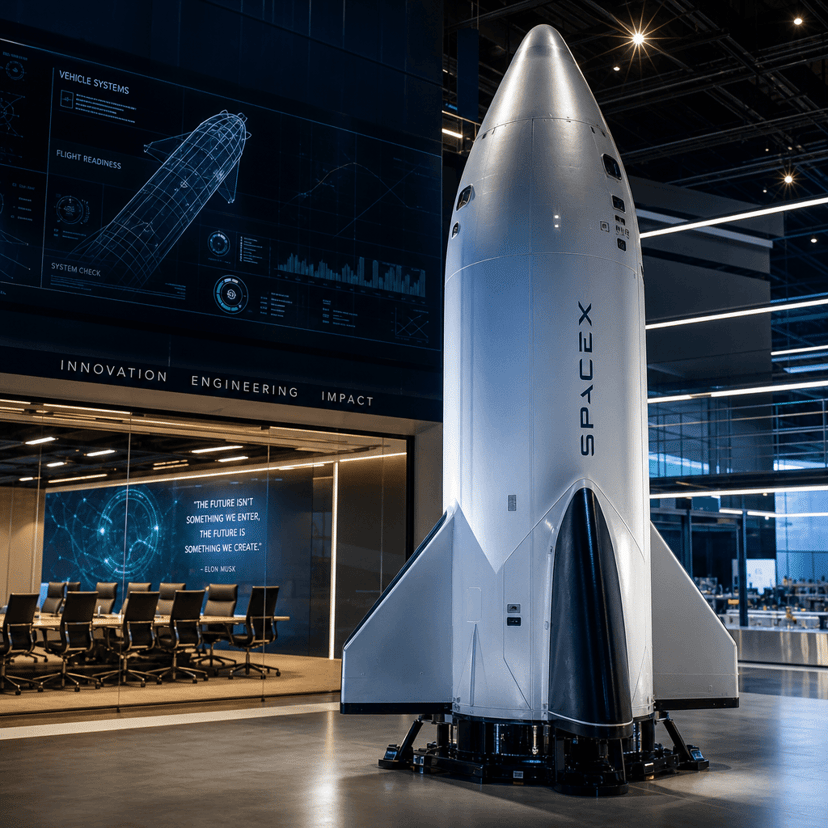
That's starting to change. SpaceX has driven launch costs down by 90% over the past decade, making it economically viable to iterate on satellite designs faster. The rise of mega-constellations like Starlink has created demand for mass-produced space components. And missions to the Moon and Mars are pushing engineers to reconsider power systems designed for low Earth orbit.
Arinna's timing reflects these shifts. The startup is entering a market where power constraints are increasingly mission-critical. Small satellite operators struggle to pack enough solar capacity into shoebox-sized form factors. Lunar missions face two-week nights where solar arrays go dormant. Deep-space probes must generate power at distances where sunlight is a fraction of what Earth receives.
The seed round doesn't specify lead investors, but climate tech and deep tech VCs have been circling space infrastructure plays with growing interest. Unlike software startups that can scale on AWS, hardware companies like Arinna need capital to build manufacturing capacity, survive regulatory certification, and endure the multi-year sales cycles inherent to aerospace.
Materials science breakthroughs in solar technology have historically transferred between terrestrial and space applications with a lag. Perovskite solar cells, for instance, have achieved record efficiencies in labs but remain unproven in orbit. Arinna's focus on spacecraft-specific requirements suggests it's prioritizing radiation hardness and thermal cycling over raw efficiency - smart trade-offs for the space environment.
The broader space power market includes everything from solar arrays to nuclear reactors. NASA is developing nuclear systems for lunar bases and Mars missions, while companies like Zeno Power are building radioisotope generators for long-duration missions. Solar remains dominant for near-Earth applications, but efficiency improvements could extend its viable range.
What Arinna needs to prove is manufacturing scalability and orbital durability. Space certification processes are notoriously slow and expensive. The company will need design wins with satellite operators willing to fly new technology, then accumulate on-orbit performance data that convinces conservative procurement teams at larger aerospace primes.
The $4 million runway likely funds prototype refinement, initial manufacturing setup, and early customer pilots. If Arinna's material performs as promised in vacuum chamber testing and radiation exposure, follow-on funding should come easier - space hardware investors love de-risked technology with clear performance data.
Arinna's $4 million seed round signals investor confidence that space power systems are ripe for disruption, but the hard work starts now. The company needs to translate materials science into flight-proven hardware that can survive years in one of the most hostile environments imaginable. If it succeeds, the payoff extends beyond better satellites - it could enable entirely new mission architectures that current power constraints make impossible. The space economy's next phase depends on infrastructure that works farther, lasts longer, and weighs less. Power is the foundation of all of it.