China just delivered its diplomatic response to the $8.5 billion US-Australia critical minerals deal, with Beijing's Foreign Ministry calling on resource-rich nations to take a 'proactive role' in stabilizing rare earth supply chains. The measured but pointed statement comes as the semiconductor industry braces for potential supply disruptions amid escalating trade tensions over materials crucial to everything from smartphones to electric vehicles.
China isn't backing down. Just hours after President Trump and Australian PM Anthony Albanese signed their $8.5 billion critical minerals agreement, Beijing's Foreign Ministry delivered a carefully calibrated response that managed to sound cooperative while defending its market position.
"The formation of global production and supply chains is the result of market and corporate choices," Foreign Ministry spokesperson Guo Jiakun told reporters, according to NBC's coverage. But then came the pointed follow-up: "Resource-rich nations with critical minerals should play a proactive role in safeguarding the security and stability of the industrial and supply chains."
It's diplomatic speak for 'we're watching you.' The timing couldn't be more strategic - China just expanded its rare earth export controls earlier this month, seeking to prevent what it calls "misuse" of these materials in military and sensitive sectors. Translation: Beijing's tightening the screws on minerals that power everything from Tesla batteries to iPhone chips.
Markets are already feeling the tension. Lynas Rare Earths, Australia's biggest rare earth producer, swung wildly Tuesday - jumping early before closing down 7.6%. Meanwhile, Latrobe Magnesium surged over 15% as investors bet on benefiting from the new US-Australia partnership.
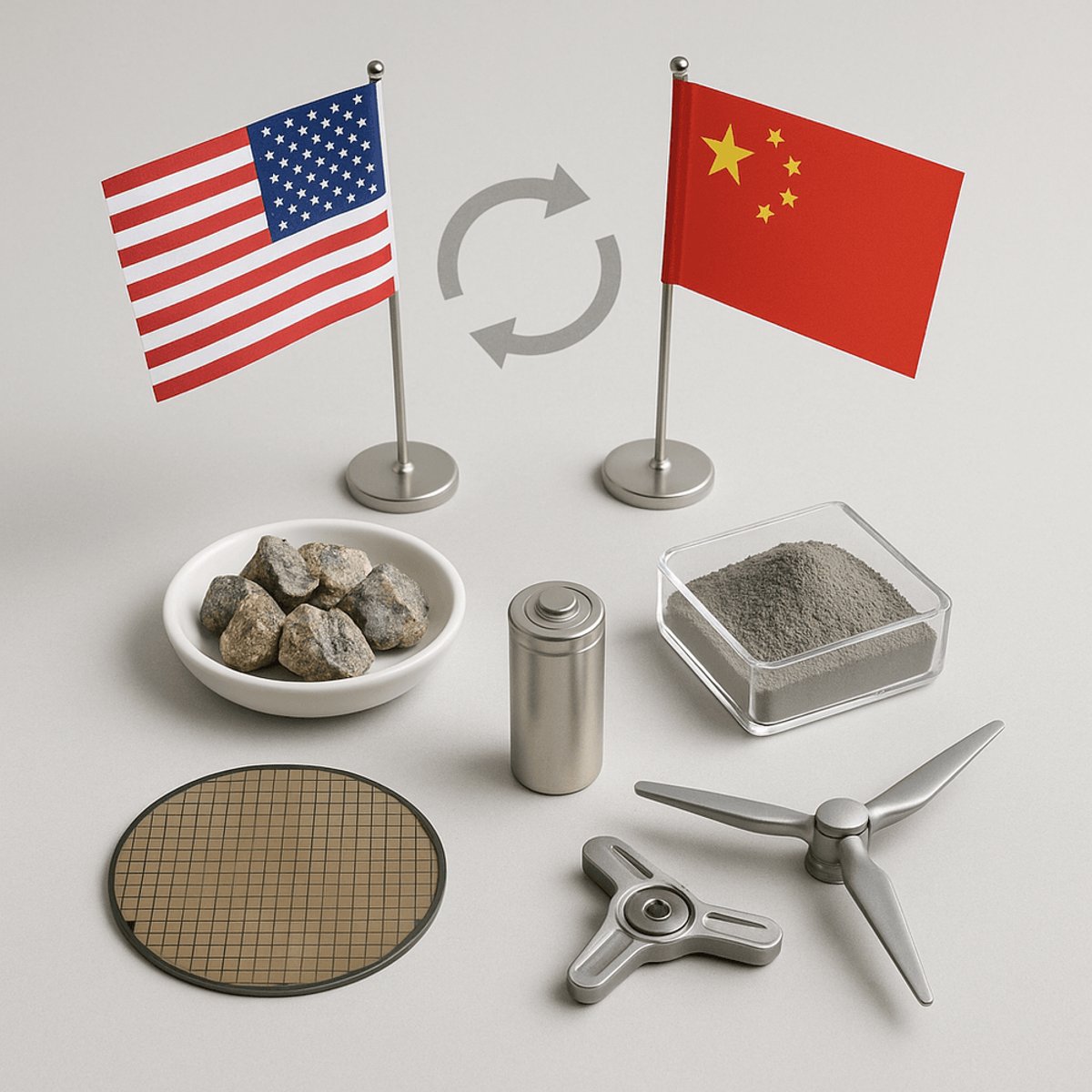
The stakes here are massive. China controls roughly 80% of global rare earth processing, giving Beijing enormous leverage over supply chains that Western governments are desperately trying to diversify. These aren't just any minerals - we're talking about the building blocks of the entire tech ecosystem. Neodymium for wind turbine magnets. Lithium for EV batteries. Dysprosium for electric motors.
"This is a very small sector," George Cheveley from Ninety One told CNBC's Squawk Box Europe Tuesday morning. "And clearly when you're dealing with a sector so politicized and where government money is being put in essentially as a subsidy, it is telling you that it is difficult to make it work economically."
That's the brutal truth behind all the diplomatic niceties. The US-Australia deal isn't just about securing supply - it's about economics that don't naturally work without massive government backing. China's spent decades building this dominance through aggressive pricing and vertical integration. Breaking that hold requires the kind of industrial policy the West largely abandoned.
The automotive industry is already sounding alarms. Western car manufacturers warn that China's new export controls could trigger "supply chain chaos" just as the EV transition accelerates. Ford, GM, and European automakers have spent years building China-dependent supply chains that suddenly look very vulnerable.
US rare earth stocks tell the story of investor skepticism. MP Materials dropped 1.8% in premarket trading, while USA Rare Earth fell 2.4%. Even with an $8.5 billion government backing, Wall Street isn't convinced these companies can compete with China's scale and cost advantages.
But here's what makes this different from previous trade skirmishes: semiconductors. The chip shortage of 2021 showed how quickly rare earth disruptions can cascade through the entire global economy. When Taiwan Semiconductor's fabs need steady flows of gallium and germanium, geopolitics becomes economics becomes national security.
China's response suggests Beijing understands this leverage perfectly. By calling for "normal economic and trade cooperation" while simultaneously tightening export controls, China's essentially saying: play by our rules or face the consequences. It's economic statecraft at its most sophisticated.
This isn't just another trade spat - it's the opening move in a long-term chess match over the materials that power modern civilization. China's measured response masks a simple reality: Beijing holds most of the cards right now, and breaking that advantage will require sustained commitment and massive capital that may not generate returns for years. The $8.5 billion US-Australia deal is a start, but restructuring supply chains that took decades to build won't happen overnight. For now, China's calling for cooperation while tightening its grip - a strategy that's worked remarkably well so far.