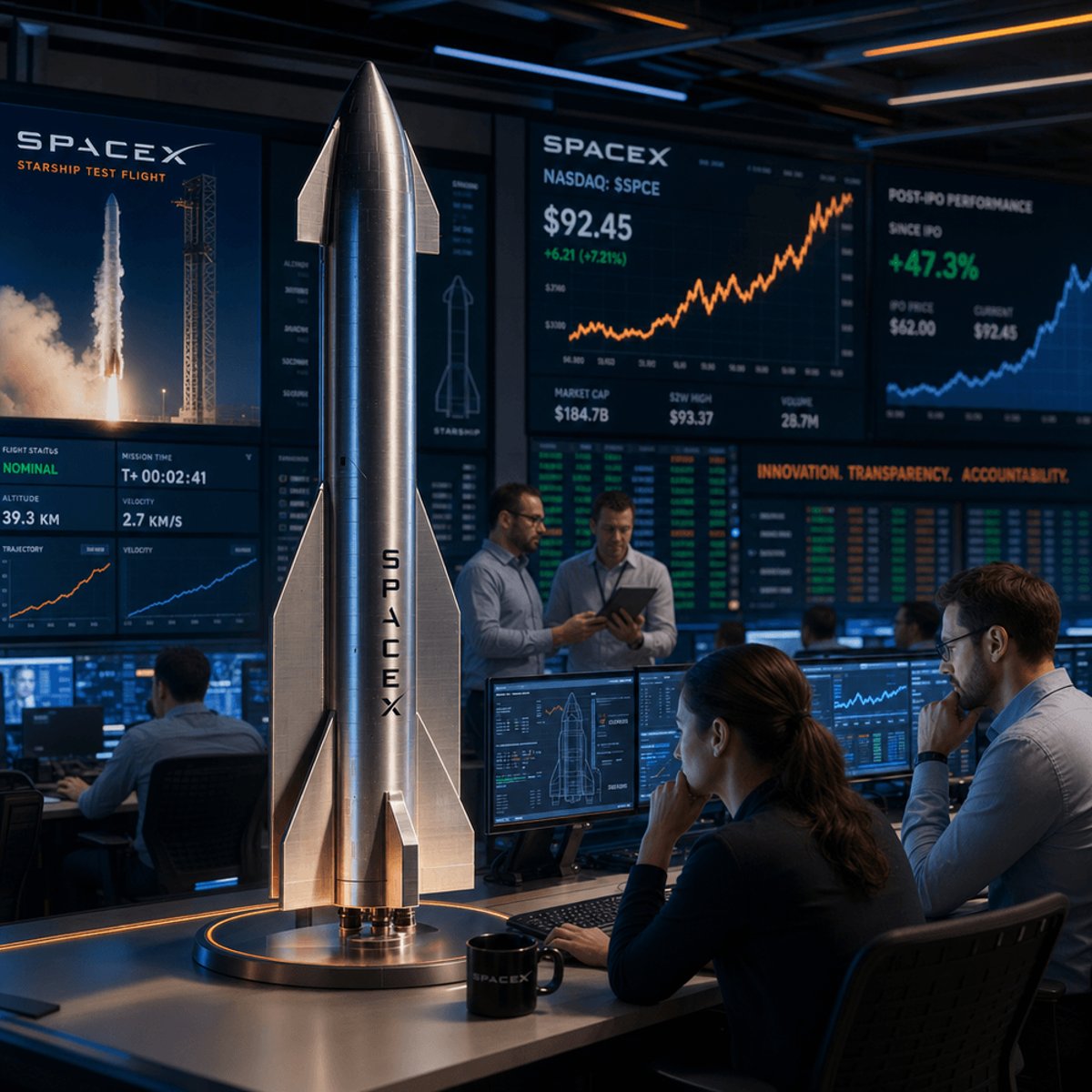
SpaceX just fired up its massive Starship rocket for the first time since the company's blockbuster IPO last month, marking a pivotal moment for the now-public aerospace giant. The test flight, conducted at the company's Starbase facility in Texas, represents Elon Musk's first major technical milestone under the scrutiny of public markets - and Wall Street is watching closely to see if the newly minted ticker can deliver on its Mars ambitions while answering to shareholders.
SpaceX is back in the test flight game, and this time there are shareholders watching. The company launched its Starship rocket Friday evening from its South Texas facility, the first major test since the aerospace manufacturer completed its IPO in June 2026.
The timing is anything but coincidental. Elon Musk has spent years resisting the public markets, arguing that quarterly earnings calls and investor pressure would hamper the company's move-fast-and-break-things approach to rocket development. But with capital needs mounting for the Starship program - which aims to eventually transport humans to Mars - SpaceX finally pulled the trigger on going public last month in what became one of the largest tech IPOs of the decade.
Now comes the hard part: proving the model works under public scrutiny. The Starship program has been SpaceX's most ambitious and expensive bet, with the fully reusable rocket system designed to carry up to 100 people to the Moon, Mars, and beyond. Previous test flights have produced mixed results, with some ending in spectacular fireballs and others achieving key milestones like successful booster catches.
What's changed since the IPO is the level of transparency SpaceX must now provide. The company that once operated in relative secrecy now faces quarterly earnings calls, SEC filings, and the constant pressure of public market expectations. Industry observers have questioned whether this new reality will slow down the rapid iteration approach that made SpaceX successful in the first place.
The test flight also comes at a crucial competitive moment. Blue Origin, Jeff Bezos's rocket company, has been making steady progress on its New Glenn heavy-lift vehicle, while Rocket Lab continues to gain market share in the small-to-medium launch category. Even traditional aerospace giants like Boeing and Lockheed Martin are watching SpaceX's public transition carefully, looking for signs of vulnerability.
For Musk, the stakes extend beyond just rockets. SpaceX's performance as a public company could influence how investors view his other ventures, including the relationship between public market discipline and innovation velocity. The entrepreneur has long maintained that the pressure to deliver short-term returns kills long-term thinking - a philosophy that will now be tested in real-time.
The Starship system represents a fundamental shift in space economics. If successful, its full reusability could drop the cost of launching payloads to orbit by orders of magnitude, potentially opening up entirely new markets for space-based commerce. But that's a big if, and one that public market investors will be watching with spreadsheets in hand.
Wall Street analysts covering the newly public SpaceX have pointed to Starship development milestones as key indicators of whether the company can maintain its valuation. The rocket's success - or failure - will directly impact quarterly guidance and investor confidence in management's ambitious timeline.
The test flight also highlights the broader transformation happening in the space industry. What was once the exclusive domain of government agencies has become a hotbed of private sector competition, with billions in venture capital and public market funding pouring into everything from satellite internet to lunar landers. SpaceX's transition to public markets accelerates that trend, potentially opening the floodgates for other space companies to follow suit.
For now, the focus remains on whether this test flight can demonstrate the technical progress investors expect. SpaceX has historically used rapid test iterations to perfect its designs - the company's Falcon 9 rocket went through numerous failures before becoming the most reliable launcher in the world. But that development approach required patience and deep pockets, two things not always abundant in public markets.
The coming months will reveal whether SpaceX can thread the needle between maintaining its engineering culture and satisfying the quarterly demands of being a publicly traded company. It's a balance that has eluded many tech companies before, but then again, most tech companies aren't trying to make humanity multiplanetary.
SpaceX's first post-IPO Starship test represents more than just another rocket launch - it's a referendum on whether the space industry's most ambitious company can maintain its edge under the watchful eye of public markets. As Musk navigates the tension between quarterly expectations and decade-long Mars ambitions, this test flight becomes a crucial data point for investors trying to value innovation that won't pay off for years. The success or failure of this balancing act won't just determine SpaceX's future, but could reshape how Wall Street thinks about funding moonshots - literally.