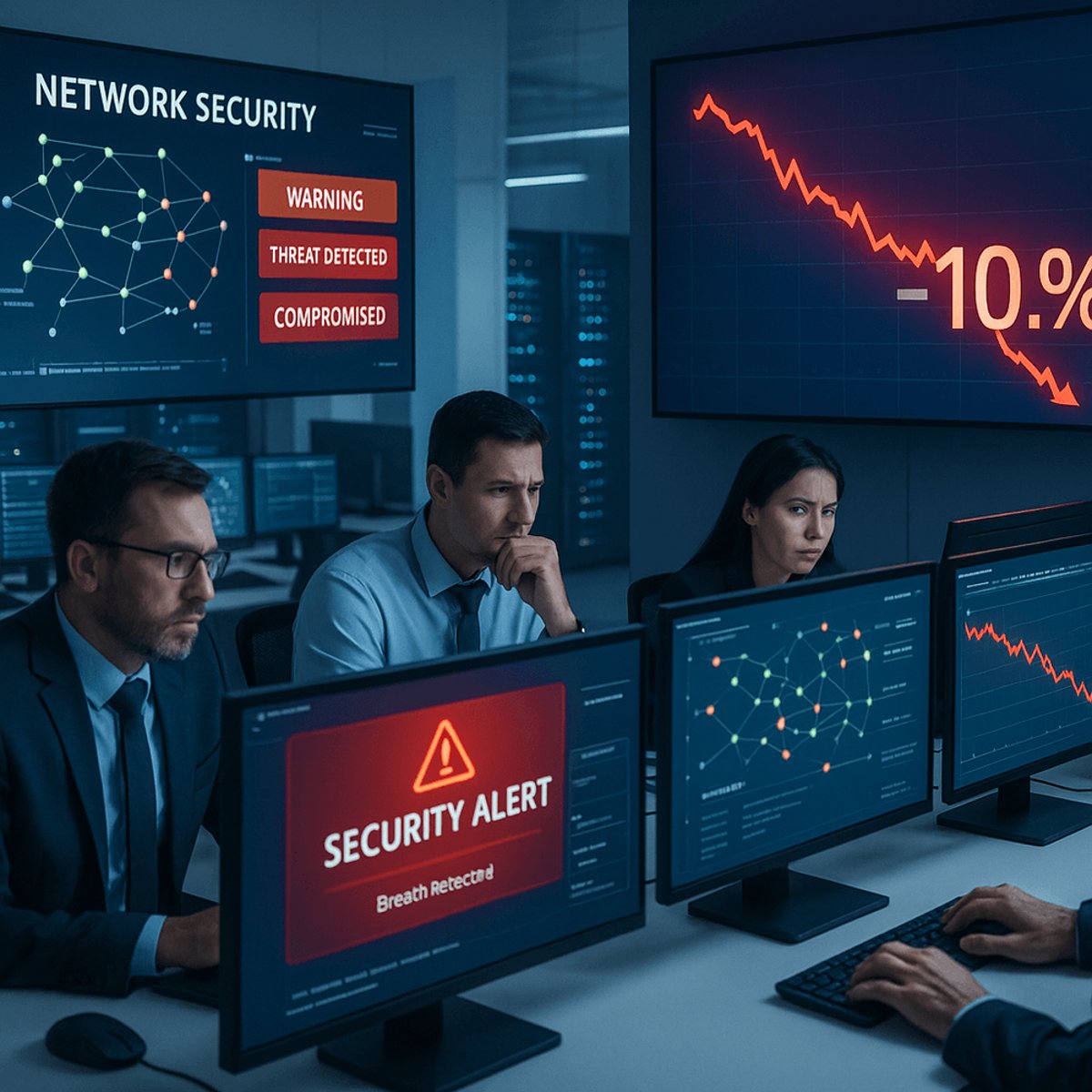
Cybersecurity firm F5's stock plunged 10% Thursday after revealing that Chinese nation-state hackers had infiltrated its systems for at least a year, gaining access to source code and vulnerability data. The breach triggered an emergency directive from federal cybersecurity officials, warning of potential 'catastrophic' impact across government and enterprise networks relying on F5's widely-used security infrastructure.
F5's nightmare started in August when the cybersecurity company first detected unauthorized access to its systems. But the full scope didn't emerge until this week's SEC disclosure revealed that sophisticated attackers had been lurking in F5's network for over a year, potentially since late 2023.
The timing couldn't be worse for F5, whose BIG-IP systems protect some of the world's most critical networks. Thursday's 10% stock plunge - the company's worst day since April 2022 - reflects investor fears about the breach's cascading impact across F5's enterprise customer base.
"We have no knowledge of undisclosed critical or remote code vulnerabilities, and we are not aware of active exploitation of any undisclosed F5 vulnerabilities," F5 said in its official statement. But that assurance did little to calm markets or federal officials who immediately recognized the threat.
According to Bloomberg's reporting, sources familiar with the investigation have attributed the attack to Chinese state-backed hackers. The breach involved Brickstorm malware, a sophisticated tool linked to the UNC5221 threat group that Google Threat Intelligence has been tracking.
Brickstorm represents a new level of stealth in nation-state attacks. Mandiant research shows this malware can remain undetected in victim systems for an average of 393 days - explaining how F5's attackers maintained access for over a year without triggering security alerts.
The Cybersecurity and Infrastructure Security Agency didn't wait for more details. CISA Acting Director Madhu Gottumukkala issued an emergency directive Wednesday night, ordering all federal agencies using F5 products to immediately apply security updates.
"The alarming ease with which these vulnerabilities can be exploited by malicious actors demands immediate and decisive action from all federal agencies," Gottumukkala warned. "These same risks extend to any organization using this technology, potentially leading to a catastrophic compromise of critical information systems."
The international response was swift. The UK's National Cyber Security Centre issued parallel guidance advising British organizations to update F5 systems and monitor for suspicious activity.
What makes this breach particularly alarming is F5's role in the cybersecurity ecosystem. The company's BIG-IP platform sits at the heart of network security for countless enterprises and government agencies. When hackers compromise the tools designed to protect other systems, the potential for widespread damage multiplies exponentially.
The attackers specifically targeted F5's product development environment, gaining access to source code and information about undisclosed vulnerabilities. This level of access could theoretically allow nation-state actors to identify zero-day exploits across F5's product line, creating a roadmap for future attacks on F5 customers.
For F5, this represents more than just a security incident - it's a crisis of trust. Enterprise customers pay premium prices for F5's security solutions based on the assumption that the company maintains ironclad protection of its own systems. Thursday's stock reaction suggests investors are pricing in potential customer defections and legal liabilities.
F5's breach exposes the fragility of even the cybersecurity industry's own defenses against nation-state actors. While the company insists no critical vulnerabilities have been exploited, the year-long intrusion demonstrates how sophisticated attackers can maintain persistent access to the most sensitive systems. For enterprise customers and government agencies, this incident serves as a stark reminder that even security vendors aren't immune to the escalating cyber warfare between nations. The immediate focus now shifts to damage assessment and preventing similar long-term compromises across the broader cybersecurity infrastructure.