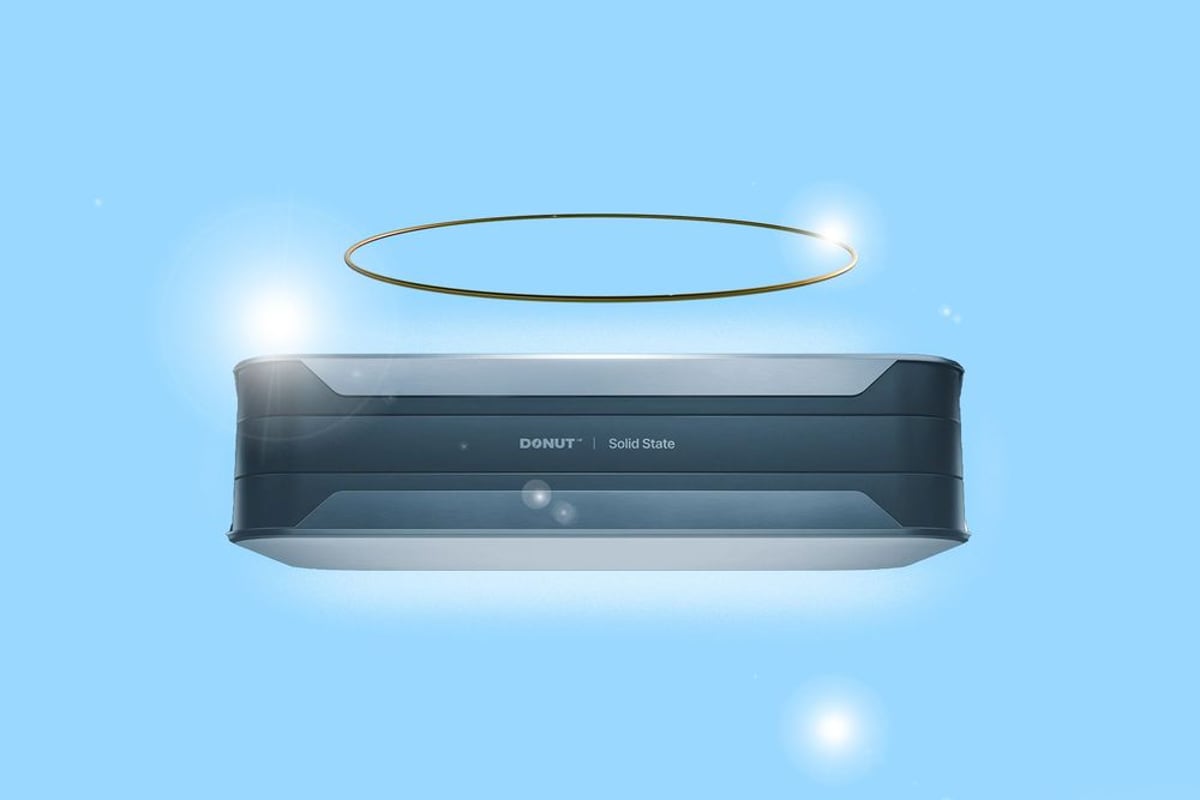
A Finnish startup is making waves with a bold claim that sounds too good to be true. Donut Lab, a spinoff from Verge Motorcycles, says it's cracked the code on solid-state batteries and plans to start production later this year. The announcement has battery experts raising eyebrows - after all, solid-state technology has been 'just two years away' for decades. But if Donut Lab can deliver on its promise of high-density, fast-charging batteries, it could reshape everything from electric vehicles to consumer electronics.
Donut Lab, a relatively unknown startup spun off from Verge Motorcycles in Finland, just dropped a bombshell that has the battery industry buzzing. The company claims it's finally solved solid-state batteries - and not in some distant future, but with production starting later this year.
It's the kind of announcement that makes battery researchers do a double-take. Solid-state batteries have earned the nickname 'Holy Grail of batteries' for good reason. They promise significantly higher energy density than today's lithium-ion cells, faster charging times, better durability, and improved safety. But they've also been notoriously difficult to manufacture at scale, with technical challenges that have stumped even the biggest players in the energy storage game.
The skepticism from battery experts is palpable and justified. Solid-state technology sits in that uncomfortable category of innovations that seem perpetually just out of reach - much like artificial general intelligence or the hyperloop, technologies that have been 'two years away' for what feels like forever. Major automotive companies and battery manufacturers have poured billions into solid-state research with limited commercial success to show for it.
What makes Donut Lab's claim particularly eyebrow-raising is the timeline. While established players like Toyota, Samsung, and QuantumScape have been working on solid-state technology for years with cautious, incremental progress reports, this Finnish startup is promising production-ready batteries within months. The company emerged from Verge Motorcycles, known for their distinctive hubless electric motorcycles, but scaling from motorcycle applications to mass production represents a massive leap.
The technical challenges in solid-state batteries are formidable. Traditional lithium-ion batteries use a liquid electrolyte to move ions between electrodes. Solid-state batteries replace that liquid with a solid material, which should theoretically allow for higher energy density and better safety since there's no flammable liquid electrolyte. But solid electrolytes have struggled with issues like interface resistance, dendrite formation, and manufacturing complexity that make them difficult to produce reliably and affordably.
If Donut Lab has genuinely cracked these problems, the implications ripple far beyond electric motorcycles. Electric vehicle manufacturers are desperately seeking battery breakthroughs that could extend range, reduce charging times, and lower costs. Consumer electronics companies want smaller, longer-lasting power sources for smartphones, laptops, and wearables. Energy storage systems for renewable power could become more efficient and compact.
But that's a big 'if.' The battery industry has seen its share of overpromising startups that fizzled when their technology couldn't scale beyond the lab. The difference between a working prototype and mass production at competitive prices is often where battery innovations go to die. Manufacturing solid-state batteries consistently and affordably has proven to be the stumbling block for companies with far more resources than a Finnish motorcycle spinoff.
What remains unclear from Donut Lab's announcement is the specific chemistry they're using, their manufacturing process, expected costs, and most critically, independent verification of their claims. The company hasn't released detailed technical specifications or third-party test results that would allow experts to assess whether this breakthrough is legitimate or another case of startup optimism outpacing reality.
The timing of the announcement also raises questions. Battery technology typically requires years of testing and validation before companies commit to production timelines. Automotive-grade batteries especially need to prove they can handle thousands of charge cycles, extreme temperatures, and safety scenarios before they're ready for commercial deployment.
Still, breakthroughs do happen, and they often come from unexpected places. Small, focused teams sometimes solve problems that eluded larger organizations. The key will be whether Donut Lab can actually deliver production batteries that meet their performance claims at a price point that makes commercial sense. Until then, the battery community is watching with a healthy mix of curiosity and caution.
Donut Lab's solid-state battery claim represents either a genuine breakthrough or another chapter in the long history of battery hype. The proof will come when - or if - production actually begins later this year. For now, the industry watches with skeptical optimism, hoping this Finnish startup can deliver on a promise that has eluded far larger companies. If they succeed, the impact on transportation, consumer electronics, and energy storage could be transformative. If not, it's just another reminder that some 'Holy Grails' remain perpetually out of reach.