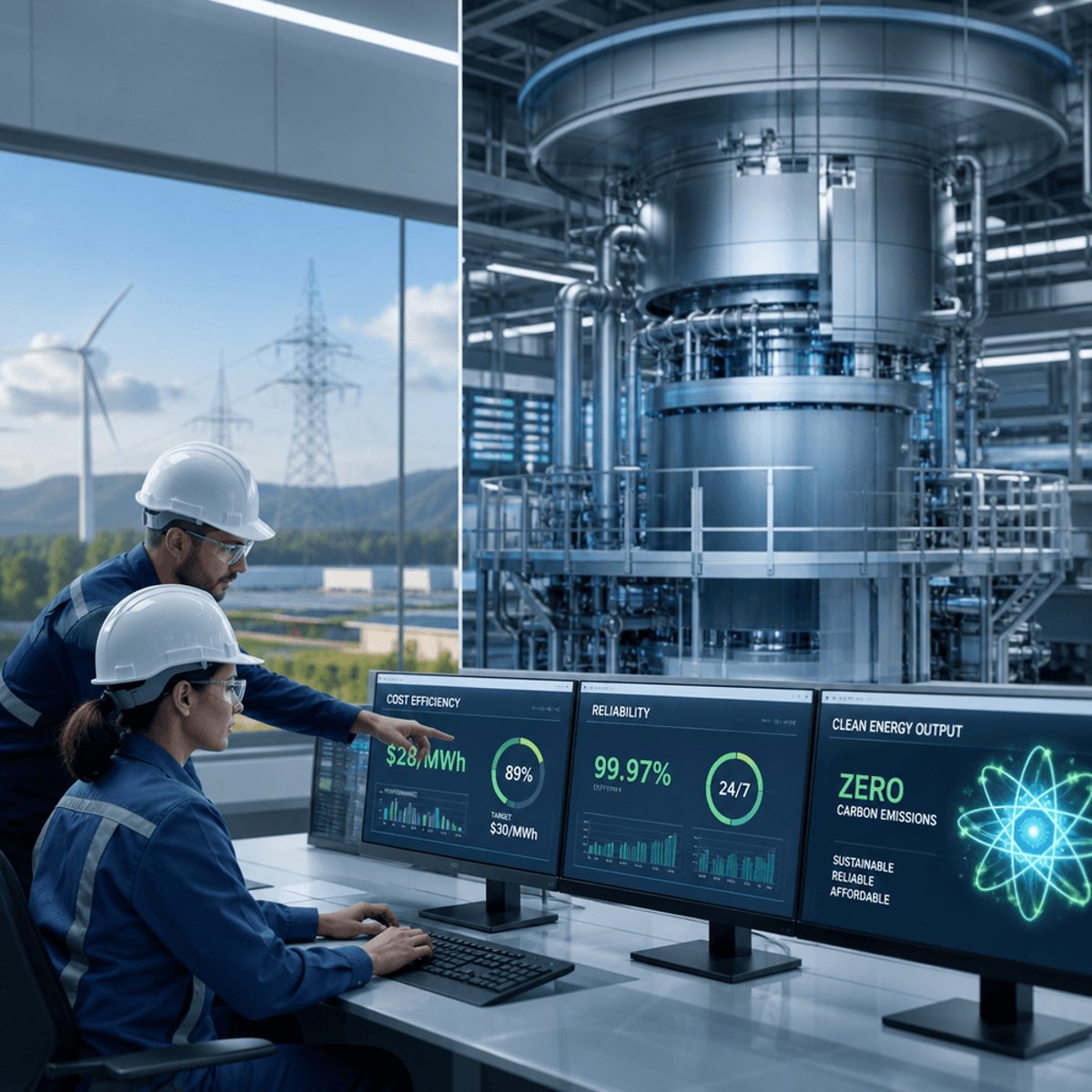
A Y Combinator-backed nuclear startup is taking aim at one of clean energy's biggest challenges: making nuclear power cheaper than fossil fuels. Apollo Atomics emerged from stealth today with a bold promise to slash electricity costs below natural gas rates by reimagining a critical but overlooked reactor component. The move signals growing investor confidence in next-generation nuclear as AI data centers and electrification drive unprecedented power demand.
Apollo Atomics just threw down the gauntlet in the race to make nuclear energy economically viable. The Y Combinator-backed startup says it's cracked the code on a reactor component that's been hiding in plain sight, one that could finally make nuclear power cheaper than the natural gas plants that dominate today's energy mix.
The timing couldn't be better. Tech giants are burning through electricity faster than utilities can build new capacity, and they're desperate for clean, reliable power that doesn't depend on the weather. Microsoft, Google, and Amazon have all recently signed deals to explore nuclear options for their data centers, signaling a massive shift in how the industry thinks about baseload power.
But here's the problem that's plagued nuclear for decades: it's expensive. Really expensive. Construction costs for traditional reactors routinely balloon into the billions, and timelines stretch for years or even decades. Apollo Atomics thinks it's found a way around that by focusing on a component that most people don't think about but that has outsized impact on total system cost.
While the startup hasn't disclosed exactly which component they're targeting, the nuclear industry has long recognized that certain parts, particularly those in the reactor cooling and heat exchange systems, drive disproportionate costs. Shrinking these components without compromising safety could dramatically reduce material costs, simplify construction, and speed up deployment times.
The Y Combinator pedigree matters here. The accelerator has been steadily expanding into hard tech and climate solutions, moving beyond its software roots. Recent batches have included fusion startups, advanced materials companies, and now Apollo Atomics. It's a bet that the same rapid iteration and lean startup principles that work for apps can apply to nuclear reactors, albeit with significantly longer development cycles and regulatory hurdles.
Apollo Atomics isn't alone in trying to reinvent nuclear economics. Companies like TerraPower, backed by Bill Gates, and NuScale Power, which went public via SPAC, are pursuing small modular reactor designs. But most of these efforts focus on shrinking the entire reactor. Apollo's component-level approach could be complementary, potentially offering cost savings that apply across different reactor architectures.
The nuclear renaissance narrative has been building for years, but it's hitting different now. AI workloads are driving data center power consumption through the roof. According to industry estimates, a single large language model training run can consume as much electricity as hundreds of homes use in a year. Multiply that across the entire AI industry, and you're looking at grid-scale demand that solar and wind alone can't reliably meet.
That's why venture capital is suddenly flowing into nuclear. Investors who wouldn't have touched the sector five years ago are now writing checks to startups promising faster, cheaper, safer reactors. The regulatory environment is shifting too, with the Nuclear Regulatory Commission establishing new frameworks for advanced reactor designs that could streamline the approval process.
Still, Apollo Atomics faces a long road ahead. Nuclear startups need to navigate not just technical challenges but also regulatory approval, public perception issues, and the simple reality that building anything nuclear takes time. Even with a breakthrough component design, getting from prototype to commercial deployment typically takes years and requires hundreds of millions in capital.
The cost comparison to natural gas is the real test. Natural gas plants are cheap to build and quick to deploy, which is why they've dominated new power generation for the past two decades. If Apollo can actually deliver electricity below gas prices while maintaining nuclear's zero-carbon advantage and reliability, it would fundamentally reshape the energy market. That's a big if, but it's one that has Y Combinator and presumably other investors willing to find out.
Apollo Atomics represents a fresh approach to an old problem: making nuclear power economically competitive without sacrificing safety or reliability. By targeting a specific component rather than redesigning entire reactor systems, the startup might have found a faster path to market impact. But the nuclear industry is littered with promising startups that couldn't cross the valley between innovation and deployment. Whether Apollo can navigate the regulatory maze, prove out the technology, and scale production remains to be seen. What's clear is that the conversation around nuclear has shifted from 'if' to 'how fast,' driven by insatiable demand for clean, reliable power. For tech companies betting their AI futures on abundant electricity, that shift can't come soon enough.