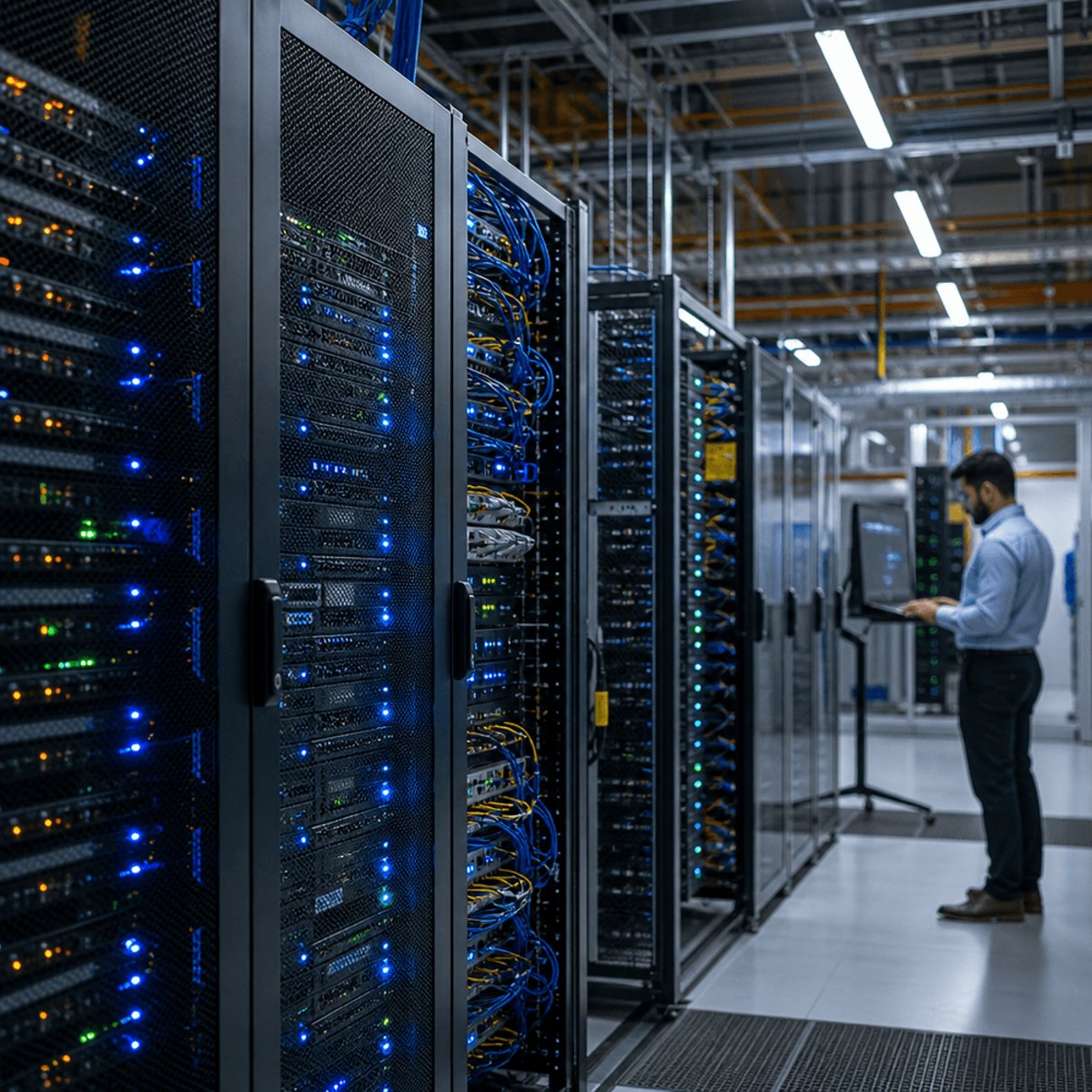
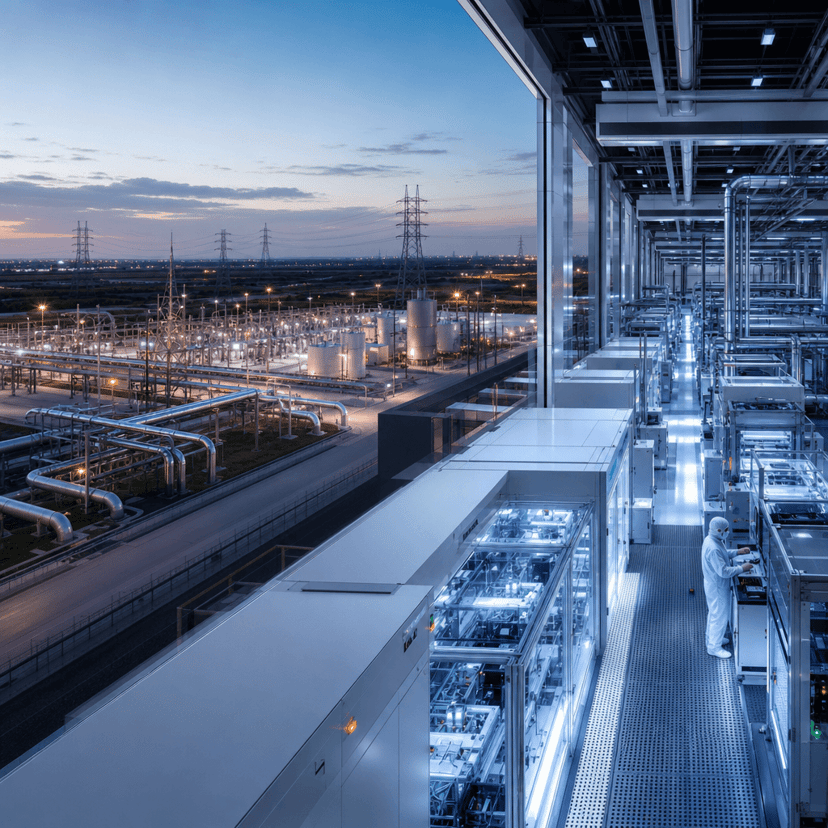
The global AI infrastructure race just expanded into new territory. Firebird, an emerging AI cloud provider, launched the CIS region's largest AI factory today in Armenia, marking a significant milestone in the buildout of AI computing capacity beyond traditional tech hubs. The facility, powered by Nvidia's accelerated computing platform and Dell Technologies' high-performance infrastructure, signals growing demand for sovereign AI capabilities in emerging markets.
Firebird, an AI cloud provider that's been quietly building infrastructure across emerging markets, just made its biggest play yet. The company's new AI factory in Armenia represents the largest AI computing facility in the Commonwealth of Independent States, a region that's been largely underserved in the global AI infrastructure buildout.
The launch comes with heavyweight backing. Armenia's Prime Minister Nikol Pashinyan attended the opening, alongside Kazakhstan's Deputy Minister Zhaslan Madiyev, signaling the strategic importance regional governments are placing on AI sovereignty. The facility is built on Nvidia Blackwell architecture and Dell Technologies PowerEdge servers, the same technology stack powering AI factories from Silicon Valley to Singapore.
"We've been preparing for this moment since we saw the compute shortage impact our region," a Firebird executive told attendees at the launch event. The company hasn't disclosed the exact number of GPUs deployed, but industry sources familiar with the project suggest it's a multi-hundred unit installation, potentially rivaling smaller hyperscaler deployments.
The timing is deliberate. As OpenAI, Microsoft, and Google pour billions into US-based AI infrastructure, emerging markets are scrambling to avoid becoming completely dependent on foreign compute. Armenia's move follows similar efforts in the Middle East, where countries have invested heavily in sovereign AI capabilities.
What makes this launch particularly noteworthy is the technology deployed. Nvidia's Blackwell platform, which only started shipping to major customers earlier this year, represents the cutting edge of AI computing. Getting access to these chips isn't trivial - Nvidia's been allocating supply carefully amid intense demand from hyperscalers and enterprise customers.
Dell Technologies provided the infrastructure backbone through its DSX platform, which integrates Nvidia's GPUs into rack-scale systems designed specifically for AI workloads. The partnership reflects how traditional enterprise vendors are positioning themselves in the AI infrastructure gold rush.
For Armenia, the facility represents more than just computing capacity. The country has been working to establish itself as a tech hub in the region, with a growing developer community and favorable policies for tech companies. An AI factory of this scale could accelerate that transformation, potentially attracting AI startups and researchers who need access to frontier computing but can't afford hyperscaler rates.
The broader context matters here. We're seeing a fundamental shift in how AI infrastructure gets built and deployed. Rather than concentrating everything in a handful of massive US data centers, the industry is moving toward a more distributed model. Regional AI factories like Firebird's address latency concerns, data sovereignty requirements, and the simple reality that not every country wants to be completely dependent on American or Chinese cloud providers.
Firebird's emergence as a serious player also highlights how the AI cloud market is evolving beyond the usual suspects. While Amazon Web Services, Microsoft Azure, and Google Cloud dominate headlines, specialized providers focusing on specific regions or use cases are carving out significant niches.
The facility will support both training and inference workloads, according to details shared at the launch. That dual capability is crucial - many regional AI projects require the ability to fine-tune models on local data, not just run inference on models trained elsewhere.
What remains to be seen is how quickly Firebird can scale utilization. Building the factory is one thing; filling it with paying customers is another. The company will compete against established hyperscalers' regional offerings while trying to convince enterprises and governments that local AI infrastructure is worth the potential premium.
Firebird's Armenia launch signals a new chapter in the global AI infrastructure story - one where emerging markets aren't content to be passive consumers of Western cloud services. As AI becomes increasingly central to economic competitiveness, expect more countries to follow Armenia's playbook: attract specialized providers, deploy cutting-edge hardware, and build sovereign compute capacity. For Nvidia and Dell, it's validation that the AI infrastructure boom extends far beyond hyperscaler deals. The question now is whether regional AI factories can achieve the utilization rates and economics needed to compete long-term, or if this represents an early experiment in a market still finding its footing.