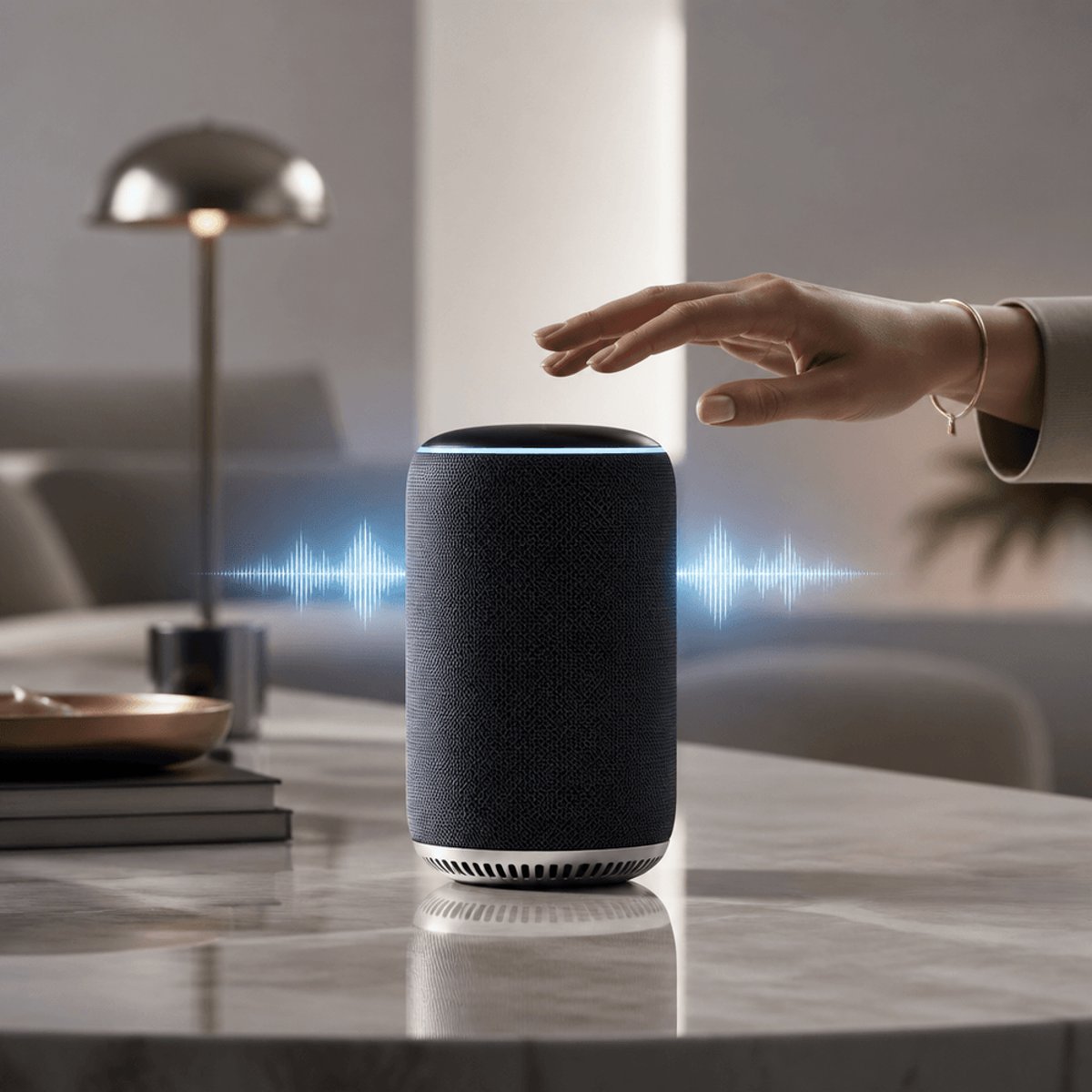
OpenAI is preparing to launch its first consumer hardware device, a premium AI-powered smart speaker that will retail between $300 and $400, according to new details emerging from the company's hardware plans. The device, reportedly designed in collaboration with former Apple design chief Jony Ive, represents the ChatGPT maker's ambitious push beyond software into the crowded smart home market, where it will compete against established players like Amazon's Echo and Apple's HomePod at a significantly higher price point.
OpenAI is making a bold bet that consumers will pay premium prices for AI-powered hardware. Fresh details about the company's mysterious smart speaker project reveal a device positioned squarely in luxury territory, with pricing that could make even Apple faithful think twice.
The $300-$400 price range puts OpenAI's hardware ambitions in direct competition with the high end of the smart speaker market. For context, Amazon's Echo devices start at just $99, while Google's Nest Audio retails for $99. Even Apple's HomePod, long criticized for its premium pricing, currently sells for $299. OpenAI is betting that ChatGPT's conversational AI capabilities justify a price tag that could reach $100 more than Apple's offering.
The involvement of Jony Ive, the legendary designer behind the iPhone and MacBook's iconic looks, adds credibility to OpenAI's premium positioning. Ive's design firm LoveFrom has been working with OpenAI on the project, though specific details about the device's appearance and functionality remain tightly guarded. The partnership was first reported earlier this year, with OpenAI CEO Sam Altman confirming the collaboration was exploring "new AI hardware concepts."
But premium design alone won't justify the price. The device will need to deliver AI experiences that fundamentally outperform existing smart speakers. Current smart assistants from Amazon, Google, and Apple have faced criticism for limited conversational abilities and frequent misunderstandings. OpenAI's advantage lies in ChatGPT's more sophisticated natural language processing, which could enable more complex multi-turn conversations, contextual awareness, and nuanced task completion.
The timing of OpenAI's hardware push comes as the company faces increasing pressure to diversify revenue beyond its enterprise API business and ChatGPT subscriptions. Hardware offers a new revenue stream, though the consumer electronics market is notoriously challenging, with thin margins and fierce competition. Apple itself discontinued the original HomePod in 2021 before reviving it in 2023, a sign of the difficulties even tech giants face in this space.
Industry watchers are skeptical about the price point. Smart speaker adoption has been driven largely by affordability, with Amazon and Google often selling devices at or near cost to get their AI assistants into homes. A $400 smart speaker would need to offer dramatically more value than existing options. OpenAI appears to be betting that early adopters and AI enthusiasts will pay a premium to have ChatGPT capabilities in a dedicated hardware form factor.
The device's exact feature set remains unclear, but it will likely integrate deeply with OpenAI's existing products. Expect seamless ChatGPT integration, possibly with enhanced voice modes that leverage the company's recent advances in audio AI. OpenAI has been testing more natural-sounding voice interactions in ChatGPT, and a dedicated hardware device could showcase these capabilities better than smartphone apps.
Competitive pressures are mounting from all sides. Amazon has been integrating more advanced generative AI into Alexa, while Google is pushing Gemini capabilities into its hardware ecosystem. Apple is rolling out Apple Intelligence features across its devices, including HomePod. OpenAI will need to move quickly to establish its hardware before competitors close the capability gap.
The speaker's success may hinge on OpenAI's ability to create a compelling ecosystem. A standalone smart speaker, no matter how sophisticated, faces limitations without supporting services, integrations, and complementary devices. Apple succeeded with HomePod largely because of its tight integration with the broader Apple ecosystem. OpenAI lacks that infrastructure, which makes the premium pricing strategy even more audacious.
Production and distribution details haven't been revealed, but bringing hardware to market at scale presents new challenges for a company built around software and AI research. Manufacturing partnerships, supply chain management, retail distribution, and customer support represent entirely new operational demands for OpenAI.
OpenAI's premium-priced smart speaker represents a significant gamble that superior AI capabilities can command luxury pricing in a market dominated by affordable devices. With Jony Ive's design pedigree and ChatGPT's conversational prowess, the company has the ingredients for a compelling product, but convincing consumers to pay three to four times the price of an Amazon Echo will require flawless execution and features that truly feel revolutionary. The device's launch will test whether AI sophistication has reached the point where it can justify premium hardware pricing, or whether OpenAI has misjudged what consumers are willing to pay for better conversations with their smart speakers.