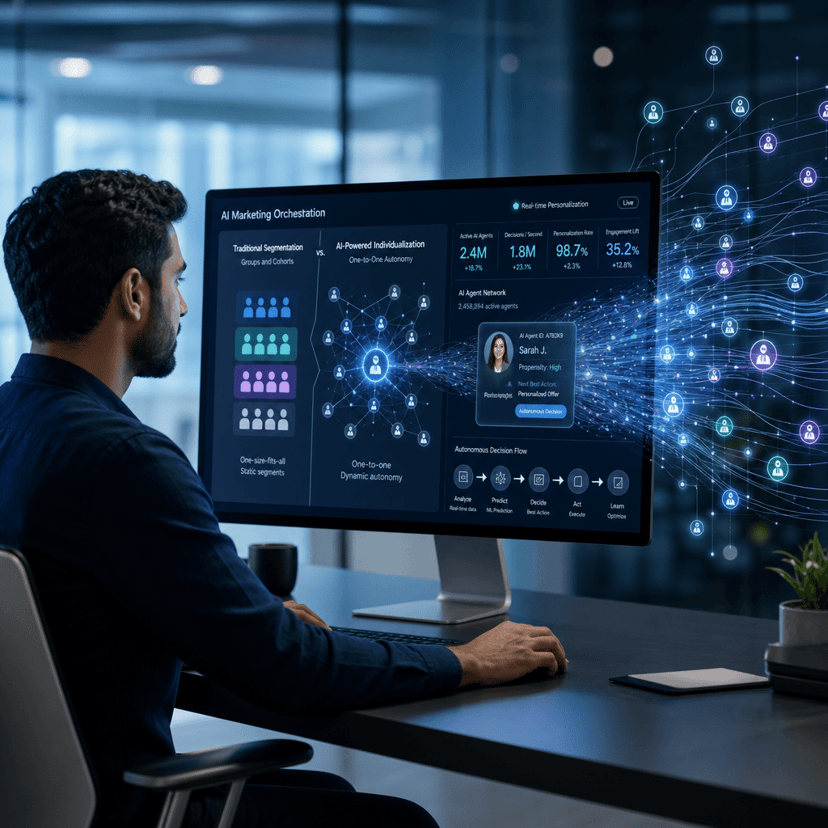
Google just made its AI agents official workplace fixtures. The company published collaboration guidelines for Ads Advisor and Analytics Advisor, marking a shift from experimental AI tools to production-ready assistants embedded in core marketing platforms used by millions of businesses worldwide. It's a clear signal that agentic AI has moved from buzzword to business-critical infrastructure at one of tech's biggest players.
Google isn't treating AI agents like experimental features anymore. The company just published official collaboration best practices for Ads Advisor and Analytics Advisor, two AI-powered assistants now baked into its core advertising and analytics platforms. Written by Omer Shakil, a Software Engineering Manager in Google Analytics, the guidance dropped Wednesday with zero fanfare but significant implications for how millions of businesses will work with AI.
The timing matters. While competitors like Meta and Amazon scramble to launch their own enterprise AI agents, Google's already moved past the announcement phase into operational guidance. That suggests these advisors have hit critical mass internally and with early customers. You don't publish collaboration tips for vapor ware.
The blog post focuses on practical workflow integration rather than capabilities bragging. Google's framing these agents as collaborative partners, not automation replacements, which tracks with broader enterprise AI adoption patterns. Companies want augmentation, not wholesale job elimination, at least in the messaging.
What's particularly revealing is the target audience. This isn't aimed at developers or AI researchers but at marketing managers, media buyers, and analytics professionals who've never touched a line of code. Google's betting that agentic AI needs to work for business users first, technical teams second. That's a marked departure from earlier enterprise AI rollouts that required data science expertise.
The Ads Advisor handles campaign optimization, budget allocation, and performance analysis across Google's advertising ecosystem. Analytics Advisor tackles data interpretation, anomaly detection, and reporting automation within Google Analytics 4. Both tap into Google's broader Gemini AI infrastructure, though the company doesn't explicitly detail the underlying models in this guidance.
Industry observers note this represents Google's most visible enterprise AI deployment outside of Workspace. The company's been relatively quiet about agentic systems compared to Microsoft's aggressive Copilot push or OpenAI's custom GPT marketplace. But embedded agents in products generating billions in annual revenue carry more weight than flashy demos.
The five collaboration tips themselves remain vague in the provided summary, but the meta-message is clear. Google's teaching customers how to work alongside AI agents because those agents are now permanent fixtures in their most profitable products. That's not a pilot program; that's infrastructure.
MarTech analysts have been watching for this exact moment. Google Ads powers a substantial portion of global digital advertising spend, while Analytics remains the dominant web analytics platform. Injecting AI agents directly into those workflows touches millions of businesses simultaneously, from solo entrepreneurs to Fortune 500 marketing departments.
Competitive pressure is mounting fast. Salesforce recently expanded its Einstein AI agents across its CRM suite. Adobe embedded AI assistants into Experience Cloud. The race isn't just about who builds the smartest AI but who embeds it most seamlessly into existing enterprise workflows where switching costs run high.
Google's approach also signals a broader platform play. By establishing Ads Advisor and Analytics Advisor as standard tools, the company creates lock-in beyond just data and integrations. If your team builds processes around these AI agents, migrating to competing platforms means retraining both humans and workflows.
The lack of detailed technical specifications in the announcement is deliberate. Google's positioning these as business tools, not AI products. That distinction matters for adoption. Marketing teams don't need to understand transformer architectures; they need to know whether the agent will improve campaign performance or surface hidden insights.
What's missing from the announcement is equally telling. No mention of pricing changes, no new enterprise tiers, no AI surcharges. That suggests Google's absorbing the computational costs for now, likely to accelerate adoption and establish market position before competitors catch up. How long that generosity lasts remains an open question as AI inference costs continue scaling with usage.
The blog post's author, a Software Engineering Manager rather than a product marketing lead, adds credibility. This reads like practitioner guidance from someone who's been building and testing these systems, not marketing fluff from the PR department. That grounded tone might resonate better with skeptical enterprise buyers tired of AI hype.
Google's publishing collaboration guidelines for AI agents signals a fundamental shift in enterprise MarTech. These aren't experimental features anymore - they're core infrastructure that millions of businesses will build workflows around. The real test comes next: whether these agents actually deliver measurable performance improvements or become expensive productivity theater. Either way, Google just made the first major move in embedding agentic AI into the platforms that power digital marketing at scale. Competitors are watching, and customers are now learning how to work alongside machines that optimize their ad spend and interpret their data. The age of AI advisors just went from future concept to present reality.