Google just rolled out WearOS 6.1 for its Pixel Watch lineup, but the real news is what's exclusive to the Watch 4. The company's flagship wearable is getting double pinch gestures that let you control everything from notifications to music without touching the screen - a direct challenge to Apple and Samsung's gesture-based interfaces. Meanwhile, an on-device AI model is making smart replies twice as fast and more contextually aware.
Google is making a serious play for smartwatch dominance with today's WearOS 6.1 rollout. While the update hits all recent Pixel watches, the flagship Watch 4 gets the premium treatment with exclusive gesture controls that could reshape how we interact with wearables.
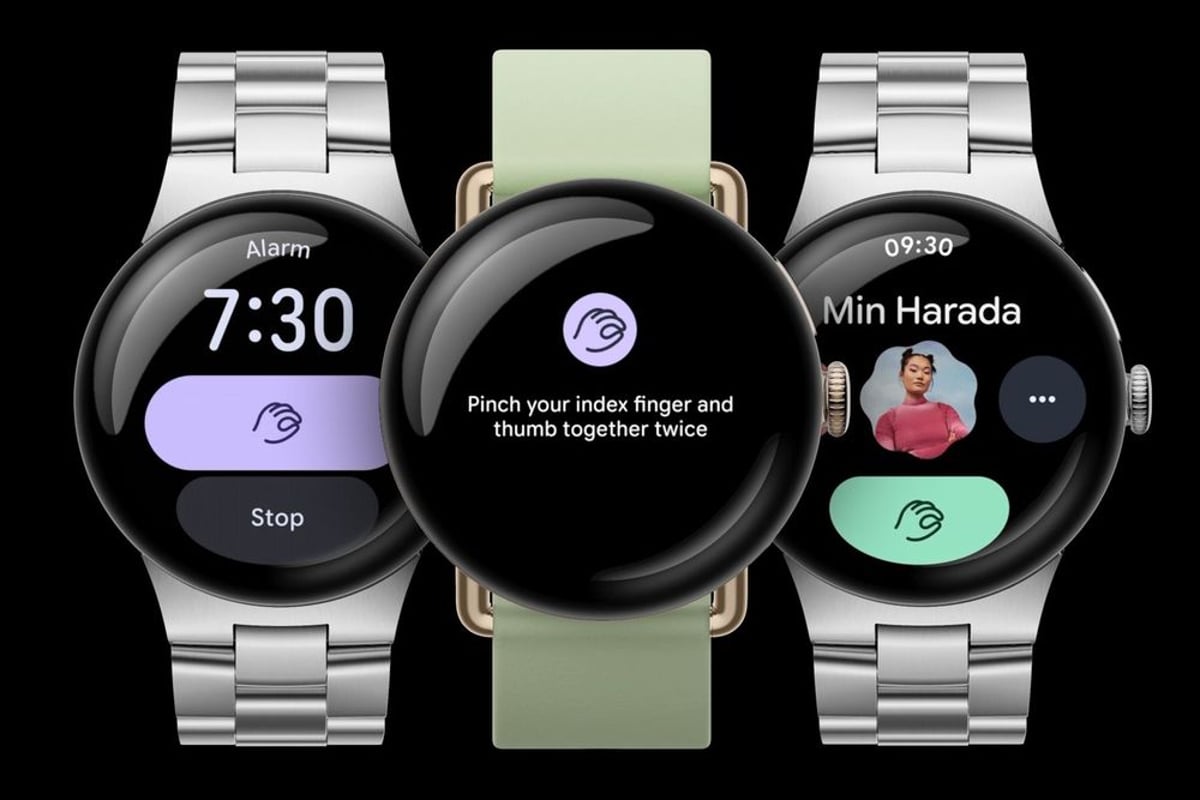
The star feature is double pinch - tap your thumb and index finger twice to scroll through notifications, snooze alarms, or fire off quick message replies. It's Google's answer to Apple's double tap gesture that debuted on the Watch Series 9, but Google's implementation goes deeper. You can control music playback, snap photos, and soon answer calls without ever touching the display.
"We're seeing users increasingly want hands-free control," a Google spokesperson told The Verge. The timing isn't coincidental - this puts Google in direct competition with both Apple and Samsung, which have been pushing gesture-based interfaces as the next evolution in wearable computing.
The second exclusive gesture, wrist turn, mirrors Apple's wrist flick feature from watchOS 26. A quick wrist rotation away and back silences incoming calls or dismisses notifications. Google smartly includes on-screen hints to help users learn when these gestures are available - addressing one of the biggest complaints about invisible UI controls.
But the real technical breakthrough happens under the hood. Google rebuilt smart replies using a custom on-device language model based on its Gemma architecture. According to internal performance metrics, the new system runs twice as fast while using one-third the memory of the previous model. More importantly, it processes everything locally without phone connectivity.
This shift to on-device AI reflects broader industry trends. Apple has been pushing local processing with its Neural Engine, while Samsung recently announced similar capabilities for Galaxy watches. The race is on to see who can deliver the smartest responses while preserving battery life and privacy.
The competitive implications are significant. Apple has dominated the premium smartwatch market partly through intuitive gesture controls and contextual features. Google's move suggests the company is serious about challenging that dominance, especially as the wearables market approaches $100 billion globally.
What's telling is the feature fragmentation - only Watch 4 users get the full gesture suite, while Watch 3 and 4 owners share the AI reply improvements. This creates a clear upgrade incentive while positioning the Watch 4 as Google's answer to the Apple Watch Ultra.
Industry analysts see this as Google's most aggressive smartwatch play yet. The company has struggled to gain significant market share against Apple, but these AI-powered features could finally give Pixel watches a distinctive edge. The real test will be execution - gesture controls are notoriously finicky, and user adoption often depends on reliability more than features.
Google's WearOS 6.1 update signals the company's most ambitious smartwatch strategy yet. By combining exclusive gesture controls with advanced on-device AI, the Pixel Watch 4 is positioning itself as a legitimate alternative to Apple's ecosystem dominance. The success will depend on user adoption and reliability, but Google has clearly decided that differentiation through AI and intuitive controls is its path to capturing meaningful market share in the premium wearables space.