Google just launched what looks like an ad-blocker's dream - a button to collapse sponsored results in search. But here's the twist: the 'Sponsored' label stays pinned to your screen as you scroll, making ads more persistent than ever. The move comes alongside AI-powered topic previews and sports updates rolling out to three countries first.
Google is playing an interesting game with user expectations. The search giant announced what initially appears to be a user-friendly addition - a 'Hide sponsored results' button that collapses ads at the top of search results. But the reality is more nuanced and arguably more intrusive than the current system.
When users tap the new button, sponsored content disappears from view, but Google keeps the 'Sponsored Results' label floating at the top of the screen. This means ads essentially follow you down the page, creating what could be seen as more prominent advertising real estate, not less. It's a clever workaround that maintains ad presence while technically giving users what they asked for.
The company's blog post reveals the strategic thinking behind this approach. The 'Sponsored results' header can appear both above and below AI Overviews - those AI-generated summaries that now top many search results. Text ads also get grouped under the same collapsible label at the bottom of pages, with Google limiting display to four text ads maximum per group.
This comes at a critical moment for Google's advertising business. The company generated over $307 billion in ad revenue last year, making any change to ad visibility a high-stakes decision. By keeping the 'Sponsored' label visible even when ads are collapsed, Google maintains advertiser value while appearing to respond to user demands for cleaner search results.
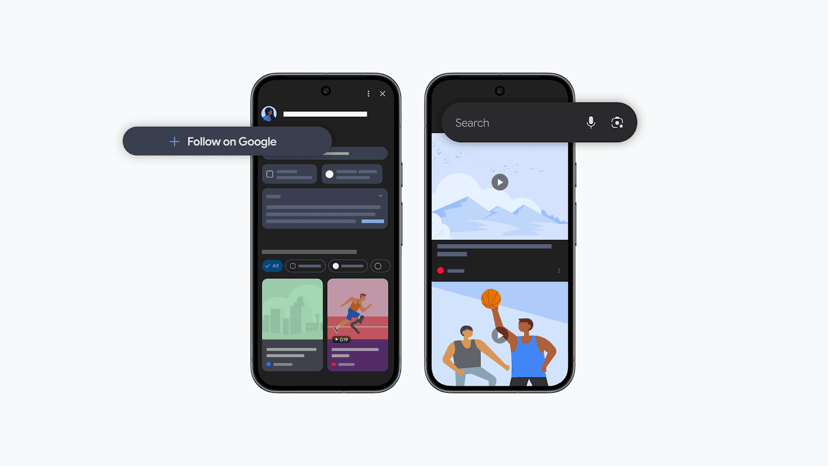
The updates extend beyond advertising mechanics. Google Search is adding a 'What's New' button for sports queries, creating dedicated feeds of trending updates and news articles. Users searching for teams or players will see this feature rolling out across the U.S. in the coming weeks, positioning Google as a sports news aggregator alongside its traditional search function.
Meanwhile, the Google app's Discover feed gets AI-powered topic previews that expand to show additional information and related links. According to Google's announcement, this feature helps users 'stay up to date on stories from a variety of publishers' - though it launches as publishers continue reporting significant traffic declines due to AI-generated answers.
The timing isn't coincidental. As Google faces increasing scrutiny over market dominance and publisher relations, these features attempt to balance user experience improvements with business imperatives. The AI topic previews theoretically drive traffic to multiple publishers, while the collapsible ads maintain revenue streams that fund Google's operations.
Google is also standardizing its 'Sponsored' labeling across products. Shopping results will display 'Sponsored Products' labels, creating consistency in how users identify paid content across the platform. This unified approach suggests Google is preparing for increased regulatory attention on advertising transparency.
The geographic rollout strategy reveals Google's testing approach. The U.S., South Korea, and India represent diverse markets with different regulatory environments and user behaviors. Success in these regions likely determines broader global deployment.
For advertisers, the changes present mixed signals. While ads can be collapsed, the persistent labels and strategic placement around AI Overviews might actually increase visibility. The limitation to four text ads per group could drive up competition and pricing for top positions.
Publishers face a different challenge. The AI topic previews in Discover could drive some traffic, but they also represent another layer between users and original content sources. As Google's AI Overviews continue expanding, publishers must adapt to an ecosystem where Google increasingly becomes the primary content interface.
Google's latest updates reveal a company walking a tightrope between user experience and business reality. The collapsible ads feature gives users perceived control while maintaining advertiser value through persistent labeling. Combined with AI-powered content previews and sports feeds, these changes position Google as both search engine and content destination. But for publishers already struggling with AI-driven traffic losses, these updates signal an acceleration toward a Google-mediated internet where the company increasingly controls both the questions and the answers.