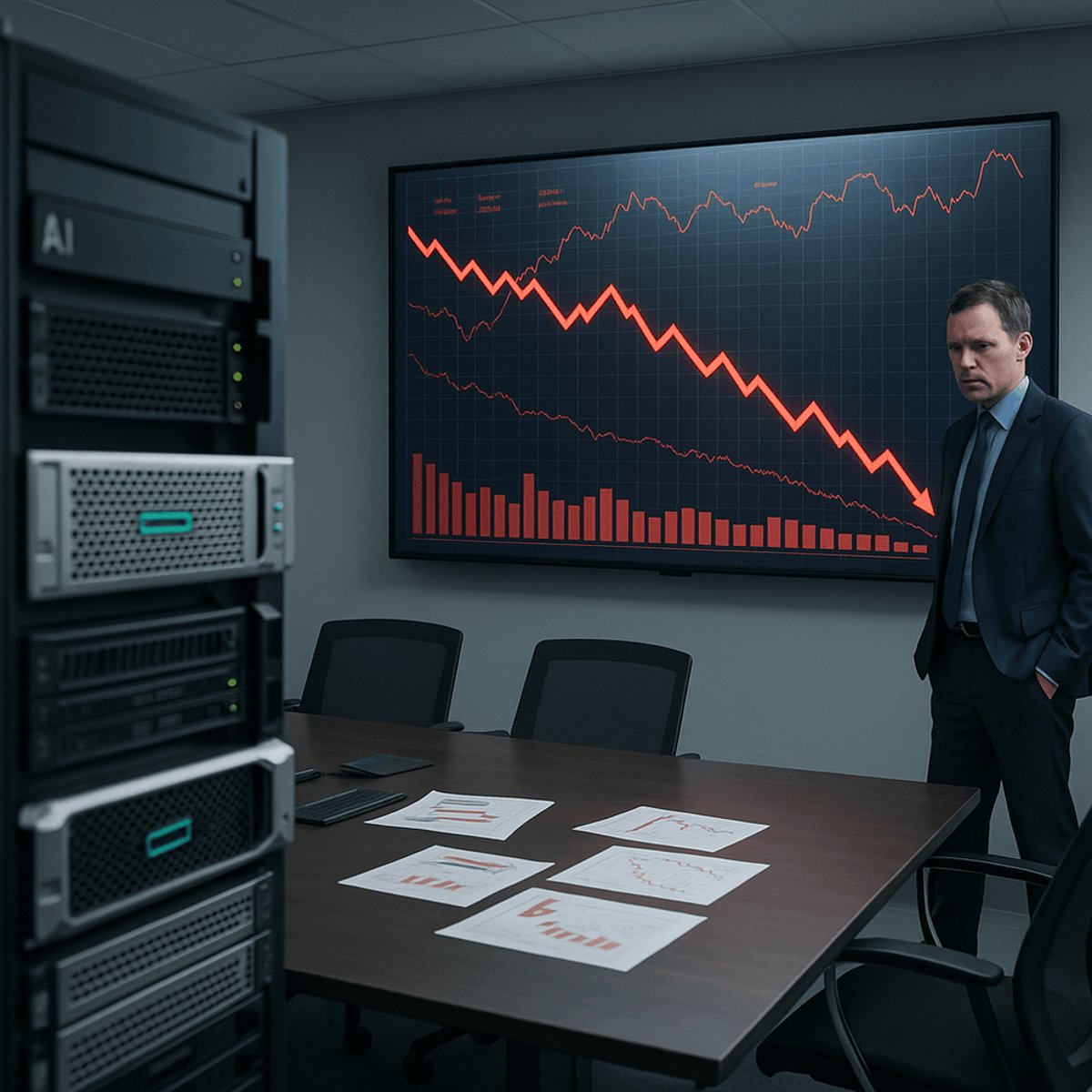
Hewlett Packard Enterprise shares are getting hammered today, dropping 9% after the company missed Q4 revenue expectations despite posting 14% year-over-year growth. The culprit? A perfect storm of delayed AI server shipments and sluggish government spending that caught Wall Street off guard and signals potential headwinds in the enterprise hardware market.
Hewlett Packard Enterprise just delivered a reality check to investors betting on the AI infrastructure boom. The enterprise hardware giant's stock tumbled 9% Friday morning after reporting Q4 results that missed revenue expectations, despite what looked like solid 14% year-over-year growth.
The numbers tell a concerning story. HPE posted $9.68 billion in revenue, falling short of the $9.94 billion analysts expected according to LSEG data. More troubling was the server segment, HPE's bread and butter, which declined 5% to $4.46 billion - missing StreetAccount estimates by a significant $120 million.
CFO Marie Myers didn't sugarcoat the issues during Thursday's analyst call. "Server revenue was hit by the timing of artificial intelligence service shipments and lower-than-expected government spending," she explained, according to earnings transcripts. The admission reveals how even AI darlings aren't immune to execution challenges.
What's particularly striking is the sequential decline. Server revenue dropped 10% from Q3 to Q4, suggesting the headwinds aren't just year-over-year comparisons but real momentum issues. This comes at a time when enterprise customers are supposedly racing to deploy AI infrastructure, making HPE's stumble all the more notable.
Myers tried to paint a silver lining, noting "robust server order growth across both traditional server and AI offerings, with demand significantly outpacing revenue in this period." But investors clearly weren't buying the "orders vs. revenue" narrative - a classic enterprise hardware excuse when shipments get pushed out.
The government spending weakness Myers cited reflects broader budget constraints hitting federal agencies. HPE has significant exposure to public sector contracts, and the timing couldn't be worse as agencies navigate budget cycles and changing priorities under shifting political winds.
On the positive side, HPE did beat earnings expectations with 62 cents per share adjusted, topping the 58 cents analysts expected. But in today's market, revenue misses carry more weight than earnings beats, especially when they signal demand or execution issues.
Looking ahead, HPE's guidance disappointed again. The company expects Q1 2026 revenue between $9-9.4 billion, well below the $9.87 billion FactSet consensus. That suggests management sees the current headwinds persisting into the new fiscal year.
The broader implications extend beyond HPE. The company competes directly with Dell and server makers like Super Micro Computer in the AI infrastructure space. If HPE is seeing shipment delays and timing issues, it raises questions about whether the AI hardware buildout is hitting speed bumps across the industry.
For HPE specifically, this earnings miss couldn't come at a worse time. The company has been positioning itself as a key beneficiary of the AI boom, particularly through its partnerships with Nvidia and focus on high-performance computing solutions. Today's results suggest that translating AI hype into actual revenue remains challenging.
Investors are now watching whether this is a temporary blip or a sign of deeper issues in enterprise AI adoption. With government budgets tight and enterprises potentially becoming more cautious about AI spending, HPE's next quarter will be crucial in determining if this was just unfortunate timing or the start of a more troubling trend.
HPE's earnings miss serves as a sobering reminder that even in the AI boom, execution matters more than positioning. While the company maintains that demand is strong and the current issues are timing-related, investors are clearly skeptical about management's ability to convert AI opportunities into consistent revenue growth. The real test will be whether HPE can get back on track in Q1 2026 or if these headwinds persist, potentially signaling broader challenges in the enterprise AI infrastructure market.